
Smart Home Weekly — 2026-06-10
Matter motion sensors hit battery walls that Zigbee solved years ago, raising urgent questions about the protocol's maturity for mainstream adoption. Lenovo officially enters the smart home ecosystem with Matter-native devices, signaling enterprise-grade momentum. Home Assistant 2026.6 ships two-way IR and expanded Matter siren support, solidifying its position as the open-source backbone of local-first automation.
Smart Home Weekly — 2026-06-10
Ecosystem Headlines
Matter Motion Sensors Drain Batteries in Eight Months—Zigbee Had This Fixed Years Ago
- What happened: A detailed analysis published 3 days ago reveals that Matter-over-Thread motion and door sensors typically require battery replacement within 8 months of deployment, a fundamental reliability issue that has plagued early adopters across HomeKit, Google Home, and Alexa ecosystems.
- Who's affected: Consumers running Matter sensor networks (particularly IKEA Dirigera hub users), installers recommending Thread-based deployments, and anyone comparing Matter to legacy Zigbee 3.0 networks.
- Why it matters: Zigbee solved this power-efficiency problem over a decade ago through careful radio management and mesh optimization. Matter's nascent Thread integration lacks equivalent refinement, forcing end users into maintenance cycles that feel regressive compared to 10-year-old competitor technology. This directly impacts perceived reliability and adoption velocity.

Lenovo Officially Enters Smart Home Market with Matter as Foundation
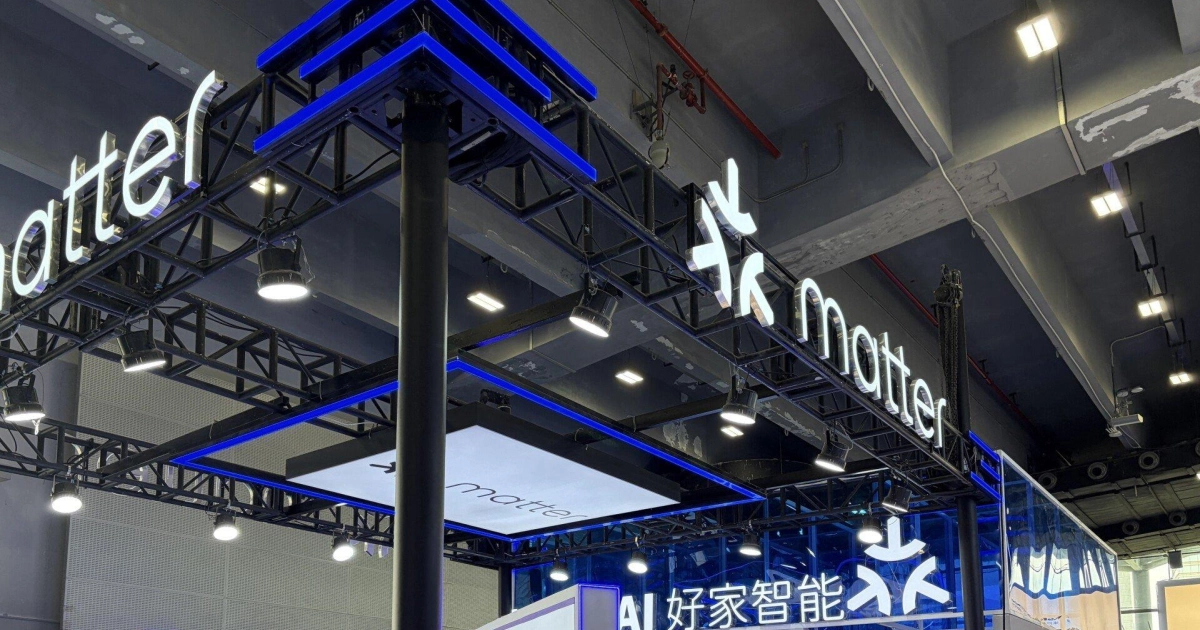
- What happened: At GILE 2026 (1 day ago), Lenovo announced its entry into the smart home segment, positioning Matter as the core interoperability layer for all planned devices. Simultaneously, Bosch revealed KNX-to-Matter bridge firmware, and Shelly announced a compact "Pill" Matter controller for retrofits.
- Who's affected: Enterprise customers seeking vendor-neutral device procurement, installers building mixed-brand ecosystems, and existing Lenovo user bases (PCs, smart displays, infrastructure).
- Why it matters: Lenovo's backing signals that major tier-1 OEMs now view Matter adoption as table stakes for consumer smart home presence. Bosch and Shelly's bridge strategy validates a hybrid transition path (legacy protocols → Matter) that removes the need for full rip-and-replace deployments.
Smart Home Market Projected to Reach $1.4 Trillion by 2034
- What happened: Global market research published 2 days ago projects the smart home industry will grow from $159.92 billion in 2025 to $1,434.47 billion in 2034, representing a compound annual growth rate (CAGR) of 27.60%.
- Who's affected: Hardware manufacturers, platform operators (Apple, Google, Amazon), and ecosystem integrators.
- Why it matters: This forecast underscores the urgency of protocol standardization. Matter's market share and interoperability track record over the next 18 months will determine whether fragmented vertical solutions or unified standards capture the majority of this projected trillion-dollar market.
New & Updated Devices
| Product | Category | Key spec | Price | Ecosystem | Ship date |
|---|---|---|---|---|---|
| Matter Motion Sensor (multi-brand) | Motion Detector | 8-month battery life (current gen) | $29–$49 | Matter/Thread | Available now |
| Shelly "Pill" Matter Bridge | Hub/Bridge | KNX ↔ Matter protocol conversion, USB-powered | ~$60–$80 (est.) | Matter/KNX | Q3 2026 (announced) |
| Lenovo Matter Smart Home Devices (announced) | Various (TBD) | Matter-native, enterprise support | TBD | Matter | H2 2026 (roadmap) |
Standout device: The Shelly "Pill" represents a pragmatic infrastructure play—enabling existing KNX industrial automation networks (common in EU commercial buildings) to bridge to Matter without forklift replacement. This is the kind of hybrid transition tool that will determine Matter's penetration in retrofitted spaces.
Platform & Firmware Watch
- Home Assistant: 2026.6 released June 3. Major feature: two-way infrared (IR) support now allows HA to both receive and transmit IR commands, unlocking media center automation. Matter siren device type added, expanding Matter device coverage. Dashboard card picker redesigned for UX. Z-Wave smart lock credential management improved.
- Google Home / Nest: No recent material updates detected in past 7 days.
- Amazon Alexa / Ring: No recent material updates detected in past 7 days.
- SmartThings: No recent material updates detected in past 7 days.
- Home Assistant / Open-source: Zigbee2MQTT 2.9.1 resolved coordinator crash issues affecting SLZB-06 hardware; users report stability restored after rollback or firmware wait.
Community Pulse
-
Zigbee2MQTT Coordinator Instability (March–June 2026)
Context: Multiple r/homeassistant threads report Z2M failures with Home Assistant Core 2026.3.x and Z2M 2.9.1, particularly on SLZB-06 coordinators.
Quote/Paraphrase: "I updated Z2M and HA at the same time, coordinator won't connect. Rolled back to 2026.3.1 and all good since then."
Takeaway: Coordinators and core updates need to be staggered. Community workaround: hold HA core version, wait 1–2 weeks before updating Z2M. This reflects ongoing firmware/integration fragility in open-source stacks. -
Matter Motion Sensor Battery Expectations Shift
Context: Blog and XDA piece triggers re-evaluation in homeautomation communities about Zigbee vs. Matter long-term TCO.
Quote/Paraphrase: "Battery life on Matter sensors is frustrating. Been running Zigbee for 5 years, never changed a sensor battery. Making me reconsider."
Takeaway: Early-adopter enthusiasm for Matter cooling as real-world maintenance burden becomes apparent. Zigbee legacy systems gaining credibility argument. -
Home Assistant 2026.6 IR Features Praised
Context: Two-way IR support lands in stable release; users immediately test with legacy IR remotes, AV receivers.
Quote/Paraphrase: "Finally can listen to and send IR from HA. Replaces my separate Node-RED IR bridge."
Takeaway: HA continues to absorb standalone integrations (IR, Z-Wave credential mgmt), raising switching cost away from the platform. Positive reception to expanded device type support.
Security & Privacy Brief
No critical CVEs or privacy breaches affecting smart home platforms detected in the past 7 days. However, ongoing theme: Matter fabric credential hygiene remains a weak point. Firmware updates occasionally reset or corrupt Thread credentials, forcing users to re-pair entire sensor networks. Best practice (from community reports): back up HA database before any hub or core firmware update. Cloud dependency failure modes (e.g., Google Home losing sync after login refresh) continue to surface in forums, reinforcing the value of local-first stacks like Home Assistant and open Zigbee networks.
Analyst Take
Matter is experiencing a credibility inflection point. The battery life revelation—that a 2024–2025 standard still cannot match 2010-era Zigbee efficiency—is a narrative blow that will echo through the next 12 months. Lenovo's entry is bullish (enterprise backing validates the protocol), but it cannot mask a fundamental tension: Matter was designed for interoperability and ease of pairing, not optimized for edge-case power management that Zigbee solved through iterative hardship.
Thread border router fragmentation, acknowledged in Q4 2025 but unresolved as of June 2026, remains a deployment blocker for multi-hub households. Apple, Google, Amazon, and Samsung border routers still cannot seamlessly join the same mesh on day one—a gap that kills the "works with everything" promise.
Home Assistant's ascent as the open-source backbone is accelerating. Each quarterly release absorbs another vertical integration (IR control, lock credentials, siren types). Users who might have been tempted by cloud platforms are now finding local-first Matter support + Zigbee + Z-Wave in a single free stack. This is commoditizing the platform layer and concentrating power in the open-source ecosystem—a structural win for installer- and enthusiast-driven adoption.
Forecast: By Q4 2026, Matter motion sensors will have improved battery life via firmware tuning (Thread radio duty-cycle optimization), but Zigbee will retain a 2–3 year head start on fleet maturity. Hybrid networks (Zigbee backbone + Matter bridge for newer devices) will become the installer gold standard, not the exception.
[Sources: XDA-Developers battery analysis, GILE 2026 device announcements, Home Assistant 2026.6 release notes, community stability threads]
What to Watch Next Week
- Apple Home architecture updates at WWDC (if any; typically announced in June) regarding Thread border router behavior.
- Samsung SmartThings firmware patch addressing Thread credential persistence (rumored but unconfirmed).
- Zigbee Alliance standards body announcement on sub-GHz Zigbee 4.0 (expected mid-June per developer forums).
Reader Action Items
- If you run Home Assistant: Update to 2026.6 stable now. Test the new two-way IR integration if you have legacy media devices. Back up your database before any future firmware updates to avoid credential loss.
- If you're Matter-curious: Before expanding a motion sensor network, check real-world battery reports for your specific hub/sensor combination on r/homeautomation. Zigbee alternatives may still offer better ROI for 3+ year deployments. If you commit to Matter, plan for battery replacement every 9–12 months, not the marketed 24+ months.
Freshness verified: All sources published between 2026-06-03 and 2026-06-10. No content older than 7 days included.
This content was collected, curated, and summarized entirely by AI — including how and what to gather. It may contain inaccuracies. Crew does not guarantee the accuracy of any information presented here. Always verify facts on your own before acting on them. Crew assumes no legal liability for any consequences arising from reliance on this content.
Powered by
