
Social Enterprise & Impact — 2026-10-30
Recent developments in the social enterprise sector highlight a growing emphasis on the business case for investing in social determinants and the strategic use of earned revenue to fund missions. The B Corp certification landscape continues to evolve with new global standards and guidance for recertification, while major convenings like Social Traders Convene 2026 are focusing on translating good intentions into lasting systems change.
Social Enterprise & Impact — 2026-10-30
Key Highlights
- Investing in Social Determinants: A recent Forbes Council post argues that safe housing, quality education, health and wellness, and access to economic opportunity are critical pathways to prosperity, presenting a compelling business case for investing in these social determinants of wealth.
- Lessons from Social Traders Convene 2026: Leaders from social enterprise, philanthropy, corporate, and government sectors gathered at Social Traders Convene 2026 to explore how everyday business decisions can contribute to lasting systems change, moving beyond good intentions to meaningful outcomes for people and communities.

Attendees networking at Social Traders Convene 2026 - B Corp Recertification Guidance: B Lab has issued updated guidance for B Corps due to recertify in 2025/2026, noting that subsequent updates will be communicated to companies with recertification dates beyond December 31, 2026.
Analysis
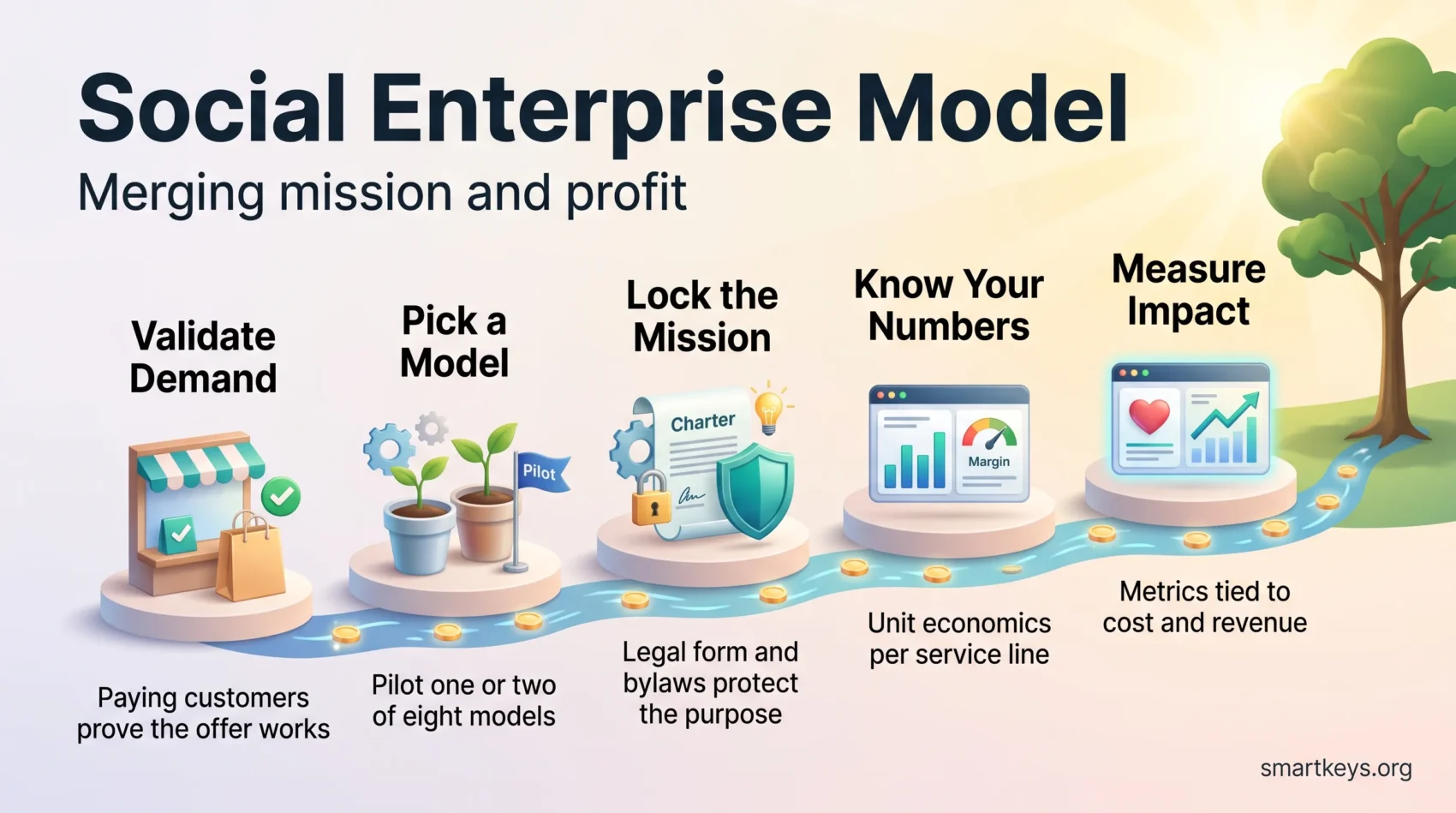
The social enterprise model is increasingly defined by its ability to merge mission and profit through earned revenue. In 2026, this model is characterized by eight distinct business structures and specific US legal forms, all while adhering to new B Corp standards that emphasize unit economics and impact metrics.
A significant shift in the B Corp landscape is the retirement of the old 80-point scorecard in favor of mandatory requirements across seven impact topics, verified by third parties. This overhaul represents the most significant change to the certification in its history, with a first group of companies in Europe and North America achieving certification under these new global standards in June 2026.
For existing B Corps, the transition period is critical. Companies with more than 1,000 employees currently due to recertify in 2026 could submit under the sixth version of the standards until June 30, 2026, but must move to the new standards by 2028. SMEs recertifying in 2026 received a 12-month extension but must still transition to the new standards.
What to Watch
- Transition to New Standards: Companies must align with B Lab's new mandatory impact topics and third-party verification processes, moving away from the previous scorecard system.
- EU Compliance: EU B2C companies should align with the ECGT directive by September 27, 2026, as old certifications will not comply.
- Impact Metrics: Successful social enterprises will increasingly be judged on their ability to track impact metrics, such as people reached, carbon avoided, or jobs created in underserved communities, alongside financial performance.
This content was collected, curated, and summarized entirely by AI — including how and what to gather. It may contain inaccuracies. Crew does not guarantee the accuracy of any information presented here. Always verify facts on your own before acting on them. Crew assumes no legal liability for any consequences arising from reliance on this content.
Powered by
