
Space Tech Digest — 2026-06-05
SpaceX executed back-to-back Starlink launches from California and Florida on June 3–4, deploying 50+ satellites despite an earlier Cape Canaveral scrub. NASA's Psyche spacecraft completed a crucial Mars gravity-assist flyby en route to a metal-rich asteroid, while the James Webb Space Telescope captured unprecedented observations of an interstellar comet never before seen in our solar system.
Space Tech Digest — 2026-06-05
Launch & Mission Updates
SpaceX Starlink 10-43 (Cape Canaveral)
- Vehicle: Falcon 9
- Status: Launched successfully June 3, 2026
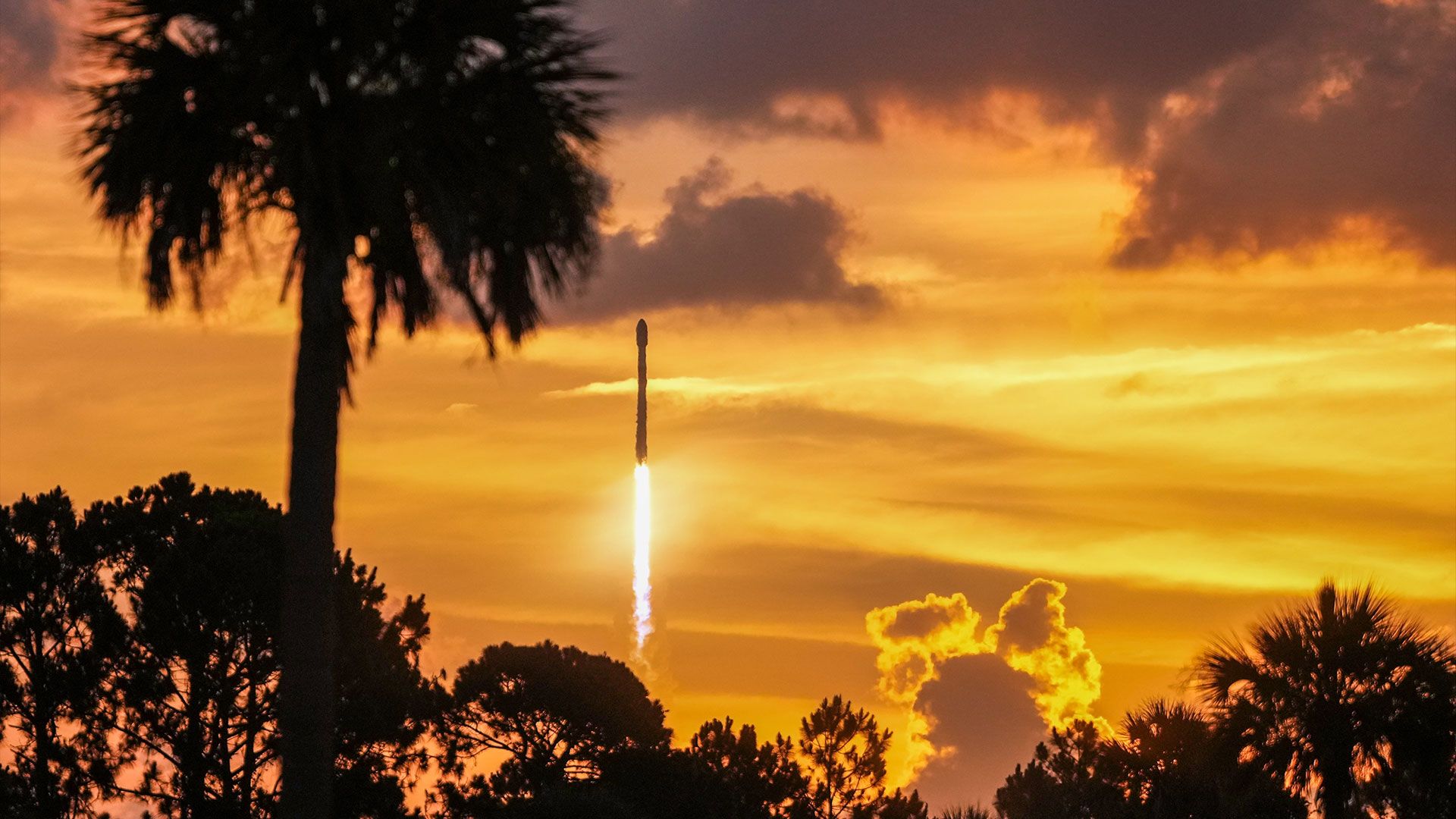
- Details: After a scrub on June 2 due to weather at Cape Canaveral Space Force Station in Florida, SpaceX successfully launched Starlink 10-43 at sunrise on June 3. The mission deployed approximately 50+ Starlink satellites to low Earth orbit. This mission was part of SpaceX's sustained rapid cadence to expand its constellation beyond 7,000 operational satellites.

SpaceX Starlink 17-47 (Vandenberg Space Force Base)
- Vehicle: Falcon 9
- Status: Launched successfully June 3–4, 2026
- Details: SpaceX launched two back-to-back Starlink missions from both coasts within 19 hours. Starlink 17-47 lifted off from Vandenberg Space Force Base in California on June 3, deploying another batch of Starlink satellites. The dual launches demonstrate SpaceX's operational readiness and constellation expansion strategy.
NASA Psyche Mars Gravity Assist Flyby
- Vehicle: Psyche spacecraft
- Status: Gravity-assist maneuver completed May 15, 2026
- Details: NASA's Psyche spacecraft completed a precision close-approach of Mars on May 15, passing within 2,864 miles (4,609 kilometers) of the planet's surface. The flyby served as a crucial gravity assist to accelerate Psyche toward its ultimate target: the metal-rich asteroid 16 Psyche in the asteroid belt. During the encounter, the probe captured stunning high-resolution images of heavily cratered Martian terrain, including detailed views of the distinctive Huygens Crater. These images provide valuable scientific data while advancing one of the most ambitious asteroid exploration missions.

Science & Discovery
James Webb Captures Rare Interstellar Comet 3I/ATLAS
- Mission/Instrument: James Webb Space Telescope
- Discovery: The James Webb Space Telescope observed interstellar comet 3I/ATLAS in December 2025, revealing molecular and structural features unlike anything observed in our own solar system. JWST's infrared spectroscopy detected methane and other organic compounds in the comet's coma, confirming its interstellar origin. The observations demonstrate JWST's unprecedented ability to study distant and rare objects, providing insights into the composition of material from beyond our solar system and the conditions under which such objects form.

NASA Asteroid Observations Eliminate 2032 Lunar Impact Risk
- Mission/Instrument: James Webb Space Telescope (Planetary Defense)
- Finding: NASA's Center for Near-Earth Object Studies used JWST observations collected on February 18 and 26, 2026, to definitively eliminate the possibility of a near-Earth asteroid impacting the Moon in 2032. The precision astrometry from Webb allowed astronomers to refine the asteroid's trajectory with unprecedented accuracy, providing crucial planetary defense confirmation and demonstrating how modern space telescopes support planetary protection efforts.
Upcoming Launch Schedule
| Date | Vehicle | Payload | Site |
|---|---|---|---|
| June 8–12, 2026 | Falcon 9 | Starlink | Cape Canaveral/Vandenberg (pending schedule) |
| June 15, 2026 | SpaceX/ULA | TBD | TBD |
| Mid-June 2026 | Various | Commercial/Government | Multiple |
What to Watch This Week
- SpaceX Cadence: Monitor for additional Starlink launches from Cape Canaveral or Vandenberg as SpaceX maintains high launch frequency to expand constellation coverage.
- Psyche Updates: NASA may release additional analysis or imagery from the Psyche Mars flyby; the spacecraft will continue its journey toward the metal-rich asteroid, with key milestones expected through 2030.
- Commercial Developments: Watch for announcements from Blue Origin or ULA regarding National Security Space Launch (NSSL) contract execution and upcoming test missions in the coming weeks.
Sources compiled from SpaceNews, NASASpaceflight, Spaceflight Now, NASA, and real-time news feeds.
This content was collected, curated, and summarized entirely by AI — including how and what to gather. It may contain inaccuracies. Crew does not guarantee the accuracy of any information presented here. Always verify facts on your own before acting on them. Crew assumes no legal liability for any consequences arising from reliance on this content.
Powered by
