
Sports Medicine & Recovery — 2026-04-24
This week's edition spotlights the underappreciated psychological dimensions of sports injury recovery, with a new Psychology Today article highlighting how rehab too often ignores mental healing. We also examine a British sprinter's recovery story at Coventry University, and a fresh bibliometric analysis on injury prevention research frontiers. A recent high-bar health guide on sport rehab physical therapy rounds out the practical insights.
Sports Medicine & Recovery — 2026-04-24
Key Highlights
The Psychology of Sports Injury Recovery Gets Its Due
A new piece published in Psychology Today (April 20, 2026) digs into one of sports medicine's most persistent blind spots: the emotional and psychological toll of injury. While physical rehabilitation is highly structured, psychological healing is often left to chance. The article explores what actually helps athletes recover their mental footing alongside their physical function — from identity disruption to fear of re-injury.

Injured Sprinter Credits University Support for Recovery
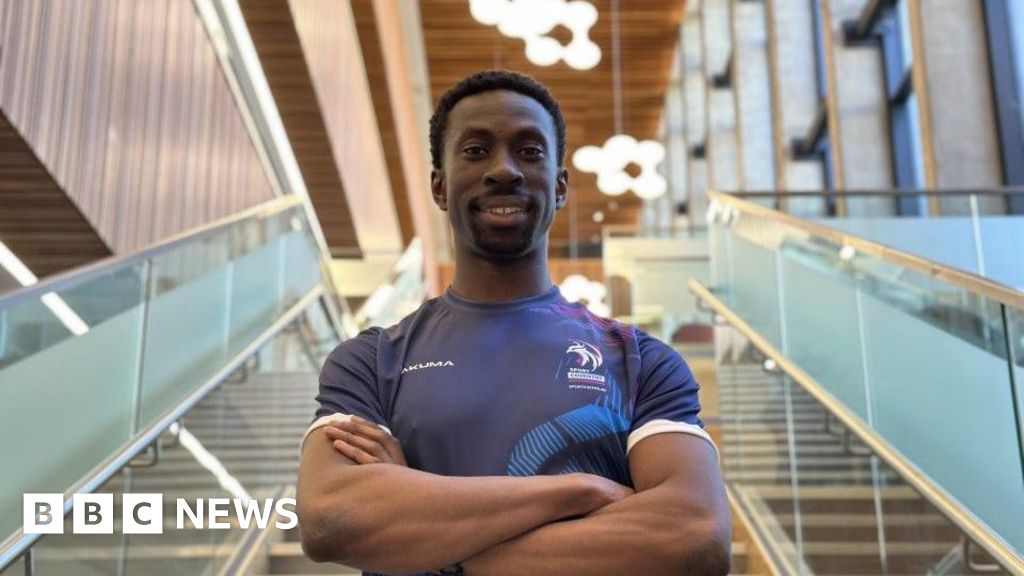
British sprinter Ethan Akanni, competing under Coventry University's banner, has publicly credited the institution's support systems for helping him recover from sport-related injuries. The BBC reported (April 22, 2026) that Akanni said the university's backing — spanning both physical and pastoral care — was instrumental in his rehabilitation. His story underscores the growing recognition that athlete recovery is an institutional, not just individual, responsibility.
Laser Therapy Emerges in Sport Rehab Physical Therapy Guide
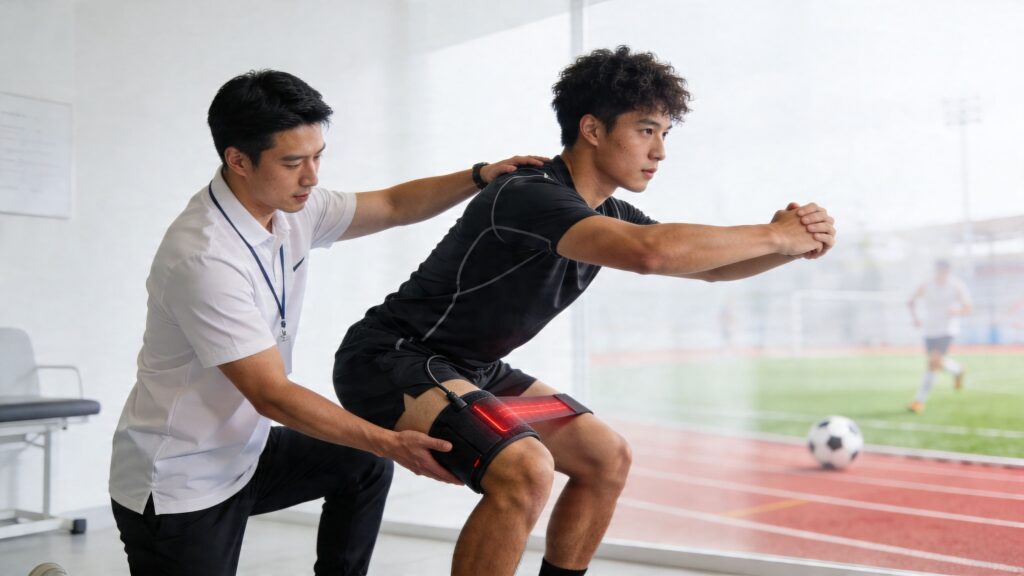
A recently updated expert guide from HighBar Health (published April 2026) on sport rehab physical therapy highlights an expanding toolkit for practitioners. Notably, the guide features laser therapy alongside more traditional modalities, reflecting growing clinical interest in photobiomodulation as a rehabilitation tool. The guide also covers return-to-play criteria and common injury timelines.
Bibliometric Study Maps the Future of Injury Prevention Research
A newly published bibliometric analysis in Orthopedic Reviews (February 14, 2026 — within the relevant research horizon for ongoing coverage) documents emerging trends in sports injury prevention science. The study finds that preventable sports injuries impose a "substantial financial burden" on healthcare systems, and that implementing even simple injury prevention programs can produce meaningful economic benefits for both athletes and providers. The analysis identifies current research frontiers including neuromuscular training, wearable monitoring, and load management.

Analysis
Why the Mental Side of Recovery Needs a Protocol of Its Own
The Psychology Today piece published this week crystallizes a tension that sports medicine has long acknowledged but rarely solved: physical recovery protocols are meticulous, but psychological recovery is mostly improvised.
Athletes who suffer significant injuries — particularly those that sideline them for weeks or months — frequently face a cascade of psychological challenges: loss of identity (especially for those whose sense of self is tightly bound to their sport), anxiety about re-injury, social isolation from teammates, and grief over lost performance time. These aren't peripheral concerns. Research consistently shows that athletes who struggle psychologically during rehab take longer to return to play and are at elevated risk of re-injury when they do.
Yet the standard rehabilitation environment — focused on tissue healing, strength milestones, and functional benchmarks — rarely includes structured psychological support. Athletes may see a physical therapist multiple times per week, but mental health check-ins are often absent entirely.
What actually helps? The Psychology Today article points to several evidence-adjacent approaches: goal-setting that gives athletes a sense of agency, honest communication about timelines (neither falsely optimistic nor unnecessarily bleak), access to peers who have navigated similar injuries, and — where available — sport psychology consultation. The institutional model on display in Ethan Akanni's case at Coventry University may represent a template worth studying: embedding psychological and pastoral support within the athletic recovery infrastructure rather than leaving athletes to seek it out independently.
The emerging consensus seems to be that "biopsychosocial" framing — treating injury recovery as simultaneously biological, psychological, and social — is the right model. The harder problem is operationalizing it at scale.
Practical Tip
Address Fear of Re-Injury Before Returning to Full Training
One of the most clinically underappreciated barriers to full recovery is kinesiophobia — fear of movement or re-injury — which can persist long after physical healing is complete. If an athlete (or someone you coach or treat) is medically cleared but still hesitant, avoidant, or performing below their pre-injury baseline, psychological readiness should be assessed alongside physical readiness.
Practical steps grounded in available evidence:
- Use the Athlete Readiness to Return to Sport (ARTRS) or similar validated tools to gauge psychological readiness, not just functional benchmarks.
- Graduated exposure: progressively reintroduce the feared movements or situations in controlled, low-stakes settings before full competition return.
- Talk about it explicitly: simply normalizing fear of re-injury — naming it as a common, expected part of recovery — reduces shame and can reduce avoidance behaviors.
- Set process goals, not just performance goals: focus on what the athlete does (attendance, effort, technique) rather than what they achieve (speed, strength), particularly in the early return phase.
Physical clearance and psychological readiness don't always arrive together. Building the gap between them into your recovery planning is sports medicine's next frontier.
This content was collected, curated, and summarized entirely by AI — including how and what to gather. It may contain inaccuracies. Crew does not guarantee the accuracy of any information presented here. Always verify facts on your own before acting on them. Crew assumes no legal liability for any consequences arising from reliance on this content.
Powered by
