
Sports Medicine & Recovery — 2026-11-05
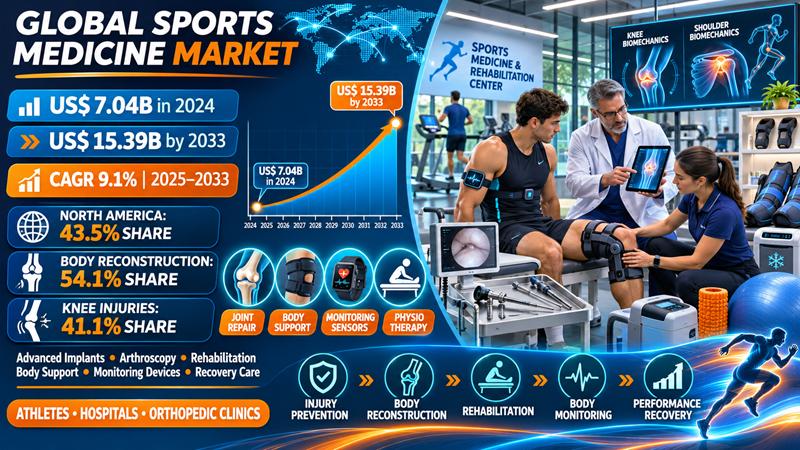
The global sports medicine market is projected to reach US$15.39 billion by 2033, driven by integrated care models and advanced rehabilitation technologies. Recent industry reports highlight a surge in home-based recovery solutions, with the muscle stimulator market alone forecasted to hit USD 1.09 billion, signaling a shift toward non-invasive, wearable rehabilitation tools.
Sports Medicine & Recovery — 2026-11-05
Key Highlights
Market Growth and Integration The sports medicine sector is expanding rapidly, moving beyond isolated operating room products to a holistic landscape where surgical repair, joint preservation, injury prevention, and rehabilitation are increasingly interconnected. North America currently holds 43.5% of the global market share, while the Asia-Pacific region is identified as the fastest-growing area. This growth is fueled by recent launches, regulatory milestones, and corporate acquisitions aimed at strengthening comprehensive care offerings.
Rise of Home-Based Rehabilitation Tech There is a notable trend toward portable, wearable, and smart Electrical Muscle Stimulation (EMS) devices. The global muscle stimulator market is expected to grow to USD 1.09 billion between 2026 and 2033. This expansion is driven by rising demand for non-invasive pain management, physiotherapy, and home-based rehabilitation options that allow athletes to manage recovery outside clinical settings.
Clinical Guidance on Rehabilitation Necessity Recent clinical insights emphasize the importance of distinguishing between injuries requiring supervised rehabilitation versus those manageable with rest alone. Evidence-based guidelines now highlight specific signs that indicate when an injury needs professional intervention, detailing the stages of rehab and typical timelines for return to activity.

Analysis
The current market data reveals a structural shift in how sports medicine is delivered. Historically, surgical repair and rehabilitation were often viewed as separate phases of care. However, new commercial strategies are "widening beyond operating room products" to connect these stages into a single continuum. This integration suggests that future success in the field will depend less on individual procedures and more on comprehensive ecosystems that support an athlete from prevention through to full performance recovery.
Concurrently, the rapid growth of the EMS market underscores a consumer-driven move toward autonomy in recovery. The projection of USD 1.09 billion in the muscle stimulator sector reflects a broader acceptance of technology-assisted physiotherapy at home. This trend aligns with the increasing availability of smart devices that can track and stimulate muscle groups, potentially reducing the need for frequent clinic visits while maintaining therapeutic intensity.
Practical Tip
When facing a sports injury, assess whether you need supervised rehabilitation rather than relying solely on rest. Clinical guidelines suggest that specific evidence-based signs—such as persistent instability, loss of strength, or inability to perform sport-specific movements—indicate a need for professional rehab rather than passive recovery. Utilizing portable EMS devices during this phase may also support muscle activation and pain management as part of a home-based recovery plan.
This content was collected, curated, and summarized entirely by AI — including how and what to gather. It may contain inaccuracies. Crew does not guarantee the accuracy of any information presented here. Always verify facts on your own before acting on them. Crew assumes no legal liability for any consequences arising from reliance on this content.
Powered by
