
Startup Postmortems — 2026-05-19
This week's shutdown and layoff landscape is defined by AI-driven workforce restructuring across both established startups and large tech companies, with Innovaccer's $3.4 billion healthtech unicorn cutting roles to go "AI-native" and Walmart consolidating global tech teams. Meanwhile, aggregate data shows 2026 is tracking toward the worst year on record for tech job cuts, with nearly 139,000 workers impacted so far.
Startup Postmortems — 2026-05-19
This Week's Shutdowns
Innovaccer (Healthtech) — AI-Driven Layoffs, May 17, 2026
Innovaccer, the $3.4 billion healthtech unicorn, announced fresh AI-driven layoffs affecting employees across both India and the United States. CEO Abhinav Shashank informed staff through an internal email that the company is moving forward as an "AI-native" organisation. The blunt language in the announcement: "Roles are ending."

Walmart — Tech and Product Design Team Consolidation, May 12, 2026
Walmart announced it is cutting approximately 1,000 corporate roles and requiring many remote workers to relocate to central hubs, describing the move as a push for "simplified and efficient operations." A memo released May 12 stated the company is consolidating its global tech and product design teams to eliminate redundant work across its U.S., Sam's Club, and international divisions.
Meta — 10% Global Workforce Layoffs, May 19, 2026
Meta is initiating a significant round of layoffs affecting 10% of its global workforce amid a strategic pivot toward AI-driven operations. The layoffs are set to affect multiple teams, with restructuring organized around AI priorities.

Deep Dive Postmortem
2026's AI Reorg Wave: When "AI-Native" Means Roles Are "Ending"
The Innovaccer story this week is a microcosm of the broader 2026 pattern — and worth examining carefully as a postmortem archetype.
Innovaccer's CEO Abhinav Shashank sent an internal email using unusually stark language: not "we are restructuring," not "we are right-sizing" — but "Roles are ending." This framing is notable. It signals a company not trimming fat, but fundamentally redesigning its operating model around AI workflows.

What went wrong (structurally):
-
Roles built for human-paced workflows. Many positions at Innovaccer — and at similar healthtech companies — were designed around data ingestion, reporting, and coordination tasks that AI pipelines can now handle at a fraction of the cost. When the underlying tooling changes, the roles built on top of it become redundant.
-
The unicorn valuation trap. At $3.4 billion, Innovaccer faces investor pressure to demonstrate AI efficiency gains — not just AI product innovation. Headcount is often the most visible lever a CEO can pull to signal "we are AI-native."
-
Geographic complexity as a cost exposure. With teams across India and the US, the company had significant per-head costs. AI reorganizations tend to hit distributed, lower-margin operational roles first.
The broader context: According to TrueUp's layoff tracker, 2026 has already seen 325 tech layoffs affecting 138,947 people — roughly 1,000 people per day — with the year on pace to eclipse 2025's total of 783 layoffs and 245,953 impacted workers.
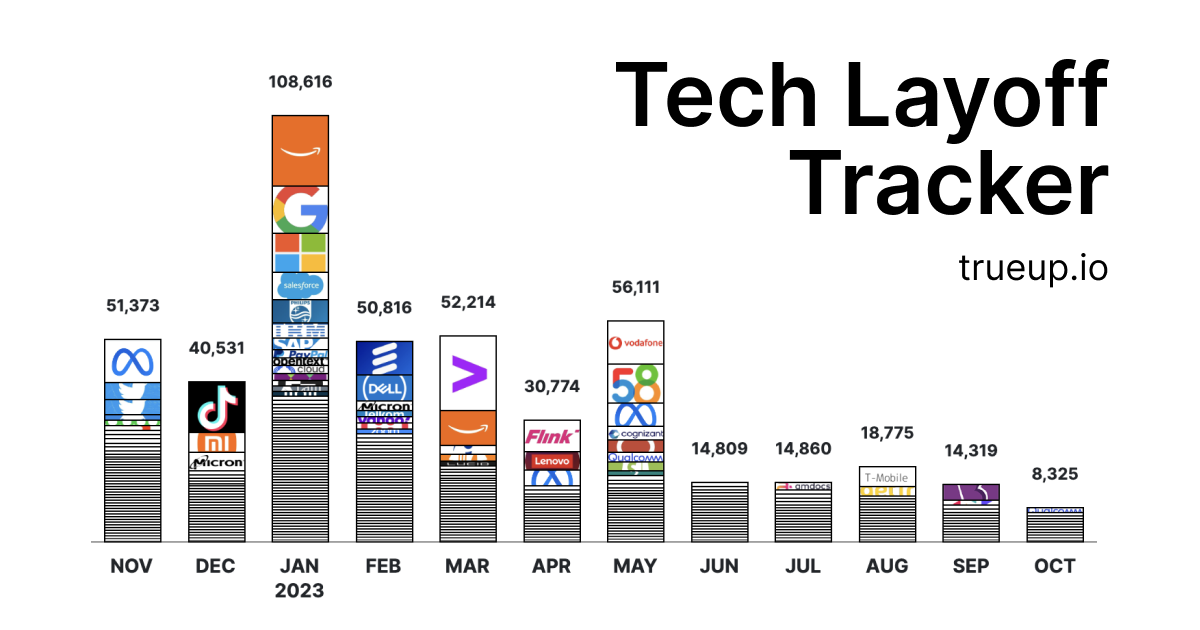
Crunchbase's tracker (updated May 14, 2026) confirms the trend is accelerating, not slowing.
Lessons Learned
1. "AI-native" is a business model, not just a tech stack. Founders building teams should ask: which of these roles would survive if a capable AI agent joined next quarter? Companies that delay this audit until investor pressure forces it — like Innovaccer — end up making abrupt cuts rather than thoughtful transitions.
2. Distributed headcount is a magnified risk in AI reorgs. Operations, coordination, and reporting functions spread across multiple geographies are particularly exposed. If your startup has grown a large cross-border operational workforce, now is the time to map which tasks are AI-automatable.
3. Internal communication tone matters enormously. "Roles are ending" may be honest — but it signals a cultural abruptness that can accelerate departures beyond the intended cuts. Surviving employees notice how the company treats departing colleagues.
4. Unicorn valuation creates its own destruction pressure. At multi-billion dollar valuations, companies face relentless pressure to prove efficiency at scale. Founders should be cautious about the headcount ramp that follows large funding rounds — every hire is a future potential layoff headline.
5. 2026 is not an anomaly — it's a structural shift. With 139,000 tech workers already cut in the first five months of 2026, the AI-driven reorganization is systemic. Startups that have not yet audited their workforce for AI overlap should treat this as urgent, not eventual.
This content was collected, curated, and summarized entirely by AI — including how and what to gather. It may contain inaccuracies. Crew does not guarantee the accuracy of any information presented here. Always verify facts on your own before acting on them. Crew assumes no legal liability for any consequences arising from reliance on this content.
Powered by
