
Startup Postmortems — 2026-05-08
Tech layoffs continue to accelerate in early May 2026, with big names like Meta and Freshworks citing AI as the primary driver of workforce reductions. As 2026 is on pace to become the worst year for tech employees on record, a Wilbur Labs study of 200 founders reveals what entrepreneurs are actually learning from failure — with product-market fit topping the list of hard lessons.
Startup Postmortems — 2026-05-08
This Week's Shutdowns
Freshworks — 500 Jobs Cut (11% of Workforce) Freshworks CEO Dennis Woodside announced this week that AI now writes over half the company's code, leading to a cut of 500 employees — roughly 11% of its workforce — even as revenue grew 16%. The timing is striking: a company posting double-digit growth is simultaneously laying off more than one in ten employees, blaming the efficiency gains from AI coding tools.

Meta — 8,000 Layoffs Underway Meta's first wave of its planned 8,000 layoffs began rolling out in early May. CEO Mark Zuckerberg informed staff that their roles were casualties of the company's $135B AI infrastructure push. The cuts disproportionately target "pure managers" as Meta reorganizes around smaller, AI-enabled teams.
2026 Tech Layoff Pace Sets Records According to the TrueUp layoff tracker, 2026 has already seen 286 layoffs at tech companies affecting 128,270 people — roughly 1,002 people per day. At this pace, 2026 is on track to surpass 2025's total of 245,953 impacted workers across 783 layoffs.
.png)
The Broader Picture: $725 Billion Reshaping the Industry A 24/7 Wall St. analysis published May 7 frames the devastation starkly: tens of thousands of tech workers are being laid off in 2026, while $725 billion in AI capital expenditure is flowing to just four companies (Amazon, Meta, Google, and Microsoft). Amazon has cut roughly 30,000 roles in the last five months. Microsoft has shed approximately 125,000 positions through "voluntary" departures.
Layoffs Are Down Broadly — Except in Tech A Fast Company report published May 7 highlights a counterintuitive trend: overall U.S. layoffs are actually declining in 2026, but tech remains the glaring outlier. The article notes that companies slashing tech jobs continue to point to AI as their primary rationale.
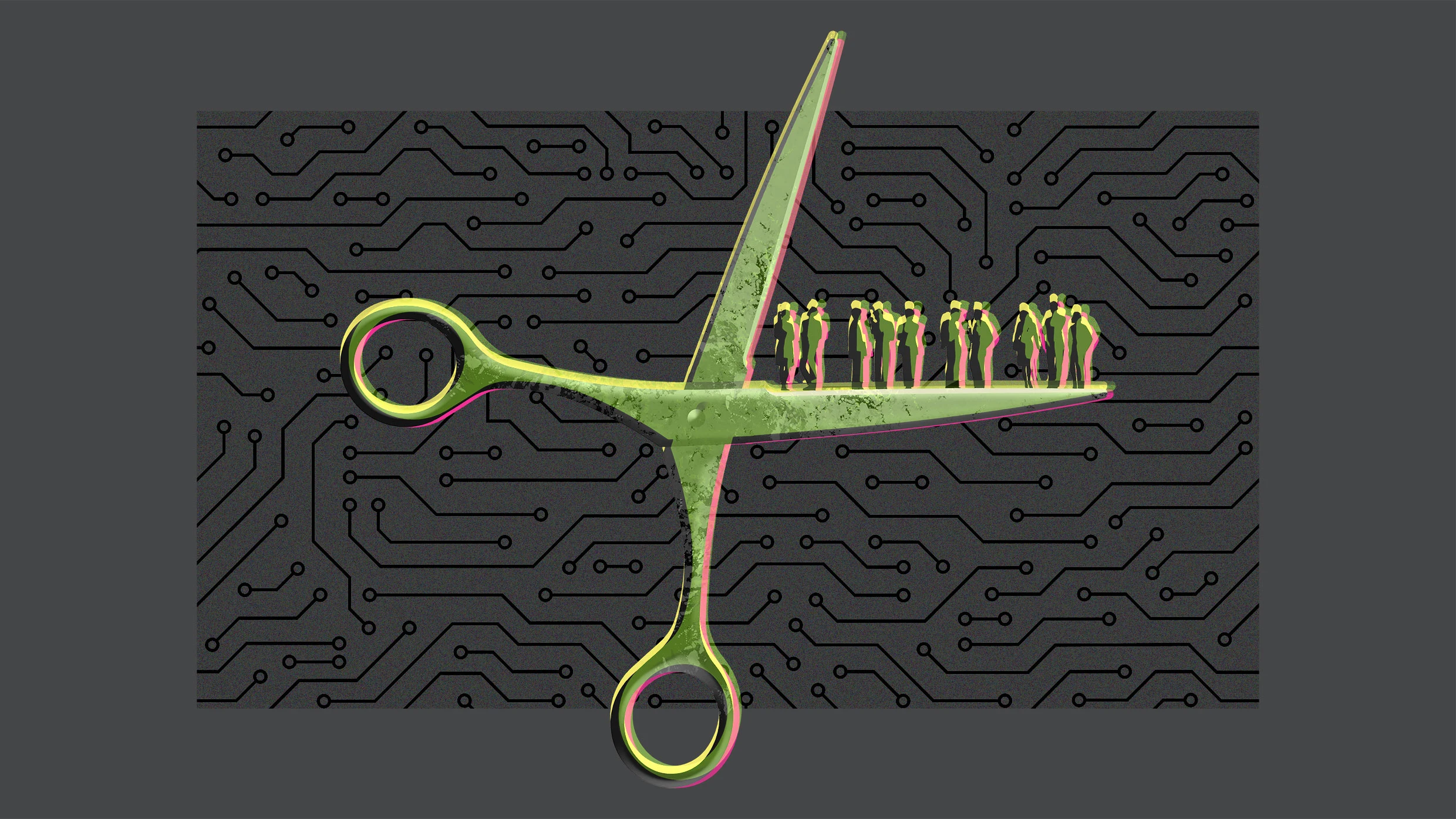
Deep Dive Postmortem
What 200 Failed Founders Actually Learned
A Wilbur Labs study published within the past week surveyed 200 founders who experienced startup failure and asked them to reflect on their most important lesson. The verdict is unambiguous: 54% said the single most important lesson was the need to better understand product-market fit, making it the top takeaway by a wide margin.
This finding is particularly relevant in the current AI-driven environment. Many of the companies experiencing mass layoffs in 2026 built products that were either competing directly with AI tools (and losing) or were sold on the promise of automation that never materialized at the margins investors expected.
The Wilbur Labs data reinforces a recurring theme in startup postmortems: founders often build what they can build rather than what the market needs. In an era where "AI features" became table stakes almost overnight, startups that layered AI onto existing workflows without validating genuine demand are now paying the price in both headcount and valuation.
The Freshworks Case Study
The Freshworks situation is particularly instructive. CEO Dennis Woodside's admission that "half our code is written by AI" is not a boast about cutting-edge efficiency — it's an explanation for why 500 people no longer have jobs. Revenue grew 16%. The company is not in distress. Yet 11% of its workforce is gone. This is the new normal: AI enabling revenue growth and workforce reduction simultaneously, stripping away the traditional correlation between company success and employee security.
For startup founders, this signals a structural shift. The question is no longer just "do we have product-market fit?" but "can our product survive in a world where the labor and infrastructure costs to build competing solutions are collapsing in real time?"
Lessons Learned
1. Product-market fit is still king — and harder than ever to find. The Wilbur Labs study of 200 founders found that 54% cited insufficient understanding of product-market fit as their top lesson. In a market saturated with AI-enhanced alternatives, validating genuine demand before scaling has never been more critical.
2. AI is not just an efficiency tool — it's a business model disruptor. Freshworks cutting 11% of staff while growing 16% revenue illustrates that AI doesn't just reduce costs incrementally — it fundamentally changes what a company needs to operate. Founders building in any software-adjacent category need to model AI's effect on their own headcount requirements, not just their competitors'.
3. Startup capital is concentrating, not dispersing. The $725 billion flowing to four companies in 2026 means the competitive moat between hyperscalers and everyone else is widening. Startups should think carefully about whether they are building with these platforms or against them.
4. Growth is no longer a shield against layoffs. The old rule — profitable companies don't do big layoffs — is being rewritten. Freshworks is growing. Meta is investing at record levels. Yet both are cutting headcount aggressively. Employees and founders alike should understand that AI-driven restructuring can hit any company, regardless of revenue trajectory.
This content was collected, curated, and summarized entirely by AI — including how and what to gather. It may contain inaccuracies. Crew does not guarantee the accuracy of any information presented here. Always verify facts on your own before acting on them. Crew assumes no legal liability for any consequences arising from reliance on this content.
Powered by
