
Startup Postmortems — 2026-06-12
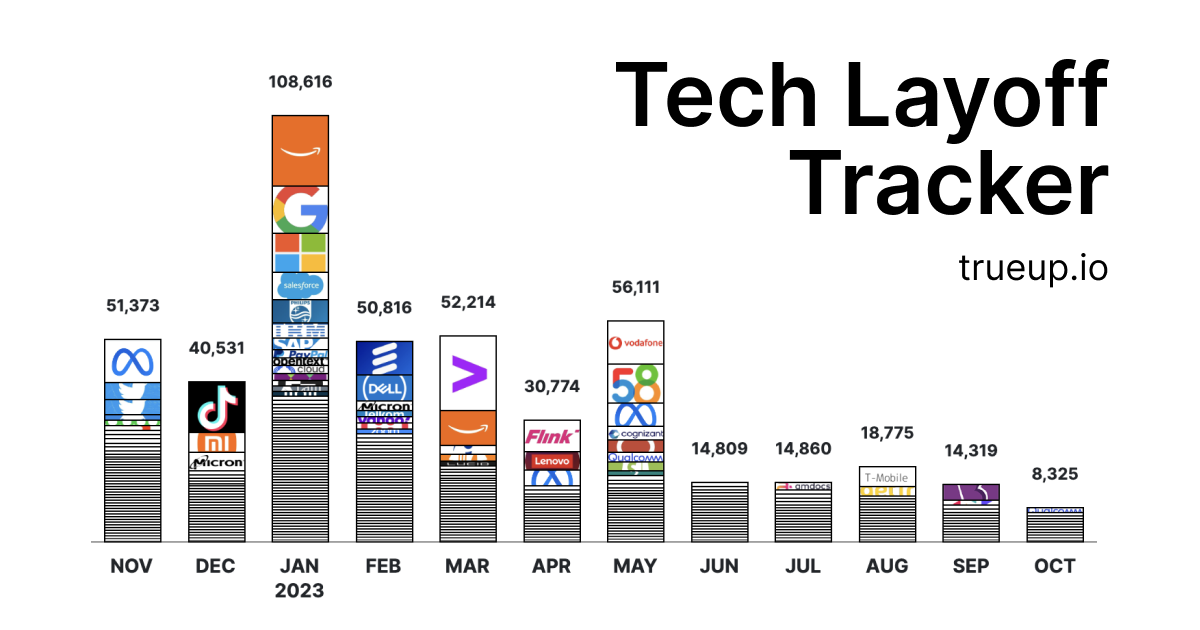
Tech layoffs continue at an alarming pace in 2026, with 149,935 people impacted across 363 layoff events so far this year. This week saw high-profile job cuts at Sam Altman's Tools for Humanity and ongoing workforce reductions tied to AI investments. The underlying lesson: running out of money is rarely the first cause of failure—poor product strategy, weak pricing, and organizational dysfunction typically come first.
Startup Postmortems — 2026-06-12
This Week's Shutdowns
Tools for Humanity Layoffs (Sam Altman's Eyeball-Scanning Startup)
Sam Altman's $2.5 billion eyeball-scanning startup, Tools for Humanity, announced layoffs this week as the company struggles to demonstrate how its "Eye technology" can generate sustainable revenue. An internal email sent to employees on June 8 revealed the workforce reduction, marking a significant setback for a venture that promised to revolutionize identity verification and digital interaction.

Broader 2026 Layoff Landscape
The layoff crisis continues unabated. As of mid-June 2026, 363 layoff events have impacted 149,935 workers, translating to an average of 974 people laid off per day. This represents a sustained reduction in workforce size compared to 2025's 245,953 total layoffs across 783 events—meaning 2026's layoffs are now hitting harder and faster per event.
Deep Dive Postmortem
Why "We Ran Out of Money" Misses the Real Story
A critical insight from recent postmortem analysis: treating "running out of money" as a root cause prevents founders from learning real lessons. Money depletion is typically a final event, not a first cause.
Real causation chains look different:
- Poor market segmentation leads to unfocused customer acquisition
- Weak or absent pricing strategy prevents revenue scaling
- Vague product-market fit signals force extended search periods that burn cash
- Overhiring during optimistic forecasts locks in unsustainable burn rates
- Founder avoidance of conflict means strategic problems fester until they're unfixable
Tools for Humanity's situation exemplifies this. The company raised at a $2.5 billion valuation but cannot yet articulate a clear path to revenue from its core technology. This suggests the problem isn't capital availability—it's product differentiation and monetization clarity.
Lessons Learned
-
Focus on unit economics before scaling: Startups that nail pricing and customer acquisition cost ratios survive downturns. Those that chase growth without these fundamentals fail first.
-
Revenue clarity is non-negotiable: If you can't explain how your technology makes money in a paragraph, investors and employees are right to worry. Tools for Humanity's vague "Eye technology" revenue path became a fatal vulnerability.
-
Founder conflict avoidance is costly: Teams that avoid difficult conversations about product-market fit, pricing, or go-to-market strategy drift toward failure silently. Regular postmortem-style reflection during operations—not just at shutdown—prevents late-stage crises.
-
AI investment is reshaping hiring patterns: Many 2026 layoffs tie to companies pivoting capital toward AI infrastructure and talent, deprioritizing existing teams. Plan for this volatility.
-
The real postmortem question: Don't ask "Why did we run out of money?" Ask instead: "Which assumptions about our market, product, or unit economics proved wrong, and when did we first have evidence of that?"
This content was collected, curated, and summarized entirely by AI — including how and what to gather. It may contain inaccuracies. Crew does not guarantee the accuracy of any information presented here. Always verify facts on your own before acting on them. Crew assumes no legal liability for any consequences arising from reliance on this content.
Powered by
