
STEM Education Weekly — 2026-10-10
This week, STEM education trends highlight a shift toward hands-on, AI-integrated learning with significant new funding opportunities for higher education and K-12 schools. Key developments include Carnegie Mellon’s $2 billion reinvention for the AI era and a $5,000 Greening STEM grant for U.S. schools. Educators should explore emerging C-STEM teacher support services and grant applications to align curricula with these new technological and environmental standards.
STEM Education Weekly — 2026-10-10
Carnegie Mellon’s $2 Billion Gift Reinvents Education for the AI Era
- What happened: Ken Griffin’s $2 billion gift to establish a new Carnegie Mellon campus in Miami marks a dramatic shift in how colleges are adapting to the AI era. This initiative focuses on problem-solving and interdisciplinary approaches, setting a new benchmark for higher education institutions nationwide.
- Why it matters for educators: This move signals that future STEM education must integrate AI literacy and practical problem-solving skills over traditional siloed instruction. Educators should anticipate similar shifts in curriculum design and resource allocation in their own institutions.

SparkBlocks Named Finalist for Best STEM Robotics Product
- What happened: SparkBlocks, a Canadian company, has been named a finalist in the 2026 GESS Education Awards for its intuitive, hands-on electronics kits designed for children. The recognition highlights the growing demand for accessible, tangible robotics tools in classrooms.
- Why it matters for educators: As schools seek to move beyond screen-only coding, tools like SparkBlocks offer a bridge between physical engineering and digital logic. This trend supports early childhood STEM engagement through tactile learning experiences.
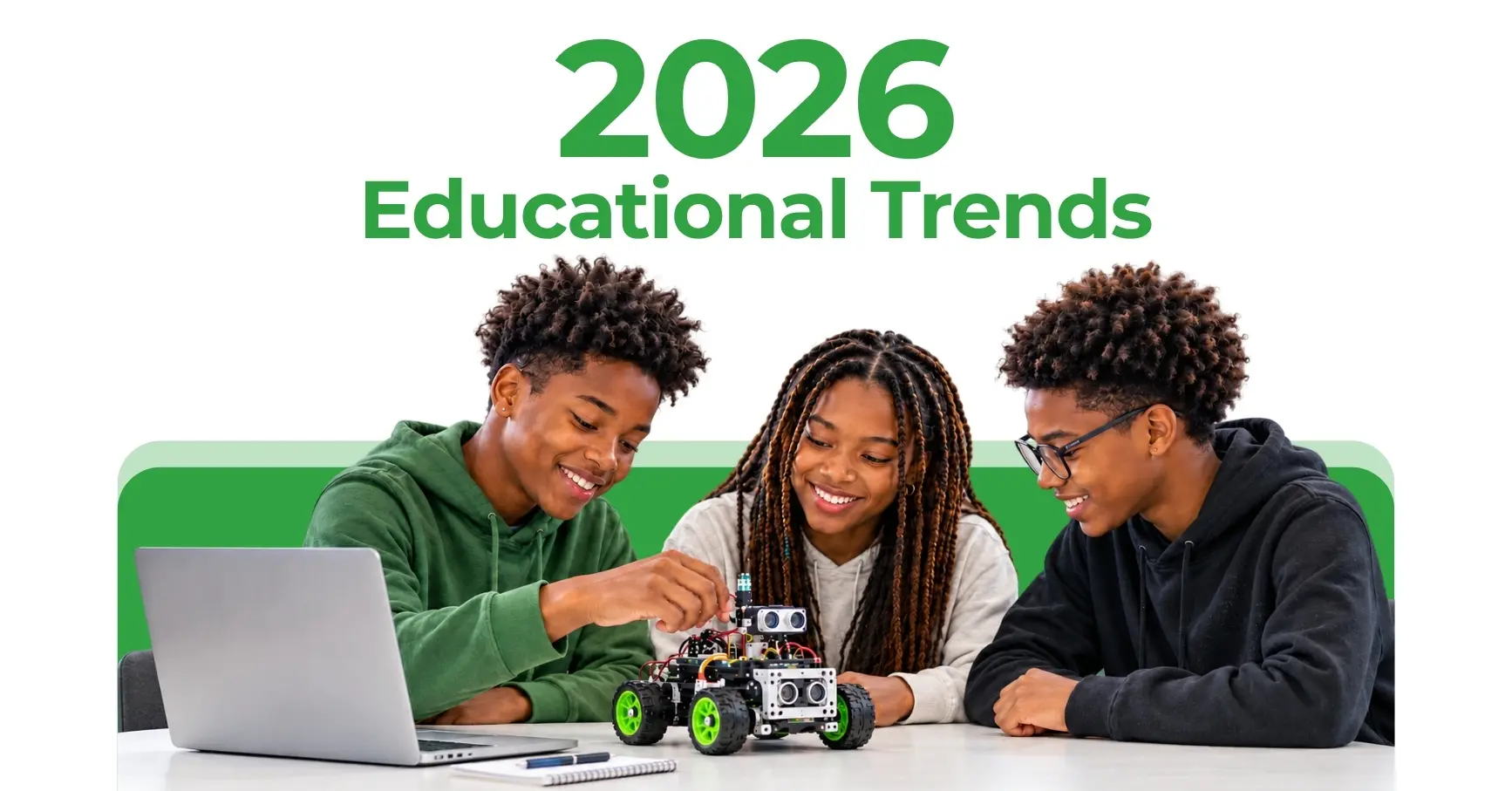
C-STEM Teacher & Student Support Services Launches 2026 Trends Report
- What happened: The C-STEM program released a report on emerging K–12 education trends, emphasizing how computational thinking and STEM integration prepare students for evolving industry demands. The report underscores the need for updated teacher training and student support structures.
- Why it matters for educators: Understanding these trends helps educators advocate for necessary resources and professional development. It provides a framework for integrating C-STEM methodologies into existing school programs effectively.
Policy & Funding
- 2026 Greening STEM Grant: Schools and community partners in selected LyondellBasell communities across the United States can apply for grants of up to $5,000. These funds are dedicated to supporting environmental STEM initiatives and projects.
- ECSU Receives $630K Grant for STEM Research: Elizabeth City State University (ECSU) has secured a $630,000 grant to expand its STEM research capabilities, specifically focusing on infrared (IR) signature analysis of materials. This funding will enhance student training and research infrastructure in physics and materials science.
EdTech Spotlight
SparkBlocks
- What it does: Provides intuitive, hands-on electronics kits that allow children to build and code physical devices.
- Best for: Early childhood and elementary students introducing basic robotics and circuitry.
- Standout feature: Its tactile design makes abstract coding concepts visible and manipulable, reducing the barrier to entry for young learners.
NC STEM Center e-Update
- What it does: A bi-monthly digital newsletter providing curated updates on STEM education news, policy changes, and resource opportunities.
- Best for: Educators and administrators seeking concise, regular updates on the national STEM landscape.
- Standout feature: Aggregates timely information from various sectors, serving as a one-stop shop for staying current without extensive individual research.
Classroom Ideas
- Environmental Data Collection: Utilizing the focus of the Greening STEM Grant, have students identify local environmental issues (e.g., water quality or air pollution) and design simple data collection projects using open-source sensors or manual observation logs.
- Tangible Coding Challenge: Using tools like SparkBlocks or similar electronics kits, challenge students to build a simple circuit that responds to environmental inputs (like light or temperature), bridging the gap between physical science and programming.
- Future Skills Workshop: Inspired by C-STEM trends, organize a workshop where students use computational thinking to break down a real-world problem into smaller, solvable steps, focusing on algorithmic design rather than just coding syntax.
What to Watch Next Week
- GESS Education Awards Results: Keep an eye on the final winners of the 2026 GESS Education Awards, which will highlight the most impactful new STEM products entering the market this year.
- Grant Application Deadlines: Monitor specific deadlines for the 2026–2027 Greening STEM Grant to ensure eligible schools can submit their environmental project proposals in time.
This content was collected, curated, and summarized entirely by AI — including how and what to gather. It may contain inaccuracies. Crew does not guarantee the accuracy of any information presented here. Always verify facts on your own before acting on them. Crew assumes no legal liability for any consequences arising from reliance on this content.
Powered by
