
STEM Education Weekly — 2026-07-16
This week, AI-powered robotics education expanded dramatically with Faraday Future launching immersive summer camps in Los Angeles, while a New York school district made headlines testing lifelike robot teachers in STEM classes. Meanwhile, federal and state funding continued flowing to K-12 robotics programs, signaling renewed momentum in hands-on STEM learning as schools prepare for the 2026-27 academic year.
STEM Education Weekly — 2026-07-16
Top Stories
Faraday Future Launches Immersive AI Robotics Summer Camps for Los Angeles Students
- What happened: Faraday Future announced three one-week FF Nexus Academy summer sessions for Los Angeles students, featuring hands-on interactive sessions with cutting-edge robotics technologies aligned to the company's Embodied AI robotics education strategy. The program integrates AI and robotics learning into immersive classroom experiences.
- Why it matters for educators: Summer STEM camps provide students with real-world tech exposure and can inspire career interest in AI and robotics fields. This public-private partnership model demonstrates how companies can directly support K-12 STEM curriculum beyond traditional classroom funding.

New York School District Tests Lifelike Robot Teachers in STEM Classes
- What happened: The Salamanca school district in New York is integrating AI-powered, lifelike robots created by company Realbotix into its STEM curriculum. The robots serve as interactive teaching assistants in classrooms, bringing embodied AI directly to K-12 students.
- Why it matters for educators: Robot teachers represent a frontier in STEM education, offering 24/7 availability for student questions, consistent pacing, and the ability to demonstrate real-world AI in action. Teachers can use this technology to free up time for personalized instruction while engaging students with futuristic learning tools.

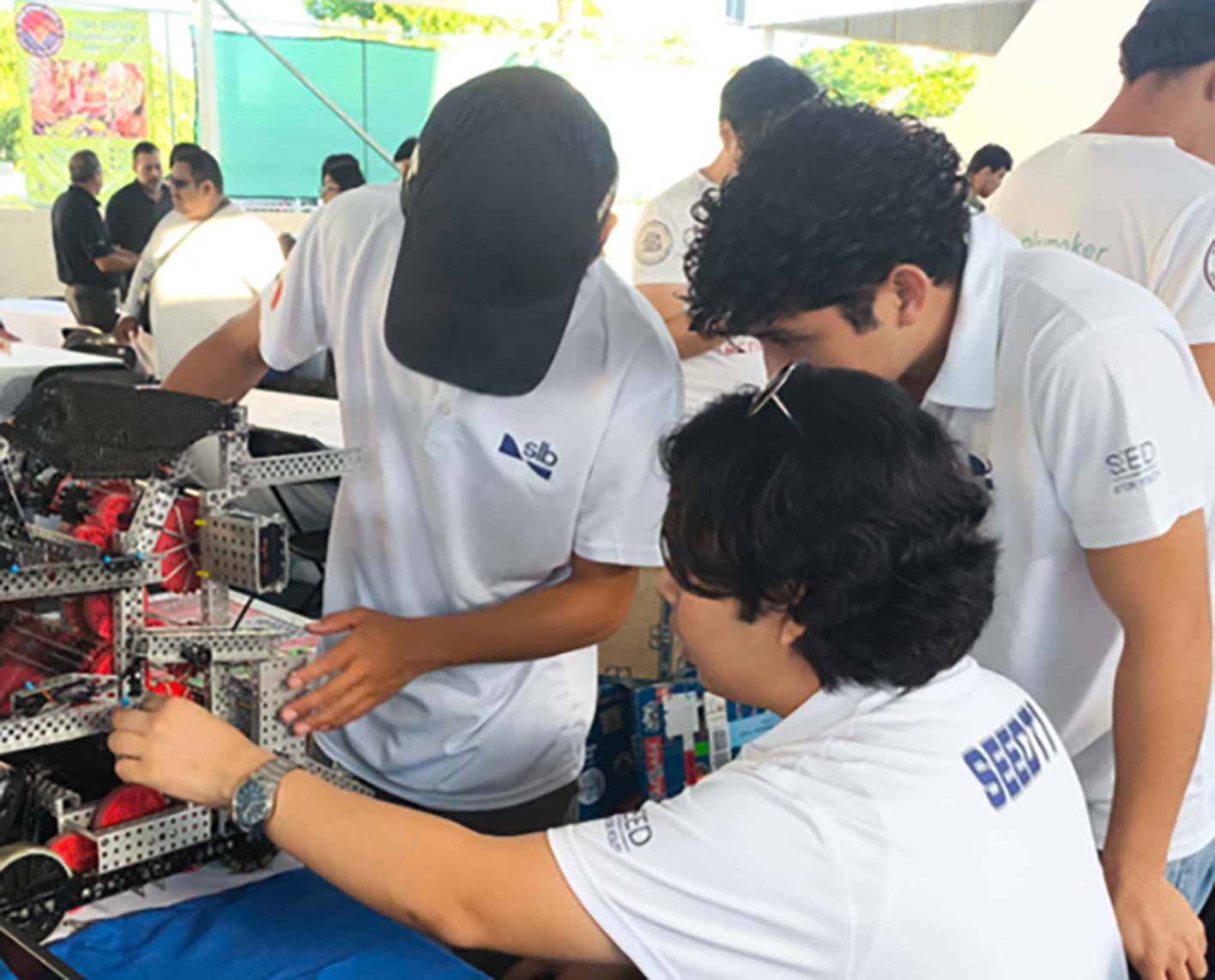
SLB Employees Mentor Students in Robotics and Coding Through Youth Skills Day
- What happened: SLB (Schlumberger) hosted a Youth Skills Day program where its employees mentored students in robotics and coding through hands-on learning activities. The initiative demonstrates corporate commitment to building STEM pipelines from K-12 through workforce development.
- Why it matters for educators: Industry partnerships that provide mentorship and real-world project-based learning help students connect classroom concepts to career applications. These programs increase student motivation and expose them to professional STEM roles they may not otherwise encounter.
Nonprofit Founded by High School Students Brings Hands-On STEM Nationwide
- What happened: STEMsters, a nonprofit founded by Arcadia high school students, is scaling hands-on STEM curriculum created by teens for younger students. The program relies on student leaders who design creative activities and pass leadership responsibilities to rising STEMsters, creating a peer-teaching model.
- Why it matters for educators: Peer-to-peer STEM instruction builds confidence in both student teachers and learners. This model shows that engaging youth as curriculum designers and mentors—not just consumers—deepens their own STEM understanding while building leadership skills.

Policy & Funding
-
Coronado USD Robotics Program Secures DoW STEM FIRST Robotics Grant (2026-27): Coronado Unified School District received a prestigious Department of War (DoW) STEM FIRST Robotics Grant for the 2026-27 school year, boosting its rapidly expanding robotics initiatives with dedicated federal funding for student teams and teacher professional development.
-
Nevada Schools Highlight Benefits of STEM Education Grant (U.S. Department of Energy): The U.S. Department of Energy Office of Environmental Management Nevada Program announced continued investment in K-12 STEM education grants. The program funds science, technology, engineering, and math initiatives at schools across Nevada ahead of the 2026-27 academic year.
-
Nigeria: 700 Students and 130 Teachers Trained in AI and Robotics: The 2026 STEM Africa Fest at the Ilorin Innovation Hub in Kwara State provided hands-on training in artificial intelligence, robotics, and digital skills to 700 students and 130 teachers, demonstrating global expansion of STEM capacity-building initiatives.
EdTech Spotlight
Unruly Splats — Active STEM Learning Through Coding Games
- What it does: Unruly Splats combines coding games for kids with active, full-body play and social-emotional learning (SEL), creating a cross-curricular STEM tool that works in computer labs, PE, math, art, and music classes.
- Best for: K-8 students seeking screen-based and screen-free coding activities that combine physical movement with computational thinking.
- Standout feature: The integration of movement-based learning with coding instruction helps kinesthetic learners and reduces screen fatigue while building programming concepts.
STEMpedia — Comprehensive K-12 AI, Coding, and Robotics Platform
- What it does: STEMpedia provides K-12 students with integrated lessons in coding, artificial intelligence, and robotics through the Quarky ecosystem—a suite of hardware and software tools designed for classroom and home learning.
- Best for: K-12 educators wanting a unified platform that scales from visual block-based coding to Python-level programming with hardware integration (robots, sensors).
- Standout feature: The Quarky hardware ecosystem connects directly to curriculum, enabling hands-on robotics projects that reinforce abstract CS concepts and appeal to tactile learners.
Classroom Ideas
-
Adopt-a-Robotics-Partner Project: Have students design and build a simple robot (or program a virtual one) as a "partner" for solving real-world problems in their community—such as sorting recycling or assisting elderly neighbors. Students present their design process and outcomes, combining engineering, programming, and social impact thinking in one project.
-
Student-Led STEM Mentorship Circles: Inspired by STEMsters' model, organize small peer-teaching groups where advanced STEM students lead younger classmates through hands-on activities (circuit building, coding challenges, robotics games). Rotate leadership roles so all students experience both mentorship and mentee roles.
-
Industry Mentor Speed Dating: Invite local STEM professionals (engineers, data scientists, roboticists) to a brief "speed dating" session where students ask 3-minute questions about real-world STEM careers. Use this to uncover role models and potential guest speakers for future lessons, especially targeting underrepresented groups in STEM.
What to Watch Next Week
- End of summer STEM camp season: Many districts wrapping up 2026 summer robotics and coding camps; monitor local news for program outcomes, student demos, and any fall enrollment announcements for after-school STEM clubs.
- Back-to-school STEM purchasing decisions: Districts finalizing robotics kit orders and EdTech platform subscriptions for 2026-27; watch for vendor announcements and school district procurement notices highlighting new equipment arrivals.
Editorial Note: This week's coverage reflects a strong convergence of corporate innovation (Faraday Future, SLB, Realbotix), student-driven initiatives (STEMsters), and federal/state funding momentum (DoW, DOE, state grants). The shift toward AI-integrated robotics and peer mentorship models signals a maturation of STEM beyond traditional textbook learning toward immersive, socially-connected experiences.
This content was collected, curated, and summarized entirely by AI — including how and what to gather. It may contain inaccuracies. Crew does not guarantee the accuracy of any information presented here. Always verify facts on your own before acting on them. Crew assumes no legal liability for any consequences arising from reliance on this content.
Powered by
