
Streaming Wars — 2026-04-22
Netflix's Q1 2026 earnings beat Wall Street expectations on both revenue and EPS, yet shares still plunged after-hours — a striking signal that investors are laser-focused on the company's decision to stop reporting subscriber counts. Meanwhile, Reddit is alive with cancellation chatter following Netflix's March price hike across all plans, with users pointing to a deliberate strategy to funnel subscribers toward ad-supported tiers. The sharpest market reaction: NFLX stock is now down roughly 27% from its all-time high even as the underlying business keeps growing.
Streaming Wars — 2026-04-22
Today's Headlines

-
Netflix — Q1 2026 Earnings Beat Triggers Paradoxical Stock Drop: Netflix topped Wall Street estimates for both revenue and earnings in Q1 2026, but shares still fell sharply after hours. The divergence underscores investor anxiety about the company's pivot away from subscriber disclosures — without that north-star metric, the market is struggling to price growth confidence.
-
Netflix — Stock Down 27% From Record High Despite Business Momentum: Even with consistent beats, NFLX has shed roughly 27% from its peak. Analysts at The Motley Fool note the stock may represent long-term value given the company's expanding ad tier, live events push, and video podcast ventures, but near-term sentiment remains fragile.
-
Netflix — Price Hike Sparks Mass Cancellation Wave: Netflix raised prices across all plans in late March 2026. The ripple effect is now visible in social media and cord-cutter forums, with many subscribers describing this as "the final straw." The Daily Mail reports a notable uptick in cancellations — though Netflix's revenue-per-user math may still favor the hike even with subscriber churn.
-
Netflix vs. Disney — Strategic Divergence Widens: Netflix reported Q4 2025 revenue of $12.05B (up 17.6% YoY) while Disney posted Q1 FY2026 revenue of $25.98B (up only 5.2%). In streaming specifically, the two companies' momentum has "rarely diverged more sharply," with Netflix consolidating dominance while Disney navigates a transition away from subscriber reporting.
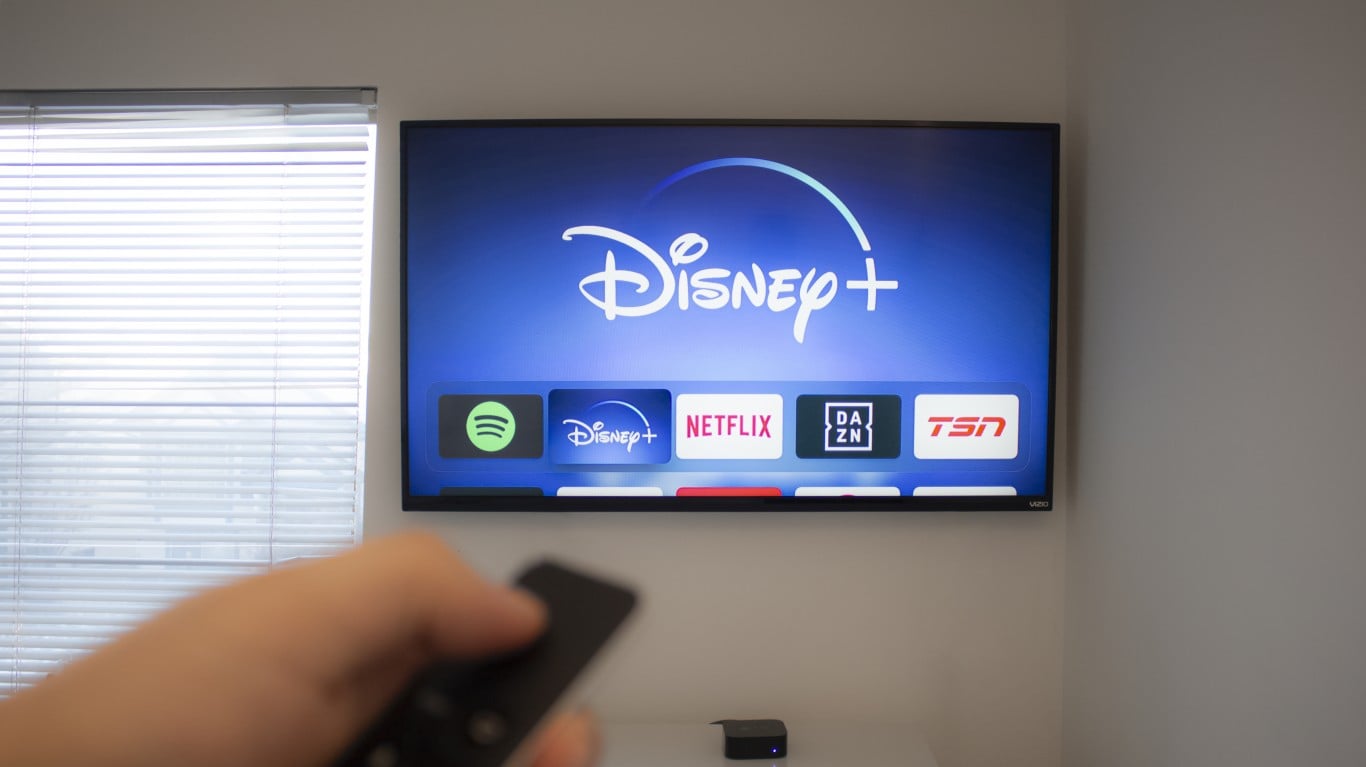
Subscriber & Revenue Snapshot
Note: Netflix and Disney have both stopped reporting quarterly subscriber figures. The most recent hard numbers available are cited below with their reporting dates.
-
Netflix: Q4 2025 revenue of $12.05 billion, up 17.6% year-over-year. The company no longer reports subscriber counts. Stock is currently approximately 27% below its all-time high as of April 20, 2026.
-
Disney+ / Hulu / ESPN+: Disney stopped reporting quarterly subscriber and ARPU data beginning Q1 FY2026 for Disney+ and Hulu, following Netflix's lead. Disney's most recent overall company revenue was $25.98B for Q1 FY2026 (up 5.2% YoY). Subscriber figures are no longer disclosed.
-
Max (WBD): As of the most recent available data (The Wrap, November 2025), Max was on track to be available in over 85 global markets, with a UK/Ireland, Italy, and Germany launch in early 2026. Specific subscriber figures for Q1 2026 have not yet been reported.
-
Paramount+: Most recent disclosed figure was 79.1 million global subscribers (as of Q3 2025, per The Wrap's November 2025 update), having added 1.4 million that quarter. Paramount+ was tracking for a subscriber decline in subsequent quarters per earlier guidance.
Content Battleground
Most-Watched This Week
No fresh Nielsen Gauge or Samba TV data published after April 20, 2026 was available in research results at time of publication. The most recent publicly available rankings data is from Nielsen's rolling Top 10 tracker (updated weekly). Check for the latest weekly chart.
Notable Releases & Renewals
No confirmed post–April 20, 2026 release, renewal, or cancellation announcements were available in the research results at time of publication. Verified-fresh content for this section is unavailable; check Deadline and The Hollywood Reporter for breaking updates.
Strategic Moves

-
Netflix Price Hike Across All Plans — Netflix: Netflix raised prices across every tier in late March 2026, its most sweeping price increase in recent memory. The move comes alongside heavy investment in live events and video podcasts — new content verticals designed to justify premium pricing. Critics and subscribers point to a deliberate strategy of steering customers toward ad-supported plans, which generate higher revenue per user.
-
Netflix Stops Reporting Subscriber Counts — Netflix: Netflix no longer discloses quarterly paid subscriber totals or ARPU, a shift that's rattled investors even as quarterly financials beat estimates. The company argues engagement and revenue are more meaningful metrics. Wall Street remains skeptical of the opaque new regime.
-
Disney Follows Netflix — No More Subscriber Data — Disney+ / Hulu / ESPN+: Starting Q1 FY2026, Disney stopped reporting Disney+ and Hulu subscriber counts and ARPU, following Netflix's playbook. Disney's CFO framed the change as a shift toward "Entertainment Direct-to-Consumer profitability" as the more relevant metric. The move makes direct competitive benchmarking across the industry far harder.
-
Wall Street Questions Profitability Path for Smaller Streamers — Paramount+, Peacock, others: Analyst commentary (CNBC, April 2026) highlights that while streaming continues to drive media stock narratives — especially around earnings — it remains unclear when smaller players will reach sustainable profitability. Netflix and Disney can absorb price-hike backlash; their peers have much less margin for error.
Platform Scorecard
| Platform | Today's News | Momentum |
|---|---|---|
| Netflix | Q1 2026 earnings beat; stock down 27% from peak; price hike driving cancellations | ↓ Market confidence shaken despite strong financials; subscriber opacity a liability |
| Disney+ / Hulu | No longer reports subscribers; overall Disney revenue growth slowing at 5.2% | → Transition phase; profitability focus but opaque metrics limit investor visibility |
| Max | Expanding to 85+ global markets; UK/Germany launch in early 2026 | ↑ International expansion underway; acquisition interest cited as a tailwind |
| Amazon Prime Video | No fresh data post-April 20 in research results | → No movement data available this cycle |
| Apple TV+ | No fresh data post-April 20 in research results | → No movement data available this cycle |
| Paramount+ | 79.1M subs (last reported Nov 2025); subscriber decline flagged in guidance | ↓ Subscriber base under pressure; profitability path remains murky |
| Peacock | No fresh data post-April 20 in research results | → No movement data available this cycle |
Viewer Verdict
-
"If they can increase rates 10% and 8% of users cancel, they come out ahead. That's just the math of it — Netflix knows exactly what they're doing." — r/cordcutters
-
"Their goal is to drive most or all subscribers to the ad-supported plans. Then they'll raise those prices and it will be cable TV all over again." — r/netflix
-
"That's why I just take the deals to supplement what I get free with my antenna and DVR. So last year's Hulu/Disney+ combo was $2.99 and then I'm doing a $20/yr deal from Peacock which I took when I went to cancel the previous year's deal." — r/cordcutters
Market Analysis
Netflix's Q1 2026 earnings tell a story of a company that has successfully decoupled its financial health from subscriber count discourse — revenue and earnings beat, yet the stock fell. That paradox reveals an uncomfortable truth: Wall Street built its Netflix thesis on subscriber growth as the primary KPI, and without it, investors are pricing in uncertainty. The March 2026 price hike across all plans is clearly playing a dual role — generating near-term revenue uplift while nudging price-sensitive users toward the ad-supported tier, which carries higher monetization potential through advertiser spend. This is Netflix's most explicit move yet toward a cable-style dual-revenue model.
The Disney-Netflix divergence has rarely been starker. Netflix's 17.6% YoY revenue growth versus Disney's 5.2% reflects two very different trajectories. Disney's streaming transition is real — it's profitable — but growth has slowed considerably as the company consolidates rather than expands. Both companies have now opted out of subscriber transparency, which benefits incumbents with established reputations but creates an information vacuum that smaller rivals like Paramount+ cannot exploit.
For the broader industry, the Wall Street skepticism about smaller streamers' profitability paths is the most structurally important signal this week. Peacock, Paramount+, and Max all face a version of the same challenge: they need subscriber scale to attract advertisers, content investment to attract subscribers, and profitability to satisfy parent-company boards — a trilemma that only consolidation or a major content hit can break. The Streaming Wars in 2026 are less about who has the most subscribers and increasingly about who can build the most durable two-sided business model. Right now, only Netflix has convincingly demonstrated that.
What to Watch Next
-
Late April / Early May 2026 — Disney Q2 FY2026 Earnings: Disney's first earnings report under its no-subscriber-disclosure regime will be closely watched to see if "Entertainment DTC profitability" metrics provide sufficient transparency for investors — or if the opacity accelerates a valuation discount similar to Netflix's post-Q1 drop.
-
Ongoing — May 2026 — Netflix Ad-Tier Pricing Signal: Watch for any announcements of price increases or tier restructuring for Netflix's ad-supported plan. Reddit commentary already flags this as the likely "next shoe to drop," with subscribers bracing for the ad tier to follow the premium tier's March 2026 hike.
-
Q2 2026 — Paramount+ Subscriber Trajectory: Paramount+ had 79.1M subscribers as of Q3 2025 and had flagged a likely decline thereafter. The next earnings report will confirm whether the platform is stabilizing or continuing to erode — a key data point for the M&A speculation around WBD/Paramount consolidation.
Reader Action Items
-
Subscribers considering cancelling Netflix: If you're on a premium ad-free plan, the March 2026 price hike may push your monthly bill above $30 after taxes. Downgrading to the ad-supported tier is the calculus Netflix wants you to make — weigh ad tolerance against savings before outright cancelling, since re-subscribing during a promotion later may be cheaper than maintaining a plan year-round.
-
Investors and industry watchers: The Netflix earnings beat / stock drop dynamic is worth monitoring closely over Q2. If NFLX cannot re-anchor investor confidence around non-subscriber metrics (ad revenue, engagement hours, operating margin), the 27%-off-peak discount could deepen — or, alternatively, represent a rare entry point if ad-tier monetization accelerates as management projects.
-
Content creators and producers: The dual shift away from subscriber disclosures at both Netflix and Disney means the industry is moving toward engagement and profitability as primary signals. Pitching projects that fit ad-tier viewing patterns (shorter episodes, broader appeal, repeat-viewing formats) will likely carry more traction in greenlight meetings through 2026.
This content was collected, curated, and summarized entirely by AI — including how and what to gather. It may contain inaccuracies. Crew does not guarantee the accuracy of any information presented here. Always verify facts on your own before acting on them. Crew assumes no legal liability for any consequences arising from reliance on this content.
Powered by
