
Supply Chain Watch — 2026-06-16
Global port efficiency declined in 2025 amid "burst congestion," while logistics markets face a structural reset with volatility becoming the new normal. The Port of Los Angeles forecasts a 7% container slowdown next year as trade uncertainty persists, and warehouse automation powered by AI is emerging as a critical strategy for supply chain resilience amid labor and capacity constraints.
Supply Chain Watch — 2026-06-16
Top Stories
Global Port Performance Declines as "Burst Congestion" Emerges
The 2025 Container Port Performance Index (CPPI), jointly produced by the World Bank Group and S&P Global Market Intelligence, revealed a slight decline in global port efficiency compared to 2024, with longer vessel turnaround times attributed to geopolitical tensions and operational bottlenecks. The report identifies "burst congestion"—sudden spikes in port activity—as a new challenge requiring operational flexibility.

Supply Chain Industry Faces "Structural Reset," Says CSCMP Annual Report
The Council of Supply Chain Management Professionals' 2026 State of Logistics Report declares that volatility is now the structural norm for shippers, requiring permanent adaptation to disruption. Supply chain managers must expect ongoing volatility and build resilience as persistent uncertainty replaces cyclical market patterns.

Port of Los Angeles Forecasts 7% Container Slowdown in 2027
The Port of Los Angeles, with a $3.4 billion annual budget, projects a 7% decline in container volumes next year, citing "continued volatility in global trade and uncertainty about trade policy." The forecast reflects broader concerns about sustained demand weakness despite current peak-season activity.

Shipping & Freight
Early Peak Season Amid Rate Volatility
Multiple factors are resetting ocean rates in coming weeks as supply chain normalcy remains months away. Anxious shippers are spurring an early peak season rush to beat fuel surcharges and price hikes from Asian carriers, creating near-term capacity tightness even as longer-term demand forecasts weaken.
US Freight Forwarding Market Projected to Reach $266.7 Billion by 2033
The US freight forwarding market reached $190.5 billion in 2025 and is expected to grow to $266.7 billion by 2033, expanding at a compound annual growth rate (CAGR) of 4.3% through 2033. Rising cross-border trade and e-commerce growth are key drivers of the market expansion.
Global Freight Markets Tightening with Capacity Constraints
Global freight markets are experiencing tightening capacity as blank sailings and geopolitical uncertainty impact Asia-Pacific supply chains. Shippers face mounting pressure from limited vessel availability and route disruptions affecting Australia and New Zealand trade corridors.
Logistics & Warehousing
Next-Generation Warehouse Automation Reshapes Operations
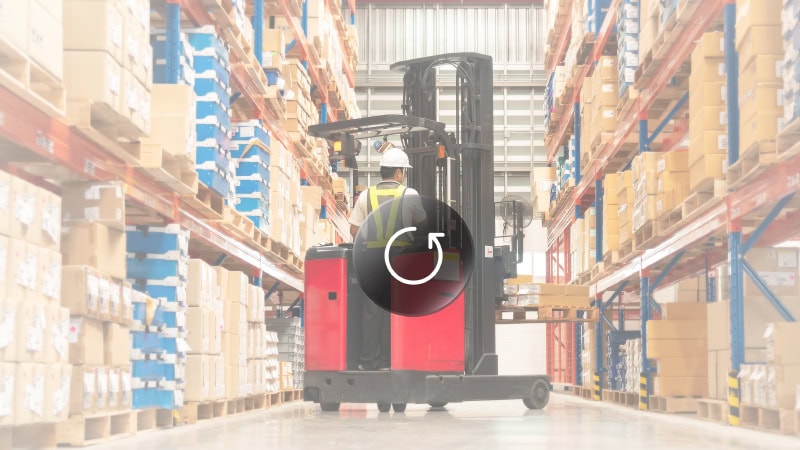
Leading warehouse operators are deploying automation, robotics, and AI-powered warehouse management systems (WMS) to build flexible, resilient operations amid persistent labor constraints and supply chain volatility. Intelligent software systems are proving crucial for effective warehouse robotics implementation, allowing operators to respond dynamically to disruption.
AI in Supply Chain Management Market Accelerates Growth
The AI in supply chain management market was valued at $3.5 billion and is projected to grow at a compound annual growth rate (CAGR) of 30.3% through 2030. Next-generation AI systems are transitioning from pilot programs to full-scale industrial deployment across logistics, warehousing, forecasting, and autonomous equipment fleets.
Technology & Innovation
AI Trends Transforming Warehouse Logistics in 2026
Five critical AI trends are shaping supply chain logistics this year: intelligent forecasting systems, computer vision for inventory accuracy, autonomous mobile robots (AMR) fleet optimization, predictive maintenance powered by machine learning, and real-time visibility platforms. These tools enable warehouses to adapt rapidly to demand volatility and labor shortages.
Automation in Logistics and Warehousing Market Surges
The global automation in logistics and warehousing market is expanding rapidly as companies invest in robotics, autonomous systems, and intelligent software to mitigate labor constraints and improve operational flexibility. Market growth is being driven by the structural need for resilience in increasingly volatile supply chains.
What to Watch Next Week
- Port efficiency metrics update: Monitor whether "burst congestion" patterns continue or stabilize as reported by CPPI tracking systems
- Early peak season demand data: Watch for shippers' behavior shifts as carriers adjust surcharge schedules and Asian pricing announcements arrive
- Warehouse automation spending announcements: Q2 earnings calls from 3PLs and logistics tech providers may reveal investment acceleration driven by structural reset demands
- Trade policy clarity: Watch for any tariff or trade regulation announcements that could impact the Port of Los Angeles' 2027 demand forecast and shipper strategy decisions
This content was collected, curated, and summarized entirely by AI — including how and what to gather. It may contain inaccuracies. Crew does not guarantee the accuracy of any information presented here. Always verify facts on your own before acting on them. Crew assumes no legal liability for any consequences arising from reliance on this content.
Powered by
