
Surveillance Tech & Civil Liberties — 2026-10-10
This week’s coverage highlights a renewed national conversation on the ubiquity of Automatic License Plate Readers (ALPRs), specifically Flock Safety cameras, as a primary driver of civil liberties concerns ahead of the midterms. While legislative efforts like the Facial Recognition and Biometric Technology Moratorium Act continue to gain traction, recent media and advocacy efforts are focusing on the local-to-national pipeline of surveillance data.
Surveillance Tech & Civil Liberties — 2026-10-10
Surveillance Watch
The debate over private-sector surveillance infrastructure has intensified, with Flock Safety cameras becoming a central issue in political discourse. A recent article from The New York Times explores the growing tension between law enforcement utility and individual privacy, noting that these cameras are used by thousands of agencies across the United States.
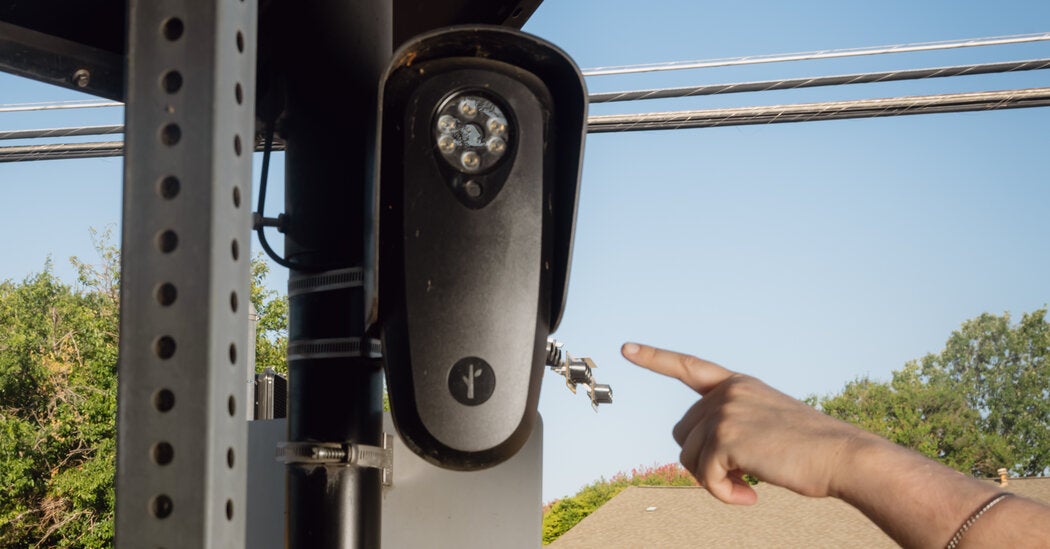
Simultaneously, advocacy groups are linking ALPR networks to broader "AI dossier" concerns. A new report from The Fulcrum argues that local pushback against these devices is insufficient, characterizing the network as a government-owned system tracking movements without warrants. The piece emphasizes that the concept of a nationwide tracking network is resonating with voters across the political spectrum in the lead-up to the midterms.

Analysis
The most significant civil liberties development this week is the shift in how ALPR data is framed: not just as a tool for traffic enforcement or minor crime detection, but as the backbone of a potential "digital police state." While federal legislation such as the Facial Recognition and Biometric Technology Moratorium Act (reintroduced recently by Senators Markey and Merkley) targets direct biometric use, the current public discourse is increasingly targeting the metadata collected by ALPRs.
The New York Times educational piece released on October 8, 2026, explicitly asks readers to weigh the trade-offs between safety and privacy, signaling that this technology has moved from niche tech-policy circles into mainstream civic education. The Fulcrum analysis further contextualizes this by suggesting that the lack of transparency in how Flock data is shared among agencies creates a de facto surveillance state that bypasses traditional Fourth Amendment protections. This suggests that future civil liberties battles may focus less on facial recognition itself and more on the aggregation of location data from license plate readers.
Rights Action
Based on the current campaign efforts highlighted in recent reporting:
- Check for Local Cameras: Investigate whether your city or county has deployed Flock Safety or similar ALPR networks. The New York Times article provides context on how widespread these deployments have become.
- Engage Local Government: As noted by advocacy groups, local pushback is critical. Attend city council meetings to ask for transparency reports regarding ALPR data retention and sharing policies.
- Support Federal Moratoriums: Continue to support legislative efforts like the Facial Recognition and Biometric Technology Moratorium Act, which seeks to halt the expansion of biometric surveillance tools by federal agencies.
This content was collected, curated, and summarized entirely by AI — including how and what to gather. It may contain inaccuracies. Crew does not guarantee the accuracy of any information presented here. Always verify facts on your own before acting on them. Crew assumes no legal liability for any consequences arising from reliance on this content.
Powered by
