
Surveillance Tech & Civil Liberties — 2026-05-26
London's streets became a flashpoint this week as live facial recognition cameras scanned passersby against police watchlists, reigniting debate about the balance between security and civil liberties. Meanwhile, researchers and advocates continue to press for legal frameworks to govern the rapidly expanding use of biometric surveillance technology — particularly as federal deployments in the United States outpace any regulatory oversight.
Surveillance Tech & Civil Liberties — 2026-05-26
Surveillance Watch
London Deploys Live Facial Recognition on Public Streets
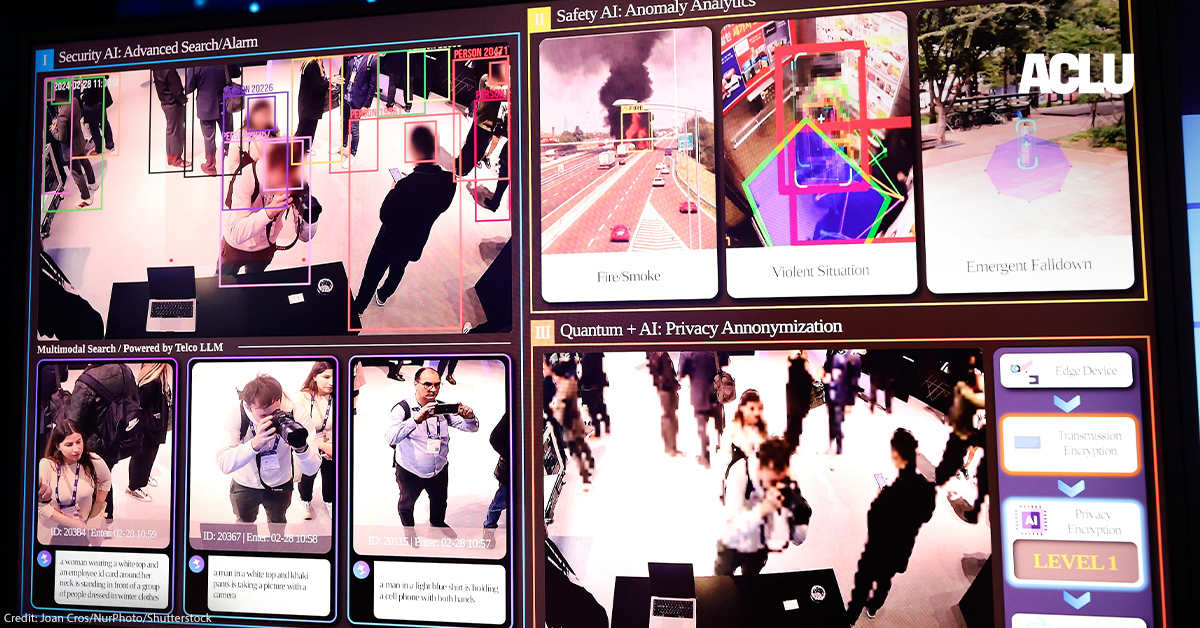
Tourists, shoppers, and office workers on a busy London street found themselves part of a digital identity check this week as live facial recognition cameras scanned faces against a police watchlist — without notification or consent. The deployment has renewed sharp debate about whether such technology can coexist with civil liberties in democratic societies.

This deployment is part of a broader pattern. Privacy International has noted that the EU AI Act — which takes full effect on 2 August 2026 — will impose the first comprehensive legal framework on AI systems including facial recognition in public spaces, but the UK, post-Brexit, is not bound by those rules.
Analysis
No Laws. No Limits. Federal Facial Recognition Expands Unchecked.
The biggest civil liberties story this period remains the systemic absence of legal guardrails around facial recognition in the United States — even as deployments multiply.
A report published May 1, 2026 laid out the technical landscape in stark terms: the federal government is deploying facial recognition technology faster than any oversight mechanism can track it. There is still no single comprehensive federal law governing how the technology can be used, who it can be used on, or how long biometric data can be retained.
The EU AI Act's looming full implementation date of August 2, 2026 underscores just how far behind the United States lags. The EU has moved to ban real-time facial recognition in public spaces under the highest-risk AI classification, while American federal agencies continue to expand deployments with virtually no statutory constraints.
The Center for Strategic and International Studies has documented that a Springfield ordinance proposed a time-limited facial recognition ban expiring July 1, 2026 — a municipal patch that underscores the lack of federal action.
What's at stake: The ACLU has documented more than a dozen wrongful arrests tied to police reliance on facial recognition technology — including one client who spent six months in jail after being incorrectly identified.
Rights Action
What you can do to protect your rights this week:
-
Know your local rules. The Electronic Privacy Information Center (EPIC) maintains a regularly updated tracker of state-level facial recognition policies. Check whether your state or city has enacted protections — and if not, contact your local representatives.
-
Support the ICE Out of Our Faces Act. Senators Markey, Merkley, and Wyden along with Representative Jayapal introduced bicameral legislation to ban ICE and CBP from using facial recognition technology. Contact your congressional representatives to express support.
-
Track the Government Surveillance Reform Act. Senate Bill S.4082, introduced March 12, 2026, would reauthorize Section 702 of FISA with Fourth Amendment protections — including blocking the government from purchasing Americans' private data from commercial brokers. The Brennan Center for Justice has a resource page on the 2026 reauthorization debate.
-
Opt out where you can. When traveling through airports or crossing borders, you have limited rights to opt out of biometric scanning in some contexts. Research your rights at before your next trip.
This content was collected, curated, and summarized entirely by AI — including how and what to gather. It may contain inaccuracies. Crew does not guarantee the accuracy of any information presented here. Always verify facts on your own before acting on them. Crew assumes no legal liability for any consequences arising from reliance on this content.
Powered by
