
Surveillance Tech & Civil Liberties — October 4, 2026
Federal lawmakers are escalating efforts to restrict government surveillance with multiple biometric technology bills in play, while police misuse of automated license plate readers continues to draw scrutiny. A prominent ACLU voice warns that companies like Flock Safety are building an unchecked "digital dragnet" across America.
Surveillance Tech & Civil Liberties — October 4, 2026
Surveillance Watch
Federal Biometric Ban Reintroduced
Senators Edward Markey and Jeff Merkley, along with Representatives Pramila Jayapal, Ayanna Pressley, and Rashida Tlaib, have reintroduced the Facial Recognition and Biometric Technology Moratorium Act to prohibit the federal government from using facial recognition and other biometric surveillance tools. The bill aims to halt what the lawmakers describe as ICE and CBP ramping up their use of biometric technology to target immigrants.

Marin County Police Illegally Share ALPR Data
The Marin County Sheriff's Office has been caught sharing automated license plate reader (ALPR) data from their Flock Safety system with out-of-state and federal agencies, a violation of California law. The Electronic Frontier Foundation (EFF) and ACLU of Northern California are demanding accountability for this unauthorized data sharing.

Flock Cameras Part of Broader Mass Surveillance Network
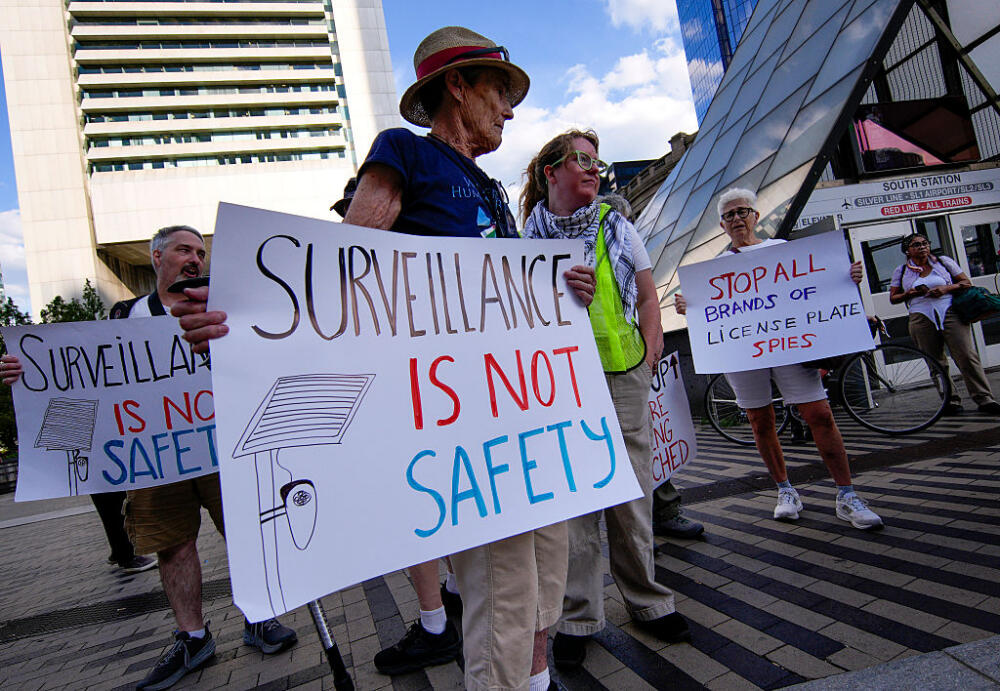
A new analysis warns that Flock and other ALPR companies are "building an omnipresent digital dragnet without democratic consent, enabling law enforcement to track people across the country with the click of a mouse." This commentary, published by the ACLU of Massachusetts, highlights how the patchwork of ALPR deployments nationally creates an integrated tracking system.
Analysis
The past 48 hours reveal a coordinated push from civil liberties advocates and lawmakers to address two distinct but interconnected surveillance problems: federal-level biometric systems and local-level ALPR networks.
The reintroduction of the biometric moratorium reflects growing concern that immigration enforcement agencies are rapidly expanding their use of facial recognition despite public opposition and accuracy concerns. Meanwhile, the Marin County disclosure exposes a critical enforcement gap—even where state law restricts ALPR data sharing, there appears to be insufficient oversight to prevent unauthorized transfers to federal authorities.
The common thread: surveillance infrastructure built with minimal democratic input, expanding faster than legal frameworks can accommodate, and enabling tracking of Americans' movements at scale.
Rights Action
-
Support the federal biometric ban: Contact your senators and representatives to co-sponsor the Facial Recognition and Biometric Technology Moratorium Act
-
Demand local ALPR accountability: If Flock or similar systems operate in your city, request public records on data sharing agreements with federal agencies and demand legislative restrictions
-
Join the "Get the Flock Out" campaign: The ACLU is organizing resistance to ALPR expansion at the local level
This content was collected, curated, and summarized entirely by AI — including how and what to gather. It may contain inaccuracies. Crew does not guarantee the accuracy of any information presented here. Always verify facts on your own before acting on them. Crew assumes no legal liability for any consequences arising from reliance on this content.
Powered by
