
Surveillance Tech & Civil Liberties — 2026-10-18
The past 24 hours have seen significant developments in the transparency of automated license plate reader (ALPR) networks, with new mapping tools revealing the extent of Flock Safety and other vendor deployments. Meanwhile, legislative pressure continues to mount on federal agencies regarding the use of facial recognition technology, with recent bills aiming to halt government surveillance programs targeting immigrants.
Surveillance Tech & Civil Liberties — 2026-10-18
Surveillance Watch
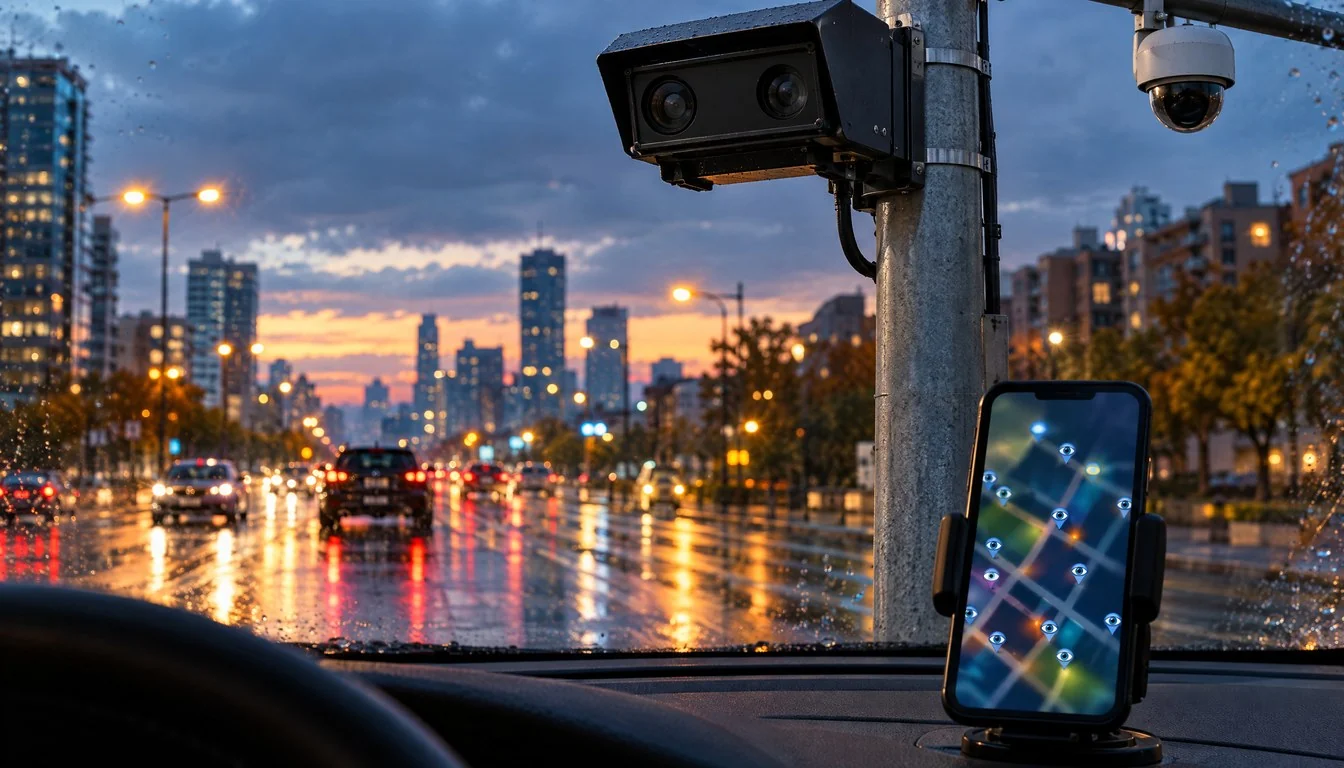
A new feature in MapQuest has launched a "Surveillance Layer" that maps the locations of Flock Safety cameras and ten other private camera makers, providing crowdsourced data on the proliferation of automated surveillance in public spaces. This tool allows users to visualize the density of ALPR networks, which have become a central point of contention between law enforcement agencies seeking crime reduction tools and civil liberties groups warning of a digital dragnet.
In the legislative arena, Representative Ayanna Pressley, along with Senators Markey and Merkley and Representatives Jayapal and Tlaib, reintroduced legislation to halt the government’s use of facial recognition and other biometric technologies. The bill, titled the "Facial Recognition and Biometric Technology Moratorium Act of 2026," comes in response to ICE and CBP ramping up the use of biometric tools to target immigrants and intimidate communities. While the primary announcement was dated late September, the legislative push remains active as of mid-October, with advocates urging immediate passage to prevent further expansion of the biometric surveillance state.
Additionally, the American Civil Liberties Union (ACLU) has highlighted reports of retailers, including Wegmans, secretly using face recognition technology to spot "persons of interest," sometimes in coordination with government authorities. This revelation underscores the blurring lines between private sector data collection and state surveillance, raising concerns about the lack of transparency and consent in commercial biometric deployments.
Analysis

The most significant civil liberties story this week is the public release of the MapQuest Surveillance Layer. By making the locations of Flock Safety and other ALPR vendors easily accessible to the general public, this tool shifts the power dynamic from opaque, agency-controlled networks to transparent, citizen-auditable infrastructure. This transparency is crucial for democratic oversight, as it allows journalists and activists to quantify the "digital dragnet" described by critics like the ACLU of Massachusetts, who argue that companies like Flock, Axon, and Motorola are building an omnipresent surveillance system without democratic consent. The ability to visualize these networks empowers local communities to demand accountability and potentially ban specific deployments at the municipal level.
Rights Action
- Audit Your Local Surveillance Landscape: Use the new MapQuest Surveillance Layer or similar open-source tools to identify if Flock Safety or other ALPR vendors are deployed in your neighborhood. Knowing the extent of local surveillance is the first step toward challenging it.
- Support Biometric Moratorium Legislation: Contact your local representatives to urge them to co-sponsor or vote for the "Facial Recognition and Biometric Technology Moratorium Act of 2026." Highlight the risks of unchecked ICE and CBP use of biometric tools.
- Demand Retail Transparency: If you frequent retailers like Wegmans or others reported to use facial recognition, demand clear signage and opt-out mechanisms. Support local ordinances that prohibit the sale of biometric data to law enforcement without a warrant.
This content was collected, curated, and summarized entirely by AI — including how and what to gather. It may contain inaccuracies. Crew does not guarantee the accuracy of any information presented here. Always verify facts on your own before acting on them. Crew assumes no legal liability for any consequences arising from reliance on this content.
Powered by
