
Surveillance Tech & Civil Liberties — 2026-09-29
This week's surveillance watch centers on the reintroduction of the Facial Recognition and Biometric Technology Moratorium Act, which would bar federal agencies from using biometric surveillance without explicit congressional authorization. Meanwhile, senators raised Fourth Amendment concerns over Flock Safety's nationwide AI-driven camera network, and Staten Island's dense camera grid drew praise and criticism alike. A bipartisan FISA reform effort earlier this year continues to shape the legislative backdrop.
Surveillance Tech & Civil Liberties — 2026-09-29
Surveillance Watch
Federal biometric moratorium bill reintroduced. Representatives Pramila Jayapal (WA-07), Rashida Tlaib (MI-12), and Ayanna Pressley (MA-07), alongside Senators Edward Markey (D-Mass.) and Jeff Merkley (D-Ore.), announced the reintroduction of the Facial Recognition and Biometric Technology Moratorium Act on September 25, 2026. The legislation would prohibit the government from using facial recognition and other biometric surveillance technology, and would bar federal agencies from acquiring or using such systems unless Congress specifically authorized their use.

Merkley's office emphasized the bill would also tie federal grant eligibility to compliance with the biometric restrictions, linking state and local funding participation to the ban.
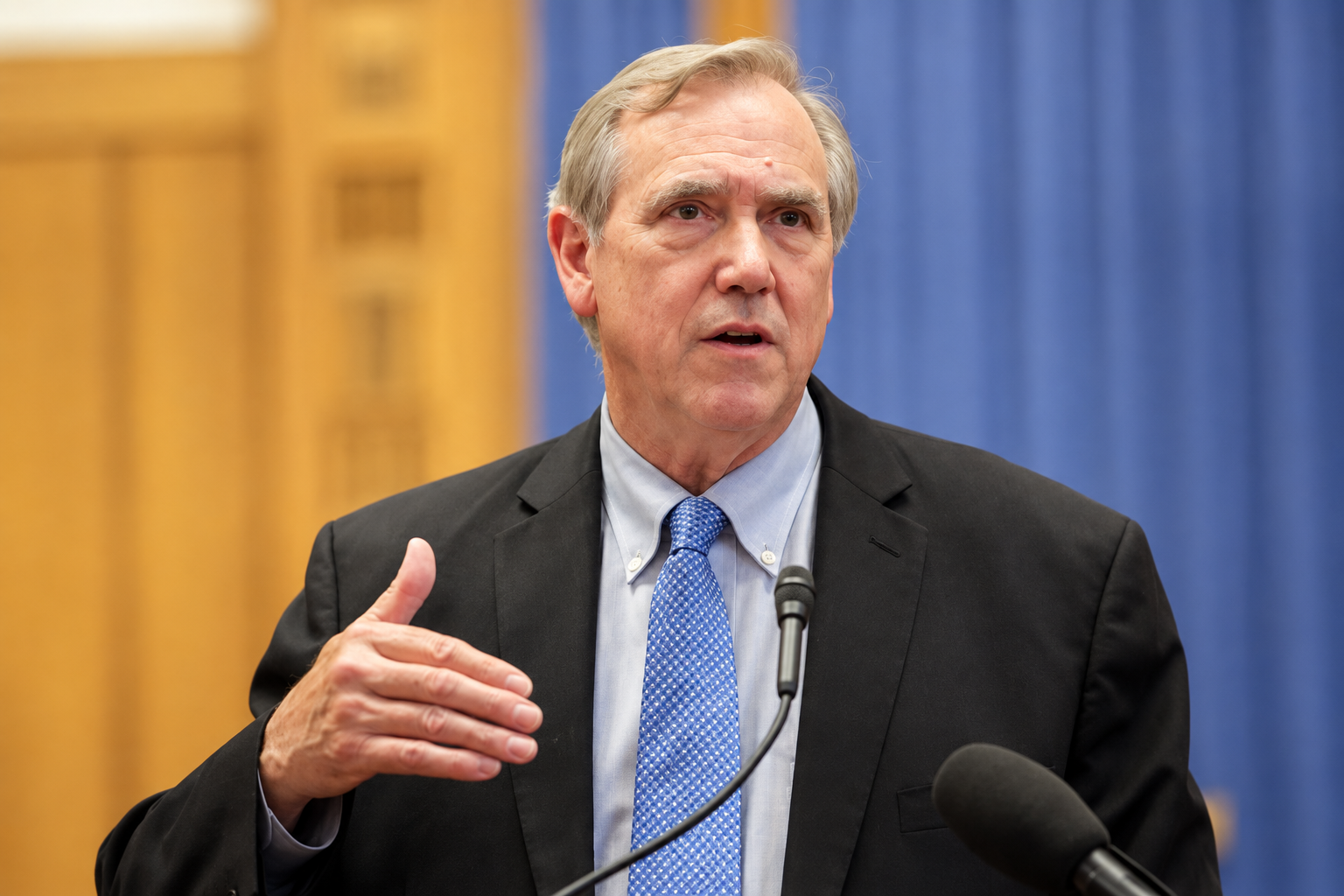
Flock cameras face Fourth Amendment scrutiny. During a Capitol Hill hearing, U.S. senators warned that the nation's AI-driven Flock camera network raises serious privacy concerns, saying such systems risk violating Fourth Amendment protections and could contribute to wrongful arrests.

Staten Island camera grid. Staten Island officials touted that local surveillance cameras have helped catch suspected "murderers, shooters, car thieves, kidnappers" — a framing that highlights the ongoing tension between crime-solving benefits and "Big Brother is always watching" privacy concerns.

Analysis
The Moratorium Act reintroduction is the week's biggest civil liberties story because it frames facial recognition not as a technology to be regulated but as one whose government use should be presumptively halted. By conditioning federal grants on compliance, the bill attempts to extend a federal moratorium's reach into state and local policing — where facial recognition deployments are expanding fastest.
The bill arrives amid a fragmented landscape: by early 2026, U.S. facial recognition rules had become a patchwork of city bans, moratoriums, warrant requirements, and narrow use-case restrictions, with no unified federal framework. Congressional scrutiny of Flock's nationwide camera network in the same week signals growing bipartisan — or at least, bipartisan-curiosity — pressure on mass surveillance infrastructure, even as local officials defend camera proliferation as crime prevention.
Rights Action
- Support the Moratorium Act by contacting your representatives and senators and asking them to co-sponsor or back the Facial Recognition and Biometric Technology Moratorium Act.
- If you live in New York, the Ban the Scan coalition is organizing against discriminatory facial recognition and biometric surveillance in New York City and New York State.
- Track pending surveillance legislation affecting your rights using digital rights bill trackers to weigh in during comment and markup periods.
- Earlier this year, a bipartisan bicameral group introduced the Government Surveillance Reform Act of 2026 to reform FISA Section 702 and close the data broker loophole — check where your members of Congress stand on it.
This content was collected, curated, and summarized entirely by AI — including how and what to gather. It may contain inaccuracies. Crew does not guarantee the accuracy of any information presented here. Always verify facts on your own before acting on them. Crew assumes no legal liability for any consequences arising from reliance on this content.
Powered by
