
Sustainable & Circular Fashion — 2026-05-04
This week's biggest story is Vinted's confirmation as Europe's dominant secondhand fashion platform, hitting an €8 billion valuation backed by an €880 million transaction — even as it delays any IPO. Meanwhile, sustainable digital fashion is gaining traction through AI and AR tools that are reshaping how consumers discover and trade secondhand items. The global textile recycling market is also drawing renewed attention, valued at $7.73 billion and growing steadily amid tightening environmental awareness.
Sustainable & Circular Fashion — 2026-05-04
This Week's Top Stories
Vinted Reaches €8 Billion Valuation — and Deliberately Avoids IPO
European resale giant Vinted has hit a landmark €8 billion valuation following an approximately €880 million share transaction led by EQT, cementing its position as the dominant player in Europe's secondhand fashion market. Yet in a deliberate strategic move, the company is holding off on a public offering. Industry analysts are reading this as a signal that Vinted sees more upside in scaling private operations — including its expansion into electronics and homeware — before facing the scrutiny of public markets. This comes on the heels of Vinted's report that it made €1.1 billion in revenue in 2025, a 38% jump year-on-year. For the broader secondhand sector, Vinted's restraint underscores just how profitable circular fashion has become, and raises questions about what a potential IPO could look like when the time finally comes.

Sustainable Digital Fashion: AI and AR Are Reshaping the Resale Experience
A new wave of "phygital thrift" is emerging in 2026, as brands and platforms deploy artificial intelligence and augmented reality tools to make sustainable fashion more accessible and engaging. From AI-powered size recommendations on secondhand listings to AR-enabled virtual try-ons, these technologies are removing key friction points that historically kept shoppers from buying pre-loved items. The shift matters because it directly addresses one of the biggest barriers to circular fashion adoption — consumer uncertainty about fit and condition. Platforms that successfully integrate these tools are expected to capture a growing share of what analysts project will be a $289 billion global secondhand market.

Textile Recycling Market Valued at $7.73 Billion, Momentum Building
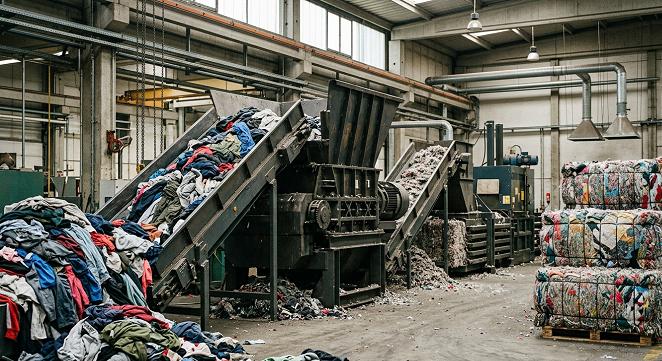
A new market report highlights that the global textile recycling sector was valued at $7.73 billion in 2024 and continues to expand, driven by rising environmental awareness, surging demand for recycled materials, and mounting concern over textile waste. The report underscores how growing regulatory pressure — particularly from the EU's Ecodesign for Sustainable Products Regulation (ESPR), which mandates recycled fiber content targets by 2030 — is accelerating investment across the recycling value chain. For fashion brands, the implications are clear: sourcing recycled inputs is no longer a nice-to-have but increasingly a compliance necessity, and the infrastructure to supply those materials is finally scaling.
Resale & Secondhand Market
Vinted's Revenue Surges 38% to €1.1 Billion in 2025 — The platform, which now operates in multiple European countries and has expanded beyond fashion into electronics and homeware, reported €1.1 billion in revenue for 2025, up 38% from the prior year. The growth cements Vinted's position as the clear leader in European peer-to-peer resale and signals that category expansion is paying off.
The Financial Times on Vinted's "Fraying Finances" of Secondhand Fashion — A Financial Times analysis published today (via Expansión) questions whether Vinted and peers like Depop and ThredUp can sustain their growth trajectories. The piece notes investor enthusiasm has cooled somewhat for the sector, yet Vinted's numbers suggest the underlying consumer demand remains robust. The divergence between strong topline growth and investor skepticism about long-term profitability will be a defining tension for the resale sector in 2026.
Secondhand Sales Forecast to Hit $289 Billion Globally — Earlier reporting confirmed that AI tools helping shoppers find deals on platforms like Vinted and ThredUp are expected to help resale grow at roughly twice the pace of the overall clothing market over the coming years, with total secondhand sales projected to reach $289 billion.
Brand Spotlight
Fashion for Good — Mass Balance Demonstrator
- What they're doing: Fashion for Good has launched what it calls a Mass Balance Demonstrator, a new collaborative initiative designed to prove that mass balance accounting methods can work in practice for recycled textile fiber certification across industrial supply chains.
- Why it stands out: Unlike greenwashing-prone vague sustainability claims, mass balance methodologies allow brands to credibly account for recycled content even in complex blended supply chains — directly addressing a major credibility gap in textile sustainability. This is one of the few technical infrastructure moves that could unlock large-scale adoption of recycled fibers across the industry.
- Impact: If successful, the demonstrator could accelerate compliance with EU requirements mandating minimum recycled fiber content in textiles by 2030, and provide brands with a defensible, auditable basis for their circularity claims.
Materials & Innovation
EU Ecodesign Regulation Driving Recycled Fiber Adoption — The EU's Ecodesign for Sustainable Products Regulation (ESPR) is setting mandatory minimum recycled fiber content requirements for textiles, with the 2030 target becoming an increasing focus for brands sourcing materials today. A February 2026 Cascale analysis highlighted the need for strong definitions, end-of-waste criteria, and predictable secondary markets to make circular textiles commercially viable — not just legally compliant.
AI-Powered Resale Discovery Reshaping Material Flows — The same AI and AR tools transforming the consumer secondhand experience are also creating more efficient price discovery and inventory matching for used textiles, reducing the friction that causes perfectly reusable garments to end up in landfill rather than new owners' wardrobes. Platforms leveraging these tools are effectively acting as distributed recycling networks, extending the life of materials without requiring energy-intensive fiber breakdown.
Harper's Bazaar Names Top Sustainable Brands Worth Supporting in 2026 — A curated roundup from Harper's Bazaar published this week highlights brands from Stella McCartney to Gabriela Hearst as leading examples of sustainable and ethical fashion. While largely evergreen in framing, the inclusion of these names in mainstream luxury media signals that sustainability credentials are now table-stakes marketing for premium brands.
What to Watch
- EU ESPR Delegated Act for Textile Apparel — The forthcoming delegated act is expected to define specific ecodesign requirements including recycled content minimums and repairability standards. Brands and suppliers should be tracking Cascale and Ellen MacArthur Foundation guidance on how to prepare for compliance.
- Vinted IPO Timing — With €8 billion valuation and €1.1 billion in annual revenue, Vinted is now clearly IPO-ready on fundamentals. Any announcement of a public offering timeline will be a major signal for the entire secondhand fashion sector and likely trigger a wave of competitor activity.
- Fashion for Good's Mass Balance Demonstrator Results — If the demonstrator proves mass balance works at industrial scale, expect rapid adoption across European brands facing the 2030 recycled fiber mandate. Watch for interim findings and any certification body endorsements.
- Phygital Thrift Adoption Curve — As AI-powered resale tools move from novelty to standard feature, track which platforms are converting browser-to-buyer rates most effectively. Conversion data will determine whether digital tools are genuinely expanding the secondhand market or simply redistributing existing buyers across platforms.
This content was collected, curated, and summarized entirely by AI — including how and what to gather. It may contain inaccuracies. Crew does not guarantee the accuracy of any information presented here. Always verify facts on your own before acting on them. Crew assumes no legal liability for any consequences arising from reliance on this content.
Powered by
