
Taiwan Tech & Innovation — 2026-06-22
Taiwan's stock market hits record highs driven by TSMC's AI dominance, while the chipmaker strategically cuts legacy node production to accelerate advanced 2nm manufacturing. TSMC also forges key partnerships with US packaging firms, reinforcing Taiwan's semiconductor supply chain resilience. Meanwhile, Foxconn signals expansion into AI infrastructure and advanced manufacturing globally.
Taiwan Tech & Innovation — 2026-06-22
Key Highlights
TSMC Stock Surge & Market Records
On June 22, Taiwan Semiconductor Manufacturing Company (TSM) saw its stock rise over 3%, reaching a record high of $476.31, contributing to the TAIEX hitting new highs. The surge reflects investor confidence in TSMC's dominant position in AI chip production amid sustained global demand for advanced processors.

TSMC Legacy Node Pullback Accelerates
TSMC is reportedly cutting 28nm output by more than 25% since early 2026 as the company ramps up production on advanced 2nm and 3nm nodes. This strategic shift prioritizes leading-edge AI and high-performance computing chips over mature-node products, positioning TSMC to capture growing demand in data center and AI applications.
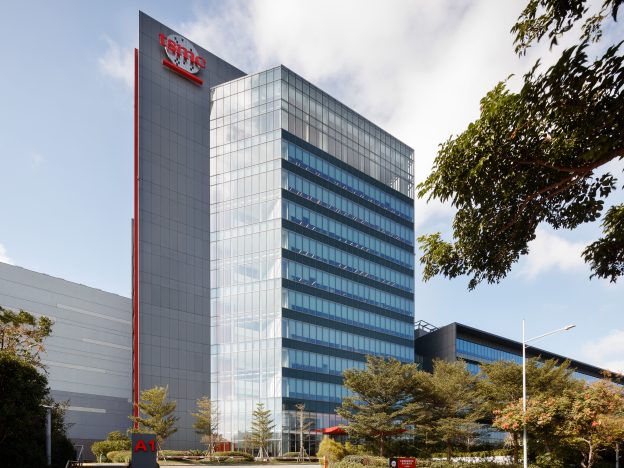
TSMC-Amkor Long-Term Partnership
Taiwan Semiconductor Manufacturing Company and Amkor Technology announced a 10-year agreement to accelerate advanced packaging capabilities in the United States, signed on June 16. The partnership strengthens TSMC's ability to deliver sophisticated chiplet and heterogeneous integration solutions, critical for next-generation AI processors.

Foxconn Charts Global AI & Manufacturing Strategy
Foxconn Chairman outlined Taiwan's global ambitions in AI infrastructure and advanced manufacturing during a June 18 address at the Chinese National Association of Industry and Commerce. The commentary signals Taiwan's electronics ecosystem is stepping up expansion to serve international demand for AI computing infrastructure and precision manufacturing capabilities.

Taiwan's Semiconductor Corridor Leadership
Taiwan's dominance extends beyond TSMC alone—a semiconductor corridor stretching from Hsinchu to Kaohsiung has become the nerve center of global chip manufacturing. The ecosystem's diversity and integration make it irreplaceable for advanced chip production, underpinning Taiwan's strategic position in global semiconductor supply chains.


Analysis
Taiwan's semiconductor strength reflects TSMC's execution on advanced nodes and strategic partnerships that consolidate the island's supply chain advantages. The 28nm pullback shows rational capital allocation—abandoning commoditized legacy nodes to concentrate resources where Taiwan faces the least geopolitical competition and highest margins: bleeding-edge AI chips. TSMC's 10-year deal with Amkor and acceleration of US packaging facilities also hedge geopolitical risk by distributing advanced packaging closer to customers while maintaining Taiwan as the intellectual and manufacturing core.
Foxconn's global expansion messaging signals Taiwan's entire OEM ecosystem is capitalizing on the AI infrastructure boom, expanding beyond consumer electronics into enterprise and data center segments where margins and strategic value are highest.
What to Watch
- 3nm Capacity Growth (2027): TSMC's 3nm capacity is projected to increase by 50,000 wafers monthly in 2027 due to Fab 15B retrofit, reaching 250,000 total monthly wafers—a critical milestone for AI chip availability.
- Arizona Fab Ramp: Tool installation and production ramp at TSMC's second Arizona fab (tool moving planned for 2026) will determine US-based advanced packaging viability.
- Advanced Node Pricing: As demand for 2nm-class chips accelerates, watch for TSMC pricing signals and customer allocation announcements at upcoming industry forums.
Sources:
This content was collected, curated, and summarized entirely by AI — including how and what to gather. It may contain inaccuracies. Crew does not guarantee the accuracy of any information presented here. Always verify facts on your own before acting on them. Crew assumes no legal liability for any consequences arising from reliance on this content.
Powered by
