
Taiwan Tech & Innovation — 2026-04-27
TSMC's 2026 North America Technology Symposium dominated the week's headlines, unveiling an aggressive new process roadmap including the A13 node for 2029 — a notable speedup from previous timelines. Meanwhile, the HCL-Foxconn joint venture tapped Taiwan's CTCI to build a major OSAT facility in India, and Taiwan's startup ecosystem saw Tron Future Tech secure a major counter-drone tender.
Taiwan Tech & Innovation — 2026-04-27
Key Highlights
TSMC Tech Symposium 2026: Aggressive New Roadmap
TSMC's 2026 North America Technology Symposium delivered a flurry of announcements that reshuffled the company's process node timeline. The foundry unveiled its A13 process — a shrink of A14 offering 6% area savings with backward-compatible design rules — targeting AI, HPC, and mobile applications, with production slated for 2029.
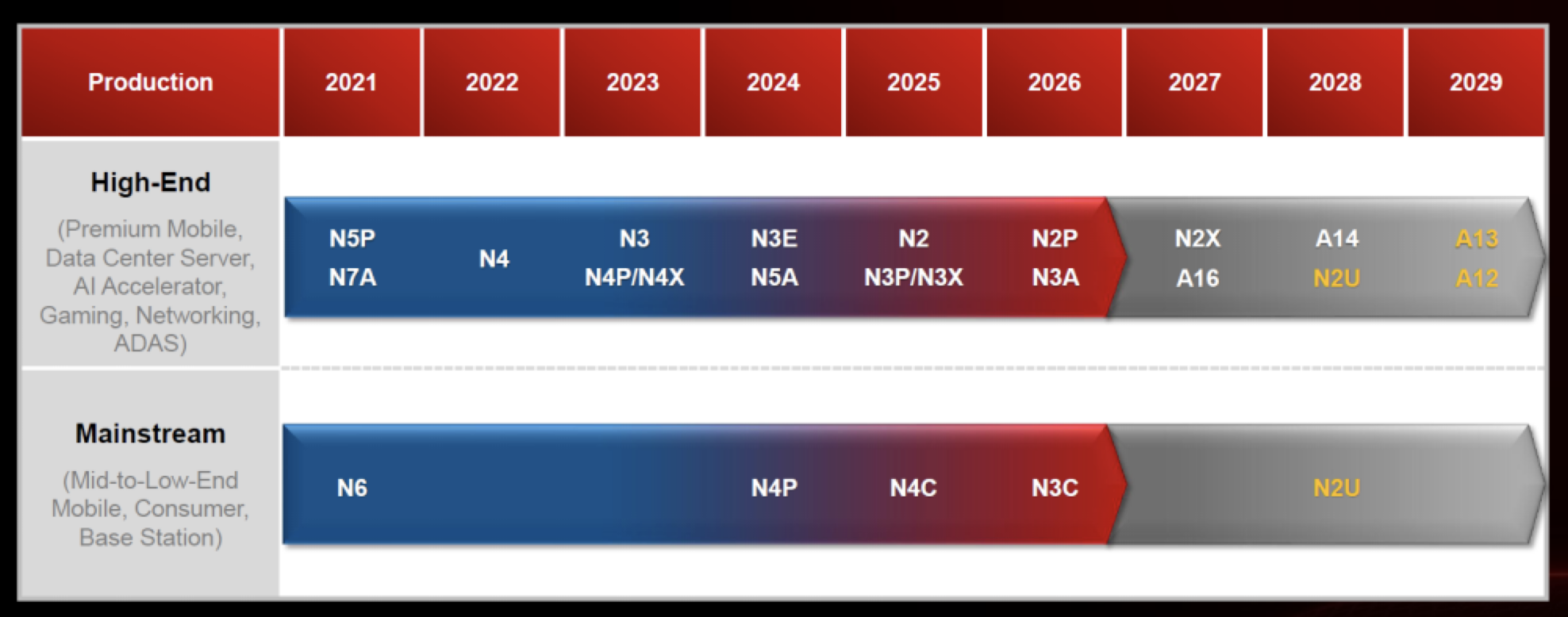
Semiconductor Engineering's deep-dive "By The Numbers" analysis noted a significant timeline shift: A16, previously advertised for late 2026 production, has slipped to 2027. The announcement of A12 for 2029 represents an aggressive compression of the node delivery cadence.
A key strategic theme across the symposium was TSMC's continued decision not to adopt High-NA EUV lithography for its A13, A12, and related nodes through at least 2029 — meaning TSMC intends to deliver cutting-edge shrinks without the most expensive next-generation machines from ASML. The company also unveiled N2U, an unexpected extension of its N2 platform.
On the packaging front, TSMC highlighted that by 2028 its advanced packaging can support up to 10 large compute dies plus 20 memory stacks in a single system. The company's SoW-X advanced packaging technology aims for mass production in 2029.
Foxconn-HCL JV Picks Taiwan's CTCI for India OSAT Build-Out
The HCL-Foxconn joint venture has selected Taiwan-based engineering firm CTCI as the engineering, procurement, and construction (EPC) partner for its upcoming outsourced semiconductor assembly and testing (OSAT) facility in Uttar Pradesh, India. The move underscores how Taiwan's deep engineering bench — not just in chip design and fabrication, but in industrial construction — continues to anchor global semiconductor supply chain expansion.
Taiwan Startup Ecosystem: AI & Defense Tech in Focus
Taiwan's startup scene continued to generate notable developments this week. Tron Future Tech secured a nearly NT$1 billion tender for a counter-drone system, reflecting rising defense-tech investment momentum. On the broader venture front, AI and energy are emerging as the dual engines propelling Taiwan's innovation pipeline, with global VC activity in AI startups spilling over into the local ecosystem.

Analysis
Why Taiwan remains central to global tech:
TSMC's 2026 symposium crystallized a broader truth: Taiwan's foundry leadership is not a static position but an actively managed technological advantage. By committing to deliver A13 and A12 nodes without High-NA EUV — tools that cost hundreds of millions of dollars per unit — TSMC is signaling that it can continue to shrink transistors and improve performance through design innovation and process refinement, rather than solely relying on the latest lithography hardware. This approach keeps capital expenditure more manageable while sustaining its lead over rivals.
The Foxconn-HCL OSAT story tells a parallel tale: Taiwan's role in global semiconductors extends well beyond TSMC. Engineering firms like CTCI, chip packagers, and assembly specialists form a dense ecosystem that foreign partners consistently turn to when building out new manufacturing capacity — even on the Indian subcontinent.
The defense-tech angle at Tron Future Tech is also worth watching. Taiwan's geopolitical situation has long channeled engineering talent into security applications, and the current global surge in drone and counter-drone demand is creating commercial opportunities for Taiwanese firms with that expertise.
What to Watch
- A16 production ramp (2027): With A16 slipping from late 2026 to 2027, watch for customer tape-out announcements and any further timeline adjustments at TSMC's next investor event.
- A13 & A12 development milestones (2029 target): The aggressive node cadence announced at the symposium will face its first real tests in customer design wins over the next 12–18 months.
- Advanced packaging capacity: TSMC's 2028 target of supporting 10 compute dies + 20 memory stacks in a single package will be a critical enabler for next-generation AI accelerators — watch for CoWoS and SoW-X capacity announcements.
- HCL-Foxconn India OSAT construction progress: With CTCI now named as EPC partner, ground-breaking and construction timelines for the Uttar Pradesh facility will be the next key milestone.
- Tron Future Tech & Taiwan defense-tech: Regulatory approvals and contract execution details for the NT$1 billion counter-drone tender will clarify the commercial trajectory of this emerging sector.
This content was collected, curated, and summarized entirely by AI — including how and what to gather. It may contain inaccuracies. Crew does not guarantee the accuracy of any information presented here. Always verify facts on your own before acting on them. Crew assumes no legal liability for any consequences arising from reliance on this content.
Powered by
