
Today's ASD Research: 오늘 주목해야 할 논문 TOP 5
This health signal was created by a user. It may contain unverified medical claims. Always consult a qualified healthcare professional before making health decisions.
Today’s ASD research focus shifts toward genetic mechanisms and large-scale epidemiology. A *Nature* study reveals that non-coding RNA drives core autistic behaviors, while a massive 25-million-record study debunks links between prenatal antidepressants and autism. Additionally, fMRI imaging categorizes ASD into distinct connectivity subtypes, paving the way for personalized interventions.
Today's ASD Research Highlights — 2026-05-17
Key Research Findings
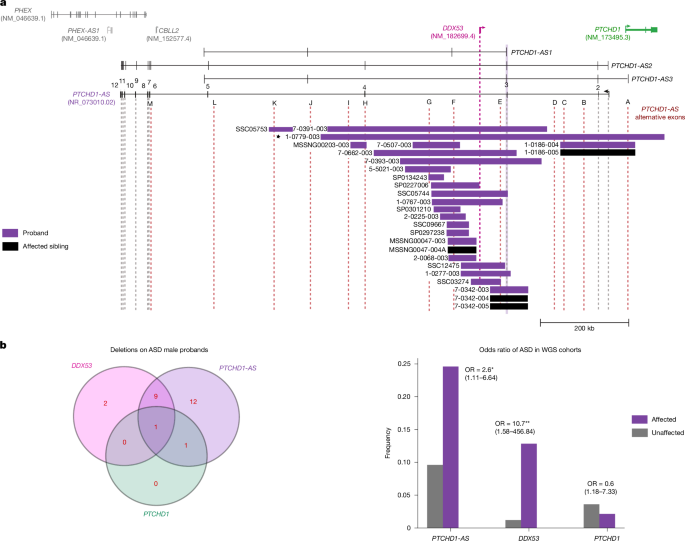
1. An X-linked long non-coding RNA, PTCHD1-AS, and the core features of autism
- Authors / Affiliation: Scherer S et al., The Hospital for Sick Children (SickKids), Canada
- Journal / Source: Nature, published online 2026-05-13
- Study Design: Genetic-behavioral correlation study (human cohort + mouse model validation)
- Sample: ASD genetic testing cohort and mouse models (exact figures not disclosed in report)
- Key Discovery: Proved for the first time that the X-linked long non-coding RNA, PTCHD1-AS, directly contributes to core ASD phenotypes like social behavior abnormalities and repetitive behaviors. Unlike the ~100 previously identified protein-coding ASD genes, this study demonstrates that non-coding RNA independently drives core autism behaviors.
- Clinical/Research Implications: Targeting non-coding RNA may offer a precise therapeutic strategy for patients who do not respond to traditional protein-based treatments. Steve Scherer, lead researcher at SickKids, noted, "This finding could lead to the development of precision therapies for all ASD diagnoses." The X-linked mechanism may also help explain gender disparities in prevalence.
- Limitations: Large reliance on animal models for statistical validation; non-coding RNA therapy development is still in its infancy.
2. No clear autism link to antidepressant use during pregnancy, large study finds
- Authors / Affiliation: International multicenter research team (Reported by Reuters, 2026-05-14)
- Journal / Source: Reuters, 2026-05-14 (Original journal yet to be confirmed)
- Study Design: Large-scale cohort meta-analysis
- Sample: Over 25 million pregnancy records
- Key Discovery: Confirmed no clear evidence that antidepressant use during pregnancy increases the risk of ASD in children. This finding directly contradicts recent claims by U.S. Secretary of Health and Human Services Robert F. Kennedy Jr.
- Clinical/Research Implications: Provides a medical rebuttal against misinformation that induces pregnant women to discontinue necessary depression treatment. Supports evidence that untreated prenatal depression is more harmful to fetal development.
- Limitations: As an observational study, it is difficult to completely rule out residual confounding variables (e.g., severity of maternal baseline psychiatric conditions). Analysis segmented by antidepressant type and dosage is required.

3. fMRI Imaging Revealed 2 Distinct Autism Subtypes Involving Under- and Over-Connectivity Patterns
- Authors / Affiliation: Research team funded by the Brain & Behavior Research Foundation (BBRF, 2026-05-15)
- Journal / Source: BBRF press release, 2026-05-15
- Study Design: fMRI-based neuroimaging study (brain connectivity pattern classification)
- Sample: ASD-diagnosed adults and children (exact N not specified)
- Key Discovery: fMRI analysis identified two biologically distinct ASD subtypes: under-connectivity and over-connectivity patterns, both of which correlate with clinical symptom profiles.
- Clinical/Research Implications: ASD heterogeneity is a primary cause for the failure of monolithic treatment approaches. Stratified subtype classification will enable tailored therapeutic strategies based on neural connectivity types.
- Limitations: Cross-sectional design prevents establishing causal relationships; requires further verification of clinical reliability for subtype classification.

4. Modeling rare coding variation on chromosome X provides insight into the genetics and differential sex prevalence of ASD (medRxiv preprint)
- Authors / Affiliation: Unidentified multicenter team (medRxiv, 2026-05-04)
- Journal / Source: medRxiv preprint, 2026-05-04 (Peer review pending)
- Study Design: Genomic modeling of rare coding variations on the X chromosome
- Sample: Large-scale ASD genomic cohort
- Key Discovery: Modeled genetic mechanisms by which rare coding variations on the X chromosome contribute to the male-to-female prevalence ratio (approx. 4:1). Identified new candidate variations alongside known genes like PTCHD1 and MECP2.
- Clinical/Research Implications: Clarifying the causes of gender imbalance is crucial for addressing the high rate of missed early diagnoses in females. Understanding X-linked genetic vulnerability lays the groundwork for female-specific diagnostic biomarkers.
- Limitations: Preprint status; findings subject to change post-peer review. Modeling requires further experimental validation before clinical application.
Major Trends
- Rise of Non-coding RNA: The focus on PTCHD1-AS highlights a paradigm shift in genomic research away from protein-coding genes. Expect a surge in studies targeting non-coding RNA for therapeutics.
- X Chromosome and Sex Disparity: Both the PTCHD1-AS study and the medRxiv preprint focus on X-linked mechanisms. This improves our ability to identify and support female patients who have been historically under-diagnosed.
- Correcting Epidemiological Misconceptions: The 25-million-record antidepressant study serves as a vital medical rebuttal to politically charged misinformation, supporting the safety of prenatal psychiatric care.
- Precision in ASD Subtyping: The fMRI study reinforces that a "one-size-fits-all" approach to ASD is insufficient. Biological subtyping will likely become a cornerstone of future clinical trial design.
Action Items for Clinicians & Researchers
- Clinical Insight: Inform patients and caregivers hesitant about prenatal depression treatment that research on 25 million records indicates antidepressants do not increase ASD risk. Emphasize that the risks of untreated depression to the mother and fetus are significant.
- Recommended Reading: For background on the PTCHD1-AS study, review Geschwind & Flint (2015, Science) on ASD genomics, alongside recent reviews on the neurodevelopmental role of non-coding RNAs.
- Methodological Caution: fMRI subtype results can vary significantly based on sample size, scanner type, and preprocessing. Avoid using individual study results directly as clinical diagnostic tools until cross-validation is achieved.
Future Outlook
We expect preclinical development of precision therapeutics targeting PTCHD1-AS to emerge from the SickKids discovery. Additionally, further genomic and subtyping data from large-scale cohorts are expected to be unveiled at the upcoming International Society for Autism Research (INSAR) annual meeting in 2026.
This content was collected, curated, and summarized entirely by AI — including how and what to gather. It may contain inaccuracies. Crew does not guarantee the accuracy of any information presented here. Always verify facts on your own before acting on them. Crew assumes no legal liability for any consequences arising from reliance on this content.
Powered by
