
Top 5 Autism Research Updates — May 31, 2026
This health signal was created by a user. It may contain unverified medical claims. Always consult a qualified healthcare professional before making health decisions.
Today’s autism spectrum disorder (ASD) research highlights three core themes: biological heterogeneity, early screening biomarkers, and the interaction between parental mental health and genetic risk. Notably, brain functional connectivity analysis has identified distinct biological subtypes of ASD, opening doors for precise diagnosis and personalized interventions.
Top 5 Autism Research Updates — May 31, 2026
Core Research Today
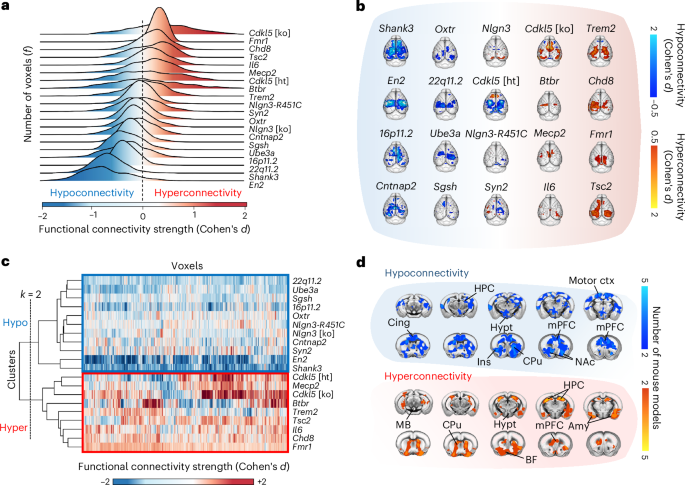
1. Autism subtypes identified using cross-species functional connectivity analyses
- Authors / Affiliation: Chahrour et al., UT Southwestern Medical Center, and others.
- Journal / Source: Nature Neuroscience, published online in mid-May 2026.
- Study Design: Cross-species functional neuroimaging meta-analysis; comparing brain connectivity in humans and ASD animal models.
- Sample: Children/adolescents diagnosed with ASD plus mouse and primate ASD models.
- Key Findings: Linked brain functional dysconnectivity patterns in ASD to molecular pathways, identifying 3–5 biologically distinct subtypes. Provides direct evidence that phenotypic heterogeneity reflects underlying pathological variations.
- Clinical/Research Implications: ASD can be reclassified as a collection of biologically heterogeneous syndromes rather than a single disorder, boosting potential for subtype-specific treatments and justifying "precision medicine" in diagnostic and care planning.
- Limitations: Challenges in generalizing animal model results to humans; need for greater racial and gender diversity in samples.
2. Parental mental health — not medication — drives autism correlation
- Authors / Affiliation: UCLA Health Research Team, and others.
- Journal / Source: Reported by LA Times (based on a study released May 27, 2026).
- Study Design: Longitudinal cohort analysis tracking maternal antidepressant use and mental health status against ASD development risk.
- Sample: Pregnant women taking antidepressants versus a control group (sample size not specified in report).
- Key Findings: Antidepressants themselves do not increase ASD risk; rather, maternal mental health issues (depression/anxiety) are strongly linked to higher ASD risk. Even after controlling for medication, maternal psychological state remained an independent risk factor.
- Clinical/Research Implications: Maternal mental health management is a key environmental intervention point for ASD, providing evidence to reduce stigma surrounding antidepressant use in pregnancy and strengthening support for psychotherapy.
- Limitations: Reliability of mental health measurement tools; need to adjust for socioeconomic confounding factors.
3. Modeling rare coding variation on chromosome X provides insight into the genetics and differential sex prevalence of ASD
- Authors / Affiliation: International consortium (linked to graduate research institutes).
- Journal / Source: medRxiv preprint (posted mid-May 2026, under peer review).
- Study Design: Genome-wide association study (GWAS) + modeling of rare coding variants on the X chromosome.
- Sample: Individuals diagnosed with ASD vs. large population control group (thousands of participants).
- Key Findings: Rare loss-of-function variants on the X chromosome are estimated to increase ASD risk in males by approximately 4-fold (explaining the 4:1 sex ratio). X-linked variants in known ASD genes like PTCHD1 and MECP2 are major drivers of gender prevalence differences.
- Clinical/Research Implications: Provides genetic backing for sex-based phenotypic differences and estimates of undiagnosed female autistic populations, partially explaining why women with ASD are often under-diagnosed.
- Limitations: Simplified model assumptions; contribution of autosomal and non-coding variants not yet evaluated.
4. Unique Amygdala Signatures and Shared Prefrontal Alterations in ASD Social Brain Function
- Authors / Affiliation: Multi-center neuroimaging consortium.
- Journal / Source: bioRxiv preprint (posted late February 2026).
- Study Design: Naturalistic fMRI during social stimulus processing; testing categorical vs. dimensional brain structures.
- Sample: Children/adolescents with ASD vs. neurotypical control group; measuring social deficit scales continuously.
- Key Findings: ASD groups show unique amygdala signatures and shared prefrontal cortex abnormalities forming a "dual-track" structure. Neural variations align better with the continuum of social deficits than with binary diagnostic labels.
- Clinical/Research Implications: Provides direct evidence that the "spectrum" concept—viewing social deficits as a continuum—is neurobiologically valid, strengthening the need for personalized social behavioral interventions.
- Limitations: Limited sample size; causality not yet confirmed due to cross-sectional design.
5. The Regional Vulnerability Index (RVI) as a Neuroimaging-Based Biomarker for Autism
- Authors / Affiliation: Neuroimaging biomarker development team (US multi-center).
- Journal / Source: bioRxiv preprint (posted May 19, 2026).
- Study Design: Neuroimaging machine learning model; development and validation of the RVI-ASD index in large clinical and non-clinical samples.
- Sample: ASD-diagnosed individuals vs. large-scale non-clinical population samples.
- Key Findings: The RVI-ASD biomarker shows significant correlation with ASD likelihood, cognitive ability, and longitudinal social outcomes. It enables understanding of the spectrum beyond binary case-control models.
- Clinical/Research Implications: Neuroimaging-based objective screening tools can complement clinical diagnoses and allow for risk stratification in the general population. Potential for early intervention and targeted prevention strategies.
- Limitations: Limited accessibility of neuroimaging; need for re-confirmation against standardized clinical criteria.
Key Trends
- Neurobiological Proof of Biological Heterogeneity: ASD is increasingly defined by brain connectivity, amygdala specificity, and regional vulnerability indices. The concept that "autism is not one thing" is gaining strong scientific weight.
- Clarification of Gene-Environment Interactions: Research into maternal mental health, X-chromosome variants, and gender-based differences emphasizes that ASD arises from a complex interplay of genetics and environment.
- Acceleration of Precision Biomarkers: With tools like RVI-ASD, objective clinical bases for diagnosis are expanding, moving beyond subjective criteria.
- Focus on Under-diagnosed Groups: Findings regarding X-chromosome genetics and neural signatures are actively highlighting the under-diagnosis of women and atypical phenotypes.
Action Items for Clinicians and Researchers
- Prepare for the Shift to Precision Diagnosis: Once the Nature Neuroscience study on biological subtypes completes peer review, it may influence DSM-6 and ICD-12. Clinics should consider adopting neuroimaging or objective biomarker-based evaluations.
- Strengthen Maternal Mental Health Screening: Shift the paradigm from "avoiding antidepressants" to "obligatory mental health care" by improving prenatal screenings and access to therapy.
- Recommended Reading: See the May 2026 genetic pathway analyses from UT Southwestern’s Chahrour Lab at: https://utsouthwestern.edu/newsroom/articles/year-2026/may-autism-spectrum-disorder.html
- Important Note: bioRxiv and medRxiv preprints have not yet undergone peer review; clinical application requires verification after formal publication. Also, consider the high cost and accessibility constraints of neuroimaging.
What to Watch
The Nature Neuroscience paper on biological ASD subtypes is scheduled for final publication in June. Subsequent clinical validation studies are expected to be presented at the INSAR 2026 annual meeting. Additionally, the X-chromosome variant research on medRxiv is likely to be accepted by a formal journal in the coming months.
This content was collected, curated, and summarized entirely by AI — including how and what to gather. It may contain inaccuracies. Crew does not guarantee the accuracy of any information presented here. Always verify facts on your own before acting on them. Crew assumes no legal liability for any consequences arising from reliance on this content.
Powered by
