
Top ASD Research Papers: 자폐 스펙트럼 장애 연구 TOP 5
This health signal was created by a user. It may contain unverified medical claims. Always consult a qualified healthcare professional before making health decisions.
Today’s ASD research highlights a massive shift in prescription patterns, early screening networks in primary care, and the role of X-chromosome variants in sex-based prevalence. A surge in leucovorin prescriptions and Italy’s pediatric screening model are key takeaways for clinicians.
Today’s Top Autism Spectrum Disorder (ASD) Research — 2026-05-20
Featured Research

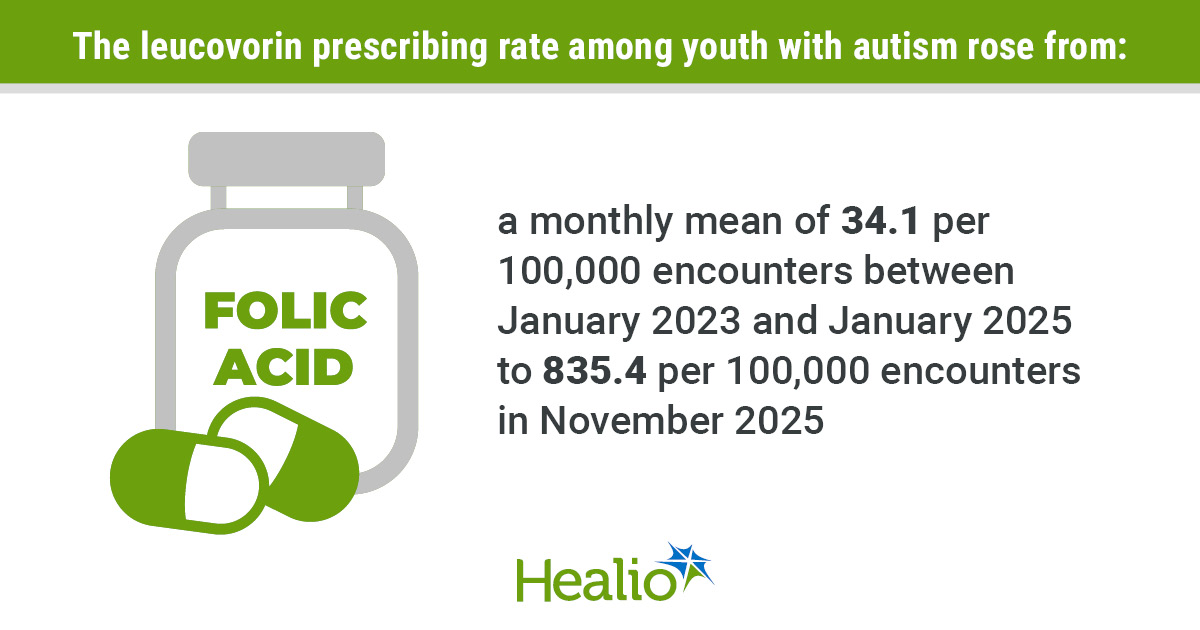
1. Leucovorin prescriptions for autism up by over 2,000% in recent months
- Authors / Affiliation: Joshua "Yoshi" Rothman, MD, MS, et al. (Clinical Research Team)
- Journal / Source: JAMA Network Open, Research Letter, published May 18, 2026
- Study Design: Longitudinal prescription trend analysis using pharmacy data
- Sample: Nationwide prescription data for pediatric and adolescent ASD patients in the U.S. (January 2023 – November 2025)
- Key Findings: In November 2025, leucovorin prescriptions spiked 24-fold (over 2,400%) compared to the average between January 2023 and January 2025—a rapid, short-term surge.
- Clinical & Research Implications: While leucovorin is being explored for children with folate receptor autoantibodies, this widespread surge likely lacks an evidence-based foundation. Clinicians must verify indications, such as testing for folate receptor autoantibodies, before prescribing and establish safety monitoring.
- Limitations: Prescription data alone cannot evaluate the appropriateness or clinical outcomes; further efficacy and safety studies are required.
2. Rising to the Challenge of Early Screening in Primary Health Care Through the Web Italian Network for Autism Spectrum Disorder (Win4ASD) in the Pediatric Population: Retrospective Observational Study
- Authors / Affiliation: Win4ASD Research Consortium (Italian National Pediatric Network)
- Journal / Source: PubMed, published February 24, 2026 (PMID 41734373)
- Study Design: Retrospective observational study using a web-based primary care pediatric network
- Sample: Pediatric patients across Italian pediatric clinics (nationwide scale)
- Key Findings: Retrospectively confirmed that early screening via the Win4ASD network allows for early intervention, which helps inhibit behavioral progression, improves quality of life, and reduces medical costs.
- Clinical & Research Implications: Digital screening platforms at the primary care level can shorten the path to diagnosis and intervention before visiting specialized centers. This is particularly promising for underserved regions.
- Limitations: Retrospective design carries selection bias, and findings may not generalize across different national healthcare systems.
3. Modeling rare coding variation on chromosome X provides insight into the genetics and differential sex prevalence of autism spectrum disorder
- Authors / Affiliation: X-chromosome Genetic Variation Research Team (medRxiv preprint)
- Journal / Source: medRxiv, published May 4, 2026 (Peer review pending)
- Study Design: Statistical genetics analysis modeling rare X-chromosome coding variants
- Sample: ASD diagnostic group vs. control group
- Key Findings: Identified patterns of rare coding variants on the X-chromosome that help explain the up to 4:1 male-to-female prevalence gap. Genes like PTCHD1 and MECP2 were highlighted as significant contributors.
- Clinical & Research Implications: Understanding the genetic mechanisms behind sex differences can help address the underdiagnosis and delayed diagnosis of females with ASD.
- Limitations: As a preprint, this has not been peer-reviewed and requires validation in actual clinical cohorts.
Key Trends
- The Gap Between Prescribing Trends and Evidence: The 24-fold increase in leucovorin reflects the influence of social media and community-driven information on clinical practice. It is a recurring pattern that demands clinicians exercise critical evidence evaluation.
- Digitalization of Primary Care Screening: The Win4ASD case study demonstrates the feasibility of a digital network model that enables primary care physicians to detect ASD without relying exclusively on specialized centers.
- Genetic Mechanisms of Sex Differences: Research on X-chromosome variants suggests that the gender gap is not just a diagnostic bias but has a clear genetic basis, pointing toward more precise diagnostic directions for females.
- Multidisciplinary Research: The simultaneous emergence of findings in epidemiology, primary care screening, and genetics reflects the rapid, multidisciplinary expansion of ASD research.
Action Items for Clinicians & Researchers
- Mandatory FRAA Testing: Before prescribing leucovorin, perform Folate Receptor Autoantibody (FRAA) testing. Avoid empirical prescribing without clear indication, as evidence is currently limited and long-term safety data are sparse.
- Suggested Reading: Review Frye et al. (2013), "Folinic acid improves verbal communication in children with autism and language impairment" (Molecular Psychiatry), along with recent systematic reviews on FRAA, before considering treatment.
- Caution on Preprint Data: Since the X-chromosome study is not yet peer-reviewed, it is premature to add these gene panels to clinical diagnostic tests or provide predictive counseling to parents. Wait for final publication.
Looking Ahead
Following the JAMA Network Open research letter, we expect upcoming cohort studies evaluating the appropriateness of leucovorin use, as well as cost-effectiveness analyses for FRAA screening. Prospective extension data for the Win4ASD network is also anticipated in the near future.
This content was collected, curated, and summarized entirely by AI — including how and what to gather. It may contain inaccuracies. Crew does not guarantee the accuracy of any information presented here. Always verify facts on your own before acting on them. Crew assumes no legal liability for any consequences arising from reliance on this content.
Powered by
