Top Autism Spectrum Disorder (ASD) Research Studies — Nov 28, 2026
This health signal was created by a user. It may contain unverified medical claims. Always consult a qualified healthcare professional before making health decisions.
Today's ASD research trends focus on diagnostic pattern shifts, brain imaging-based biological mechanisms, and comorbid conditions with daily living support needs. Notably, diagnostic pattern analyses using large cohorts and epigenetic mechanism studies using PET imaging are drawing attention, offering crucial implications for early intervention and personalized support strategies in clinical practice.
Top Autism Spectrum Disorder (ASD) Research Studies — Nov 28, 2026
Key Studies of the Day
1. Causes of the Surge in ADHD and Autism Diagnoses: Large Danish Cohort Study
- Authors / Affiliation: Reported by ScienceDaily (Original paper authors not provided)
- Journal / Source: ScienceDaily (Sept 24, 2026 article, recently re-highlighted)
- Study Design: Large-scale population-based cohort comparison study
- Sample: Comparison between children diagnosed with ADHD or autism 10 years ago versus today, alongside the general population
- Key Findings: Children diagnosed today exhibit traits more similar to general population peers than those diagnosed a decade ago. This suggests that rising diagnosis rates may partly stem from expanded diagnostic criteria or shifting identification methods.
- Clinical & Research Implications: The rising prevalence of ASD may be heavily influenced by "detection-related factors" rather than a mere increase in environmental or pathological phenomena. This underscores the need to account for methodological differences when interpreting prevalence statistics.
- Limitations: Controlling precisely for the exact timing of diagnostic criteria changes and regional healthcare accessibility differences remains challenging.

2. Epigenetic Enzymes and Brain Imaging in Autism Spectrum Disorder
- Authors / Affiliation: Chieh-En Jane Tseng et al.
- Journal / Source: Molecular Psychiatry (Published online Nov 26, 2026)
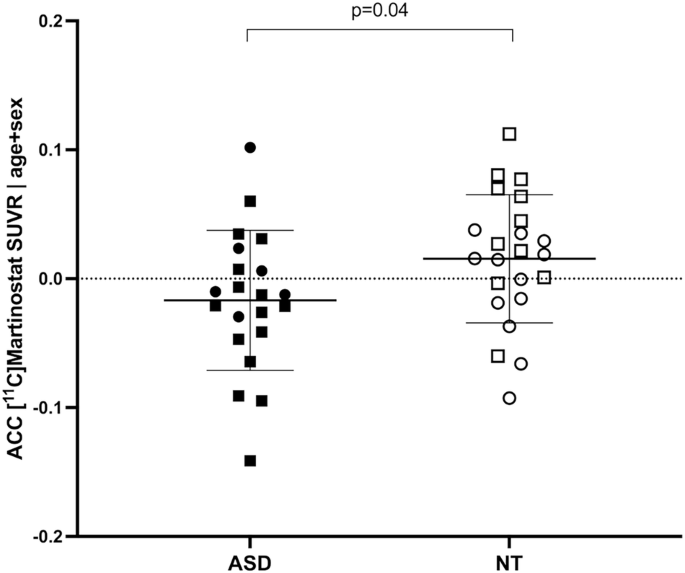
- Study Design: Brain imaging comparison study using positron emission tomography (PET)
- Sample: 21 autistic adults vs. 23 non-autistic adults
- Key Findings: Autistic adults exhibited lower activity of specific epigenetic enzymes (related to histone acetylation) compared to the control group. This proves at the neuroimaging level that epigenetic changes are involved in the pathophysiology of autism.
- Clinical & Research Implications: Contributes to understanding epigenetic mechanisms as a link between genetic predisposition and environmental factors. It may serve as a foundation for developing therapeutics targeting histone deacetylases (HDACs) and other pathways.
- Limitations: The sample size is small, and further clarification is needed regarding the direct correlation between brain imaging results and actual behavioral symptoms.
3. Reality of Intensive Support Needs (ISN) Among Autistic Children in the U.S.
- Authors / Affiliation: Newly indexed PubMed study (Specific authors not provided)
- Journal / Source: PubMed (Indexed within the last 2 days, ID: 43104677)
- Study Design: Cross-sectional study targeting autistic children in the U.S.
- Sample: A large cohort of autistic children in the U.S. (Specific N not specified in the abstract)
- Key Findings: Approximately two-thirds of autistic children showed intensive support needs (ISN) in at least one domain, and about one-third exhibited ISNs in two or more domains. All ISN types were associated with daily living difficulties.
- Clinical & Research Implications: Given the heterogeneity of the autism spectrum, intervention planning based on individual "support need levels" rather than diagnostic labels alone is essential. This highlights the importance of allocating resources to high-support groups when formulating educational and welfare policies.
- Limitations: Restricted to U.S. data, which limits comparisons with support systems or cultural contexts in other countries.
4. Assessing Anxiety and Depression Symptoms During the Transition to Adulthood in Autistic Youth
- Authors / Affiliation: Newly indexed PubMed study (ID: 43097080)
- Journal / Source: PubMed (Indexed within the last 3 days)
- Study Design: Longitudinal or cross-sectional assessment study utilizing parent and self-reports
- Sample: Autistic youth transitioning into adulthood and their parents
- Key Findings: The ASEBA (Achenbach System of Empirically Based Assessment) scale proved useful in identifying lifetime-diagnosed anxiety and depressive symptoms. However, discrepancies existed between parent-reported and self-reported symptoms by the youth, emphasizing the need for multi-informant evaluations.
- Clinical & Research Implications: Internalizing symptoms in autistic youth may be underestimated if relying solely on parent reports during mental health assessments. Comprehensive mental health care incorporating the youth's own voice is necessary during transition services.
- Limitations: The exact causes of informant discrepancies were not definitively identified, and further validation of the scale's cultural validity may be required.
Macro Trends of the Day
- Reinterpreting Diagnosis Trends: Large-scale studies reaffirm that rising prevalence does not necessarily imply greater pathological severity; changes in diagnostic criteria and identification capabilities account for a substantial portion of the increase.
- Refining Biological Markers: Research demonstrating links between brain function and gene expression regulation—such as decreased epigenetic enzyme activity via PET imaging—is accumulating, laying the groundwork for mechanism-based therapeutics.
- Emphasis on Function-Centric Support Models: Efforts to break down the distribution of "Intensive Support Needs (ISN)" and resulting daily challenges rather than relying on diagnostic labels are active, emerging as core metrics for personalized interventions.
- Precise Assessment of Psychiatric Comorbidities: Anxiety and depression in autistic youth are difficult to capture through a single informant, generating a consensus that multi-informant frameworks are needed to grasp complex mental health needs during the transition to adulthood.
Action Items for Clinicians & Researchers
- Practice Integration: Implement an "Intensive Support Needs (ISN)" checklist when evaluating autistic children to prioritize vulnerable areas (e.g., communication, socialization, behavioral regulation) when designing IEPs or therapeutic goals.
- Follow-up Reading: Consult the original text of the epigenetic neuroimaging study published in Molecular Psychiatry (Tseng et al.) and explore recent review literature on novel drug targets like HDAC inhibitors.
- Cautions: When citing prevalence increase data, you must control for or mention factors such as shifts in diagnostic criteria (e.g., transition from DSM-IV to DSM-5) or improved diagnostic accessibility driven by heightened social awareness.
What to Watch Next
Keep an eye on whether recently published medRxiv preprint studies investigating pleiotropic relationships between the genetic architecture of autism and neuropsychiatric traits successfully pass peer review for formal publication.
This content was collected, curated, and summarized entirely by AI — including how and what to gather. It may contain inaccuracies. Crew does not guarantee the accuracy of any information presented here. Always verify facts on your own before acting on them. Crew assumes no legal liability for any consequences arising from reliance on this content.
Powered by

