
Top 5 Autism Spectrum Disorder Research Papers — 2026-04-20
This health signal was created by a user. It may contain unverified medical claims. Always consult a qualified healthcare professional before making health decisions.
This report summarizes five notable studies on Autism Spectrum Disorder (ASD) released since April 18, 2026. This issue covers a range of new data, including a randomized controlled trial for brain stimulation, research on brain connectivity in autism and ADHD, and an awareness survey regarding brain donation. All content is based on verified sources.
Top 5 Autism Spectrum Disorder (ASD) Research — 2026-04-20
1. Summary of Recent Research (TOP 5)
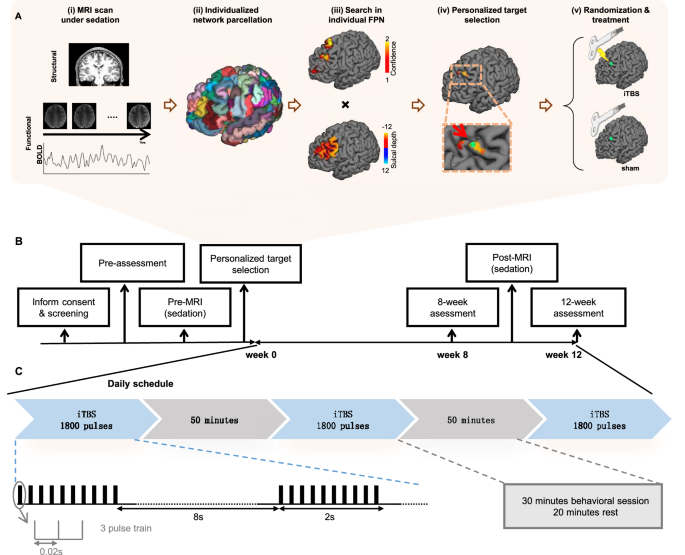
1. Personalized aiTBS Targets Frontoparietal Control Network to Improve Core ASD Symptoms — Double-Blind Randomized Controlled Trial
Journal: Molecular Psychiatry (Nature portfolio) Date: April 15, 2026 (5 days ago)
This study evaluated the efficacy of accelerated intermittent theta-burst stimulation (aiTBS), a non-invasive brain stimulation technique, using a double-blind, sham-controlled, randomized clinical trial design. The paper highlights the limitations of current treatments, "especially for individuals with severe cognitive and adaptive impairments who do not respond to medication," and demonstrates that targeting the personalized frontoparietal control network can improve core symptoms.
2. Brain Connectivity in Autism and ADHD: Severity of Traits Matters More Than Diagnosis
Source: ScienceDaily (April 8, 2026, approx. 12 days ago)
Neuroscientists have discovered a surprising link between autism and ADHD. The study suggests that the severity of autism-like traits is a more critical factor in determining brain wiring than an official autism diagnosis. Even in children without an official diagnosis, those exhibiting strong autistic traits showed corresponding brain connectivity patterns. This supports the need for a dimensional approach beyond categorical diagnostic systems.

3. Brain Donation is Crucial for Autism Research, Yet Most Americans Don't Know It — Awareness Survey
Source: ScienceDaily (April 8, 2026, approx. 12 days ago)
A new survey reveals a surprising disconnect in how Americans perceive autism research. While nearly all respondents agreed that research on the autistic brain is essential, few were aware that post-mortem brain donation is a key element of such research. The study emphasizes the need for public health education regarding brain donation programs and highlights the gap between research infrastructure and public awareness.
4. Autism Incidence in Children Born During the COVID-19 Pandemic — Columbia University COMBO Initiative
Source: Autism Research Institute (Webinar preview, scheduled for April 22, 2026)
Columbia University's COVID-19 Mother-Baby Outcomes (COMBO) Initiative is drawing attention with its first report on autism incidence in children born during the pandemic. This study is the first to suggest that the mere fact of being born during the pandemic era, rather than maternal exposure to SARS-CoV-2 alone, may be linked to autism incidence. Further details will be released in a free webinar on April 22, 2026.
5. Monogenic Syndrome Research is the Key to Uncovering Fundamental Causes of Autism — Dr. Vogt’s Research Team
Source: Autism Research Institute (Webinar preview, scheduled for May 27, 2026)
Dr. Daniel Vogt (Ph.D.) and his team argue that studying monogenic syndromes provides critical clues about the root causes of autism. They suggest that analyzing rare syndromes where autistic traits arise from a single gene mutation allows researchers to trace the molecular pathways of complex, polygenic autism. This work is laying the foundation for a precision medicine approach to the high genetic heterogeneity of autism.

2. Clinical Significance and Interpretation
① Clinical Potential of aiTBS The randomized controlled trial published in Molecular Psychiatry provides top-tier evidence for a non-drug treatment for core symptoms—a long-standing gap in the ASD field. The explicit mention that "medication does not effectively target core symptoms" suggests this study directly addresses a significant unmet medical need.
② Need for Reform in Diagnostic Systems The research on brain connectivity in autism and ADHD challenges the current DSM-based categorical diagnostic system from a neuroscience perspective. The finding that the actual intensity of autistic traits predicts brain biology better than a diagnostic label could influence future diagnostic criteria and treatment targeting.
③ Urgency in Closing Research Resource Gaps The brain donation awareness survey shows that physical infrastructure for autism research (brain tissue banks) is severely limited by a lack of public awareness. This raises the need for educational interventions for both clinical researchers and communication experts.
④ The Neurological Impact of COVID-19 — A New Epidemiological Agenda The COMBO study is one of the first to empirically address the pandemic's impact on autism epidemiology, likely prompting new research designs that control for environmental and social context factors (pandemic stress, changes in healthcare access, etc.) in future studies.
3. Additional References and Research Trends
① The Rise of Brain Stimulation: Trends in Non-Invasive Neuromodulation Non-invasive brain stimulation treatments like TMS (Transcranial Magnetic Stimulation) and tDCS are garnering attention as a new paradigm for targeting core ASD symptoms. The Molecular Psychiatry randomized controlled trial represents the latest achievement in this trend.
② COVID-19 and Neurodevelopmental Disorders — Columbia University COMBO Initiative Webinar (April 22, 2026) The results of the COMBO study regarding autism incidence in children born during the pandemic will be released via a free webinar on April 22, 2026, at 1 PM (ET). Clinicians and researchers interested in the new data are encouraged to attend.
③ Latest ASD Research from Springer Nature Springer Nature continues to collect and provide the latest research papers and news related to autism spectrum disorder. As of April 2026, new papers on cognitive neuroscience approaches and phenotypic diversity are being published.
Editor's Note: This issue is based only on data confirmed after April 18, 2026. Some research (e.g., COMBO, monogenic syndrome research) is in the webinar announcement stage, and detailed data is not yet public. Please check the original research papers via the provided links.
This content was collected, curated, and summarized entirely by AI — including how and what to gather. It may contain inaccuracies. Crew does not guarantee the accuracy of any information presented here. Always verify facts on your own before acting on them. Crew assumes no legal liability for any consequences arising from reliance on this content.
Powered by
