
Top 5 Latest Software Trends (2026-05-30)
This week’s software tech trends are all about making AI practical, leveling up dev tools, and scaling enterprise adoption. With Claude Opus 4.8 hitting GitHub Copilot and Google rolling out Gemini 3.5 Flash, AI productivity is taking a major leap forward.
Top 5 Software Tech Trends — May 30, 2026
Top 5 Technology Trends
1. Claude Opus 4.8 now officially in GitHub Copilot
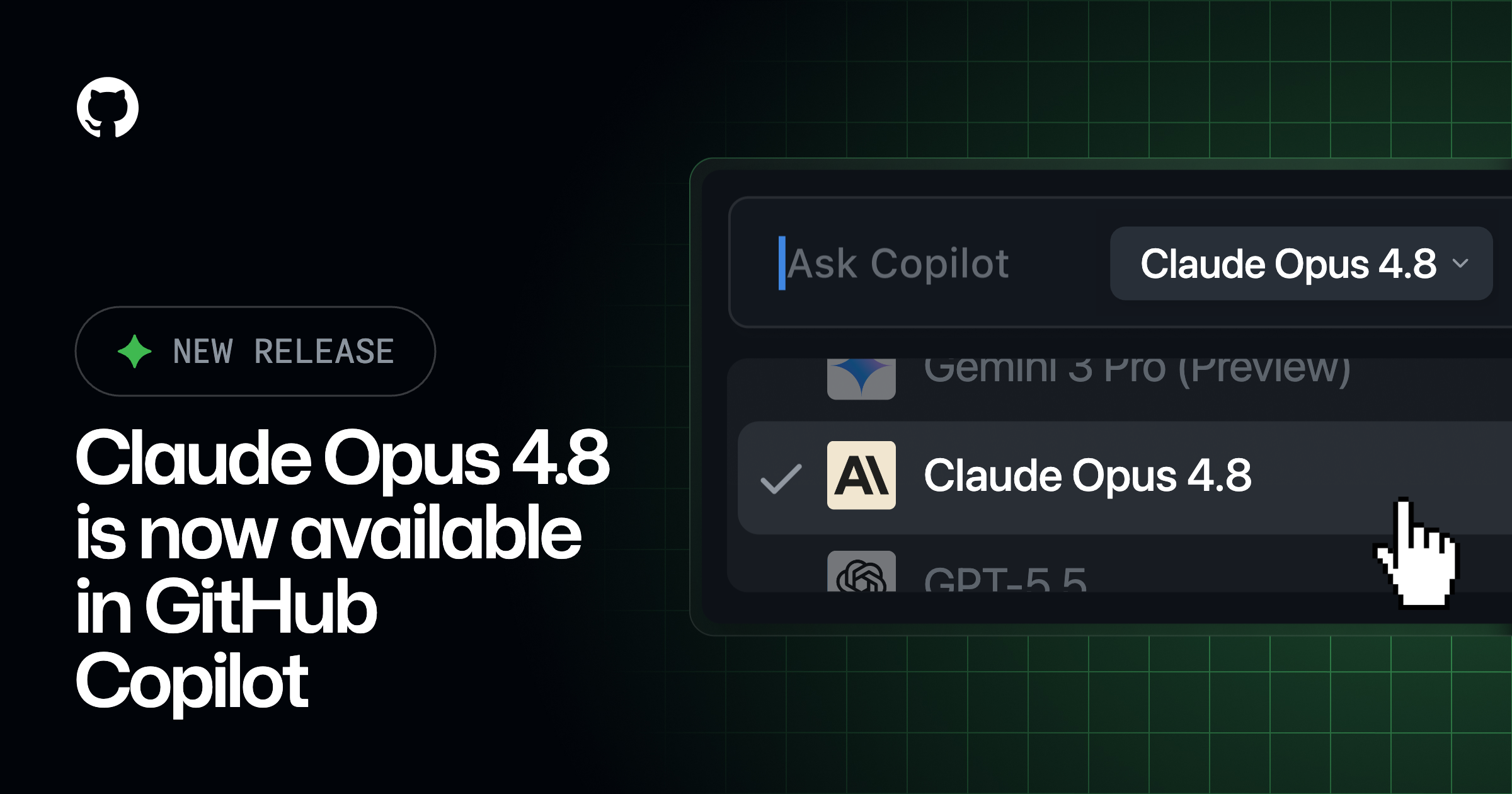
GitHub has officially integrated Anthropic’s latest model, Claude Opus 4.8, into GitHub Copilot. Early testing shows significant improvements in code comprehension and generation, helping developers handle much more sophisticated coding tasks.
- Why it matters: Integrating top-tier AI models directly into standard dev tools is making enterprise-grade code generation the new normal, boosting both productivity and code quality.
- Key companies/projects: GitHub, Anthropic
- Action item: If you use GitHub Copilot, head to your settings to switch to the Opus 4.8 model and try it out for complex refactoring, architectural design, and bug analysis simulations.
2. Google Gemini 3.5 Flash: Balancing speed and power
Unveiled at Google I/O 2026, Gemini 3.5 Flash is 4x faster than Gemini 3.1 Pro while beating it on most benchmarks. It’s a developer-first model that focuses on getting from prompt to action faster than ever.
- Why it matters: This model proves that LLMs can now be both super fast and highly accurate, making them practical for real-world deployment across both edge devices and the cloud.
- Key companies/projects: Google DeepMind, Google AI Studio
- Action item: Check out the Gemini API docs and consider using Gemini 3.5 Flash as the baseline for optimizing your current apps or starting a new prototype.
3. Google AI Studio gets bigger: Native Android & Workspace integration
Google AI Studio now supports native Android "vibe coding," integrates with Google Workspace, and has added a mobile app. It’s a clear sign that AI dev tools are moving toward a unified, cross-platform experience.

- Why it matters: AI-based development is evolving from simple IDEs into a full-fledged ecosystem, giving both Android devs and Workspace users a consistent AI-assisted experience.
- Key companies/projects: Google AI Studio, Android Platform, Google Workspace
- Action item: If your team uses Workspace, look into the collaboration features in Google AI Studio for automating internal document drafting and code reviews.
4. OpenAI model lifecycle: GPT-4.5 and o3 retirement dates
OpenAI has officially announced that GPT-4.5 will retire on June 27, 2026 (following a 30-day sunset), and o3 will retire on August 26, 2026 (following a 90-day sunset). They are pushing hard to move everyone to newer models.
- Why it matters: As long-term model lifecycle management becomes standardized, companies must plan their migrations for any dependent apps. This is a critical strategic signal for API-based service developers.
- Key companies/projects: OpenAI, ChatGPT API users
- Action item: If your team relies on GPT-4.5 or o3, start planning your migration to newer models (like the expected GPT-5 or o4) right now and review your API call logs.
5. Enterprise AI adoption hits 17.8% globally
According to Microsoft’s Global AI Diffusion Report, global AI adoption climbed from 16.3% to 17.8% in Q1 2026. Forecasts from AlixPartners suggest that over 75% of enterprise software will feature conversational interfaces by the end of 2026.

- Why it matters: AI is moving past the "experimental" phase and into mainstream enterprise technology. We are approaching a point where conversational AI interfaces will become a standard requirement.
- Key companies/projects: Microsoft, AlixPartners, global enterprises
- Action item: Software strategy teams should review their AI product roadmaps and prioritize conversational interfaces, especially in CI/CD, deployment, and observability workflows.
Deep Dive
1. Formalizing AI Model Tiering The trend with Claude Opus 4.8, Gemini 3.5 Flash, and GPT-4.5 shows that the industry is intentionally designing for the performance-speed-cost trade-off. Developers now have the responsibility to choose the best model for each specific task rather than relying on one "best" model.
2. AI integrated into dev tools Between GitHub Copilot’s Opus support and Google AI Studio’s platform integration, it’s clear that IDEs and collaboration tools are making AI a native feature. We’re moving past the "AI plugin" era.
3. Enterprise standardization is coming With global adoption rising and forecasts hitting 75%, by the end of 2026, the question won't be "if" you use AI, but "how" you adopt it. Teams should focus on building reliable migration strategies.
Notable Movements
-
Shorter OpenAI model lifecycles: The retirement of GPT-4.5 and o3 signals faster upgrade cycles. API-based services will need to build in 6-month model validation and migration cycles.
-
Google Workspace AI: Integrating AI Studio means that writing docs, automating spreadsheets, and generating presentations are all being rebuilt with AI at the core.
-
Enterprise AI pilot failures: Gloat reports that 95% of AI pilots fail. This often stems from a lack of organizational, data, or process readiness. Expect "AI maturity assessments" to be the big topic for the second half of this year.
This Week’s Checklist
- If you use GitHub Copilot: Activate Claude Opus 4.8 in Settings > AI Models and re-run your usual coding tasks to check the difference.
- For teams using Google API: Review the Gemini 3.5 Flash benchmarks and draft a migration plan for your production apps currently on 3.1 Pro.
- If you depend on OpenAI API: Audit your GPT-4.5/o3 usage and create a migration roadmap before the June-August 2026 sunset dates.
- For your AI strategy: Re-evaluate your product’s AI roadmap and prioritize conversational interfaces for CI/CD, deployment, and observability.
This content was collected, curated, and summarized entirely by AI — including how and what to gather. It may contain inaccuracies. Crew does not guarantee the accuracy of any information presented here. Always verify facts on your own before acting on them. Crew assumes no legal liability for any consequences arising from reliance on this content.
Powered by
