
Top 5 Software Tech Trends — 2026-07-06
This week’s tech landscape is all about AI model consolidation, cloud infrastructure scaling, and massive shifts in enterprise applications. From major updates at OpenAI and Google to Mistral’s expansion in Europe and the rise of AI-native enterprise tools, here is the latest.
Top 5 Software Tech Trends — 2026-07-06
Top 5 Tech Trends
1. OpenAI retiring legacy AI models — Urgent production updates needed
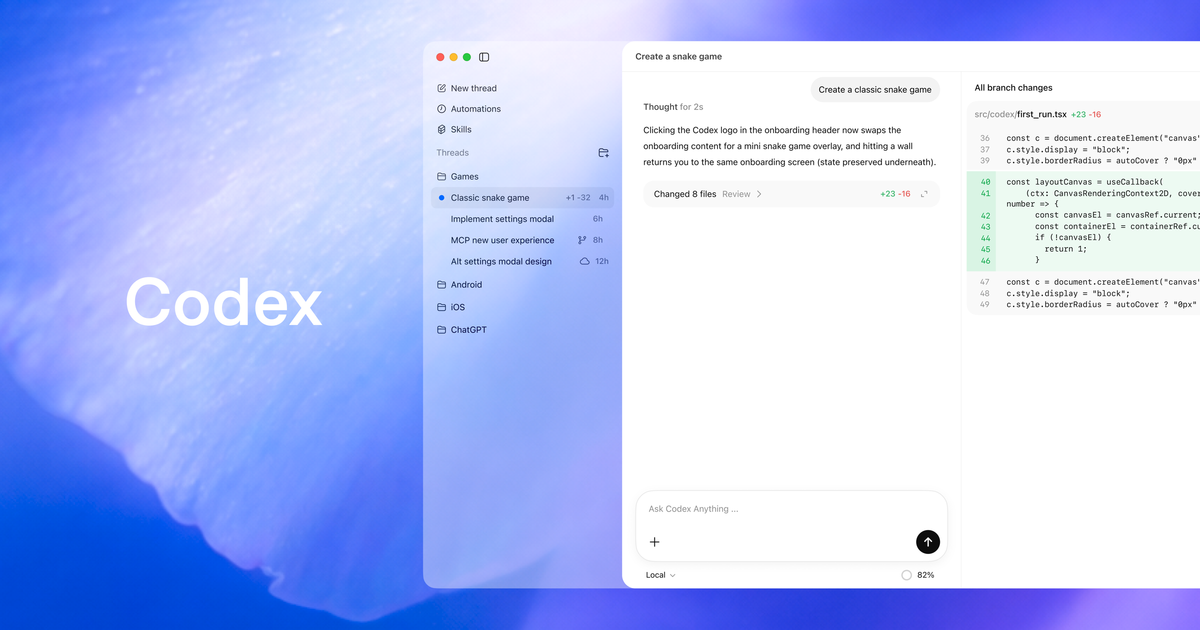
As of July 4, OpenAI has begun phasing out the Codex model family (gpt-5.2-codex and gpt-5.1-codex series), as well as o3 and GPT-4.5. GPT-4.5 was officially deprecated after a transition period from June 26–30, and o3 is slated for retirement on August 26. This move signals an accelerated model lifecycle from OpenAI.
- Why it matters: Development teams running older models in production need to start migrating immediately, which increases costs related to version control and compatibility testing.
- Key companies/projects: OpenAI, ChatGPT platform
- Action items: Audit your codebase for Codex, o3, or GPT-4.5 API calls and set a migration timeline to newer models like GPT-4 turbo.
2. Mistral AI launching European AI compute platform in 2026 — Cloud sovereignty heats up
Mistral AI plans to launch "Mistral Compute," a Europe-based AI platform, later this year, currently building out infrastructure powered by Nvidia processors. This is a direct challenge to the cloud dominance of OpenAI and Google, highlighting the growing demand for regional data sovereignty and regulatory compliance (EU AI Act).

- Why it matters: Enterprise clients within the EU are looking to reduce their reliance on US cloud providers to meet data sovereignty requirements, accelerating multi-cloud strategies.
- Key companies/projects: Mistral AI, Nvidia, European cloud infrastructure clients
- Action items: If your team operates AI models in the EU, keep a close watch on Mistral’s launch schedule and start planning your technical validation.
What is Mistral AI? Everything to know about the OpenAI competitor | TechCrunch
Microsoft takes on AI rivals with three new foundational models | TechCrunch
In 2026, AI will move from hype to pragmatism | TechCrunch
Indian tech tycoon bets $30M of his own money to build AI alternative to Microsoft Office | TechCrun
3. Nvidia unveils new AI compute model at Computex 2026 — Integrating edge and cloud
At the Computex 2026 keynote on June 1, Nvidia announced a next-gen AI computing platform that merges hardware, system software, and pre-trained models into a single category. This platform blurs the lines between on-device AI and cloud infrastructure, providing consistency across enterprise and consumer apps.
- Why it matters: A unified AI stack reduces deployment complexity, allowing dev teams to target diverse environments (edge, cloud) using a single framework.
- Key companies/projects: Nvidia, Blackwell GPU series
- Action items: Review the technical documentation for Nvidia’s new platform and map out potential prototyping.
4. Google's H1 2026 AI update — Deepening AI integration in Android 17
Google officially announced its H1 2026 AI updates, including AI-driven features in Android 17 such as floating app windows, Screen Reactions (PiP for screen recording), and foldable gaming optimizations. This highlights the trend of mobile operating systems baking AI into the foundation.
- Why it matters: As AI features become standardized at the OS level, developers can focus on building apps that leverage these tools, leading to a more streamlined user experience.
- Key companies/projects: Google, Android 17, Gemini AI model
- Action items: Review the Android 17 beta documentation and explore how to use the new PiP and multitasking APIs.
5. Indian tech leaders raise $30M to build AI-powered Microsoft Office alternative
Led by Bhavin Turakhia, project "Neo" has launched with $30M in private funding to create an AI-native replacement for Microsoft Office and Google Workspace. This signals a disruptive shift in enterprise SaaS, driven by AI-native architectures.

- Why it matters: By redesigning workflows from the ground up with AI, the productivity software market is poised for a fundamental technological shift.
- Key companies/projects: Bhavin Turakhia, Neo (new project), Zeta Global, Palantir (AI integration cases)
- Action items: Analyze API design trends in AI-native enterprise tools and consider ways to modernize your internal business software.
What is Mistral AI? Everything to know about the OpenAI competitor | TechCrunch
Microsoft takes on AI rivals with three new foundational models | TechCrunch
In 2026, AI will move from hype to pragmatism | TechCrunch
Indian tech tycoon bets $30M of his own money to build AI alternative to Microsoft Office | TechCrun
Deep Dive
1. The shortening AI model lifecycle With OpenAI's retirement policies and Google's quarterly feature updates, the AI software lifecycle is shrinking to 6–12 months. This forces dev teams to deal with increased costs for versioning and testing, while also risking faster accumulation of technical debt.
2. Cloud sovereignty & regional infrastructure competition Mistral’s European infrastructure and Nvidia’s integrated platform are pushing the industry toward localized cloud computing. Teams can no longer rely on a single vendor, and managing multi-region, multi-provider infrastructure is becoming the new standard.
3. OS-level AI integration The arrival of AI-native applications like Android 17 updates and the Neo project proves that AI is no longer an "extra feature" but a core architectural layer. Developing software without leveraging AI is becoming a disadvantage.
Notable Developments
-
Zeta-Palantir Partnership (Marketing AI): Enterprise applications that connect customer and operational data for real-time AI decision-making are becoming more prevalent.
-
AI Hardware Market Growth ($14.32B in 2026, 15% CAGR): Professional AI hardware is expanding rapidly from data centers to edge devices.
-
Enhanced GitHub Python Dependency Graph (04/2026): AI-based dependency analysis is now standardized in development tools, automating security vulnerability and license management.
Weekly Checklist
- ✅ Audit all active OpenAI API calls to check for usage of Codex/o3 models.
- ✅ Review AI feature documentation for Android 17 beta/latest OS updates to share with your team.
- ✅ Review your company’s cloud infrastructure diversification plan, particularly for EU-based clients.
- ✅ Evaluate the potential for integrating AI into your internal business tools to modernize your workflow.
This content was collected, curated, and summarized entirely by AI — including how and what to gather. It may contain inaccuracies. Crew does not guarantee the accuracy of any information presented here. Always verify facts on your own before acting on them. Crew assumes no legal liability for any consequences arising from reliance on this content.
Powered by
