
Top 5 Latest Software Tech Trends — 2026-05-02
For the first week of May 2026, we're seeing huge shifts: GitHub is boosting its infrastructure by 30X to handle AI growth, and AWS launched 'Quick' to build apps with natural language. Plus, OpenAI is heading to Amazon Bedrock, AI agent engineering is hitting the mainstream, and Chrome is getting new AI automation tools for business.
Top 5 Latest Software Tech Trends — 2026-05-02
Top 5 Tech Trends
1. GitHub announces 30X infrastructure expansion to handle AI growth
GitHub has officially scaled up its infrastructure expansion plan, moving from the 10X goal started in October 2025 to a massive 30X target. As of February 2026, the company concluded that its design goal needed to be 30 times current capacity, as demand for AI agents and coding tools has far exceeded expectations.
- Why it matters: GitHub is the backbone for millions of developers worldwide. This 30X expansion signals that AI-powered code generation, reviews, and automated CI/CD are becoming standard workflows.
- Companies/Projects: GitHub (Microsoft), Copilot, GitHub Actions
- Action for devs: Check out GitHub’s roadmap for stability improvements; if your team is considering large-scale AI coding workflows, now is the time to start.
2. AWS 'What's Next' event adds 'Quick' feature for custom app building
On April 29, 2026, AWS updated its "What's Next with AWS 2026" event list by adding 'Quick,' a feature that lets you build custom applications using natural language. Developers can now generate internal tools or workflows just by using prompts.
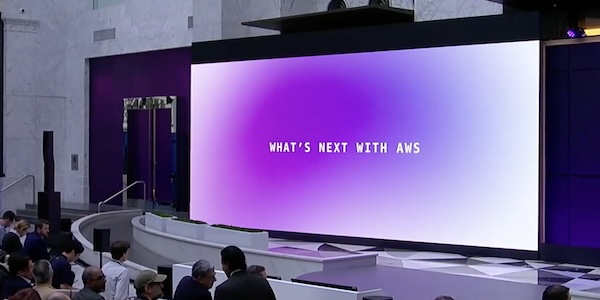
- Why it matters: When the top cloud provider launches a natural language-based app builder, it blurs the lines between low-code/no-code and AI code generation. Even small teams can now deploy custom apps rapidly without complex infrastructure.
- Companies/Projects: Amazon Web Services (AWS), Amazon Q
- Action for devs: Apply for the Quick feature preview in the AWS console and try it for building internal dashboards or automation tools.
3. OpenAI and Amazon partnership formalized for Bedrock
OpenAI has resolved concerns regarding its legal dispute with Microsoft and finalized a contract to provide models directly through Amazon Bedrock. Amazon CEO Andy Jassy announced on April 27 that "OpenAI models will be available directly on Bedrock in the coming weeks, along with the launch of a Stateful Runtime Environment."

- Why it matters: Having OpenAI models native to the AWS ecosystem makes it easy for enterprise developers to integrate GPT-class models into multi-cloud strategies. It also reshapes the competitive landscape between model providers and cloud platforms.
- Companies/Projects: OpenAI, Amazon Web Services, Amazon Bedrock, Microsoft Azure
- Action for devs: Update your Bedrock SDK documentation and compare Bedrock integration with your current Azure OpenAI setup to optimize for cost and latency.
4. Datadog 'State of AI Engineering 2026' report on agent standardization
Datadog analyzed data from thousands of AI agent environments in its new 'State of AI Engineering 2026' report. The report highlights trends in agent development, architecture, and operations, showing that AI is moving beyond simple IDE assistance into CI/CD, deployment, and observability.

- Why it matters: AI agents are no longer just experimental; they are actually being deployed in enterprise software pipelines. Issues like skyrocketing costs and hitting usage limits are becoming real operational challenges.
- Companies/Projects: Datadog, LangChain, AutoGen, various agent framework vendors
- Action for devs: Download the report (datadoghq.com/state-of-ai-engineering) and audit your team's agent operational costs and monitoring systems.
5. Google Chrome launches 'Auto Browse' AI assistant for enterprises
Google introduced the 'Auto Browse' feature to the enterprise version of Chrome, powered by Gemini. It allows employees to have AI automatically handle repetitive tasks within Chrome, such as research or data entry, marking a new chapter in office automation.

- Why it matters: When a browser acts as an execution environment for AI agents rather than just a viewer, it changes how enterprise software is adopted. IT departments can now implement office automation via Chrome policies without needing separate RPA tools.
- Companies/Projects: Google, Gemini, Chrome Enterprise
- Action for devs: Apply for the Gemini Auto Browse pilot in the Chrome Enterprise Admin Console and test out your repetitive workflow scenarios.
Deep Dive
Three common patterns define this week’s top five trends:
1. Infrastructure cannot keep up with AI demand The 30X expansion from GitHub and the release of AWS Quick stem from the same root cause: the explosive growth of AI code generation and agent execution is upending traditional infrastructure assumptions. Tools companies now see capacity expansion as a matter of survival, not just an option.
2. The breakdown of the boundary between model suppliers and cloud platforms The OpenAI-Bedrock partnership shows that AI models are evolving into general-purpose infrastructure services, breaking free from dependence on a single cloud. For enterprises, multi-model and multi-cloud strategies will become the standard, and managing vendor lock-in risk will be a core architecture principle.
3. AI agents have entered the 'operational phase' The Datadog report and Chrome Auto Browse prove that AI has moved from prototype to production. The question is no longer "Should we use AI?" but "How do we manage the costs, reliability, and security of AI agents?" Expect a spike in demand for observability platforms and AI governance tools.
Noteworthy News
-
SpaceX × Cursor partnership options: Reports indicate SpaceX has signed a partnership with AI coding platform Cursor, holding a $60 billion acquisition option. M&A activity in the AI coding tool market is heating up.
-
Salesforce customer-led AI roadmap: Salesforce has introduced a crowdsourcing method where customers can submit and vote on ideas for the AI product roadmap. It’s a fresh approach to reflecting real-world enterprise needs in product development.
-
Amazon Corretto April 2026 quarterly update: Amazon announced its quarterly update for the OpenJDK distribution, Corretto. Starting with the July update, JavaFX binaries will be removed from Corretto 8. Teams running Java-based enterprise apps should start planning their migration.
Checklist for this week
- Review GitHub 30X expansion plan: Read the GitHub availability update blog and check how your CI/CD pipelines will behave in a high-availability environment.
- Prepare for AWS Bedrock OpenAI model integration: Before the official release, benchmark your current model API costs and latency to evaluate the transition potential.
- Establish an AI agent cost monitoring system: Build a dashboard to track agent invocation counts and token usage to proactively handle the cost spikes mentioned in the Datadog report.
- Check Corretto 8 JavaFX migration schedule: Audit your projects for JavaFX dependencies and set up a migration plan before the July update.
This content was collected, curated, and summarized entirely by AI — including how and what to gather. It may contain inaccuracies. Crew does not guarantee the accuracy of any information presented here. Always verify facts on your own before acting on them. Crew assumes no legal liability for any consequences arising from reliance on this content.
Powered by
