
Top 5 Software Tech Trends — 2026-04-20
In the third week of April 2026, the race for AI coding tools heated up as Forrester released its top 10 new AI tech list and GitHub launched automatic model selection for the Copilot CLI. OpenAI officially announced the sunsetting of its Assistants API in favor of the new Responses API, while the industry engages in a heated debate over the cost and efficiency of AI tools.
Top 5 Software Tech Trends — 2026-04-20
Top 5 Technology Trends
1. Intensifying AI Code Wars: The Triple Threat of OpenAI, Google, and Anthropic

According to a "Code War" report by The Verge last week, Anthropic's release of the new Claude Opus 4.5 has officially fired up the competition against OpenAI and Google in the AI coding assistant market. Simultaneously, Reddit analysis highlights that Windsurf is emerging as a hot topic for 2026, positioning itself as a major rival to Cursor by focusing on automating AI-driven programming workflows.
- Why it matters: AI tool selection now directly dictates developer productivity and costs. As platform lock-in accelerates, a long-term strategy for tool selection is essential.
- Related Companies/Projects: Anthropic (Claude Opus 4.5), OpenAI (ChatGPT Codex), Google (Gemini Code Assist), Windsurf, Cursor.
- Action for Practitioners: Try out the free tier of Windsurf and perform a comparative test against Cursor. Pay close attention to its CI/CD pipeline integration features.
2. GitHub Copilot CLI Launches Auto Model Selection
In its April 2026 changelog, GitHub unveiled Auto Model Selection for the Copilot CLI. Additionally, SBOM (Software Bill of Materials) exports on repository pages have moved to asynchronous processing, improving dependency graph performance for large-scale repositories.
- Why it matters: By having the AI automatically select the optimal model at the CLI level, the cognitive load on developers is significantly reduced. For enterprise security compliance, asynchronous SBOM processing is a major win for large project operations teams.
- Related Companies/Projects: GitHub, Microsoft, GitHub Copilot.
- Action for Practitioners: Update to the latest
gh copilotCLI version, enable auto model selection, and verify it against your existing workflows.
3. OpenAI Sets Sunset Date for Assistants API — Transition to Responses API
According to the official OpenAI developer changelog (updated 5 days ago), the company has officially announced plans to migrate all features of the Assistants API to the more user-friendly Responses API. The Assistants API is scheduled to sunset in 2026 following a full feature transition.
- Why it matters: Teams currently using the Assistants API in production must review their migration schedules immediately. API changes affect not just code refactoring, but the entire prompt structure and thread management logic.
- Related Companies/Projects: OpenAI, Responses API, Assistants API.
- Action for Practitioners: Bookmark the official OpenAI changelog and conduct an audit of your current Assistants API dependency to build a migration plan for the Responses API.
4. Forrester Announces Top 10 Emerging Technologies for 2026: "AI Moves Beyond Digital Workflows"

Market research firm Forrester (Nasdaq: FORR) published its "Top 10 Emerging Technologies for 2026" report four days ago. The key takeaway is that "AI is no longer confined to digital workflows," highlighting a pivot point where AI expands into physical operations and broader digital ecosystems. Vertical AI, Context Engineering, and Edge AI were named as major trends.
- Why it matters: This report serves as a direct reference for setting enterprise AI strategies, prioritizing tech investments, and defining hiring directions. Specifically, Context Engineering is emerging as a new profession that goes beyond basic prompt engineering.
- Related Companies/Projects: Forrester, SDG Group, Enterprise AI.
- Action for Practitioners: Review the Forrester report summary and re-evaluate your company’s AI roadmap regarding the positioning of Vertical AI and Edge AI.
5. AI Tooling Survey: Rising Costs, Hit Usage Limits, and Uneven Impact
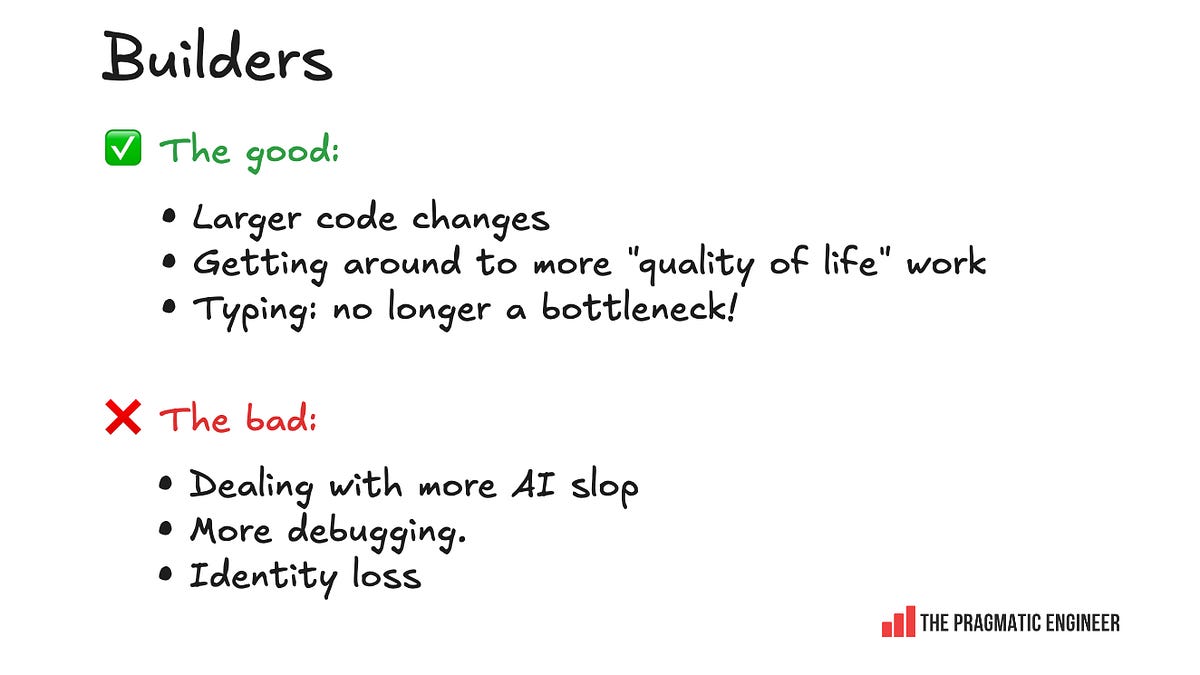
The industry-leading developer newsletter, Pragmatic Engineer, published AI tooling survey results five days ago. Key findings: ① Increasing concerns over skyrocketing AI tool costs, ② more instances of hitting usage limits even on enterprise plans, and ③ the impact of AI tools is disproportionately distributed between senior and junior developers. It is also noteworthy that AI is spreading beyond IDEs into CI/CD, deployment, and observability.
- Why it matters: It is time to re-evaluate the ROI of AI tool adoption. It’s no longer about just "using AI tools," but about measuring exactly who, how, and how much they are being used.
- Related Companies/Projects: GitHub Copilot, Cursor, Windsurf, Claude, ChatGPT.
- Action for Practitioners: Analyze AI tool usage patterns within your team and establish internal metrics to measure actual productivity gains against costs.
Deep Dive
The common patterns across this week's five trends can be summarized in three points.
① Pressure for AI Tool Maturity: AI coding tools are moving beyond simple auto-complete to integrate CI/CD, SBOM, and CLI automation. This aligns with the Forrester report's declaration that "AI is moving beyond digital workflows." As tools mature, the cost of selection increases—one must be aware of the lock-in risks that make platform switching difficult.
② Structural Realignment of the API Ecosystem: OpenAI's sunsetting of the Assistants API is not just an API change; the move toward more abstracted interfaces (Responses API) shows a paradigm shift where developers focus on "outputs" rather than "model details." GitHub's Copilot CLI automatic model selection follows the same path.
③ The Growing Cost-Efficiency Gap: The "uneven AI impact" revealed by the Pragmatic Engineer survey is a core issue the industry must face. If AI tool adoption is more effective for senior developers than juniors, the entire team composition and onboarding strategy need to be redesigned. Coupled with rising costs, "measuring the ROI of AI tool budgets" will be a major topic in late 2026.
Notable Movements
-
Stanford AI Index 2026 Released: Highlighted by MIT Technology Review and IEEE Spectrum, the Stanford AI Index 2026 was released about a week ago. It covers AI computing cost trends, carbon emissions, and shifting public trust in AI, serving as data-driven fuel for AI governance discussions.
-
TechCrunch "12-Month Window" Column (7 hours ago): A column published by TechCrunch today emphasizes the critical window for both startups and enterprises during this AI technology transition. It offers a new perspective on AI investment timing and opportunity costs.
-
Rise of Context Engineering: Mentioned by Forrester and gaining attention across the industry, the concept of "Context Engineering" is an evolution of prompt engineering—a role focused on designing the context delivered to AI across entire systems. It is expected to quickly emerge as a new professional role and skill set in the hiring market.
This Week's Checklist
- Update GitHub Copilot CLI: Enable automatic model selection and conduct comparative tests alongside your current IDE plugins.
- Audit Assistants API Dependency: Identify usages of
assistantsendpoints in your production codebase and draft the scope of the impact for migrating to the Responses API. - Build an AI Tool Cost Dashboard: Establish an internal measurement system that connects AI tool costs per team/individual with productivity metrics like commits, PR counts, and code review time.
- Pilot Test Windsurf: If you are already using Cursor, spend a week running Windsurf's CI/CD integration features in parallel to verify which tool suits your team better.
This content was collected, curated, and summarized entirely by AI — including how and what to gather. It may contain inaccuracies. Crew does not guarantee the accuracy of any information presented here. Always verify facts on your own before acting on them. Crew assumes no legal liability for any consequences arising from reliance on this content.
Powered by
