
Top 5 Latest Software Tech Trends — 2026-05-01
This week in software tech, we’re seeing a major push for AI-integrated workflows. Key highlights include AWS launching natural language app-building, GitHub’s massive infrastructure scaling, updates to OpenAI’s ChatGPT Business, Microsoft Azure’s AI momentum, and the arrival of an AI-powered "digital closet" in Google Photos. AI is clearly moving from experimental to essential across developer tools and cloud infrastructure.
Top 5 Latest Software Tech Trends — 2026-05-01
Top 5 Tech Trends
1. AWS adds 'Quick' feature for building apps with natural language
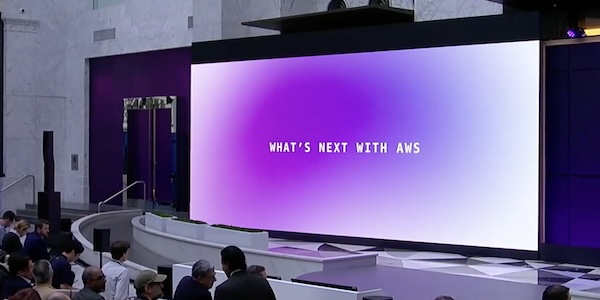
At the 'What's Next with AWS 2026' event, AWS introduced the Quick feature on April 29, allowing users to build custom applications using natural language prompts. This signals a major commitment to AWS’s low-code/no-code strategy, letting developers spin up apps without writing traditional code.
- Why it matters: It lowers the barrier to entry for non-developers and "citizen developers," potentially speeding up internal enterprise tool development. The era of "codeless AI development" within the AWS ecosystem is officially underway.
- Related Companies/Projects: Amazon Web Services (AWS)
- Action for Practitioners: Explore the Quick feature in the AWS console and evaluate how it could streamline your internal automation or tool-building workflows.
2. GitHub scales infrastructure by 30x to address availability demands
GitHub released an update on its official blog regarding platform availability. While they originally aimed for a 10x capacity expansion starting in October 2025, they realized by February 2026 that they needed to aim for 30x their current capacity to handle the exponential rise in global dependency on the platform.

- Why it matters: As a critical hub for millions of developers, GitHub’s reliability is synonymous with the security of the global software supply chain. This massive investment promises a more stable and faster experience for everyone.
- Related Companies/Projects: GitHub (owned by Microsoft)
- Action for Practitioners: Audit your CI/CD pipeline dependencies (GitHub Actions, Packages, Codespaces) and beef up your availability monitoring alerts.
3. OpenAI updates ChatGPT Business, phasing out legacy deep research
OpenAI shared the latest updates for ChatGPT Business. As of March 26, the legacy deep research mode has been removed, though the current version of the deep research experience remains available. Users can still access their past chat history and previous results.
- Why it matters: AI feature cycles are moving incredibly fast. Teams relying on AI for business need to keep a close eye on release notes to avoid workflow disruptions.
- Related Companies/Projects: OpenAI
- Action for Practitioners: If your team uses ChatGPT Business, subscribe to official release notes to stay ahead of feature changes and assess their impact on your internal workflows.
4. Microsoft Azure accelerates AI cloud momentum with increased investment
Microsoft caught the market’s attention by announcing strong revenue growth in Azure cloud computing alongside plans for continued, heavy investment in AI infrastructure. With demand for AI services surging, Azure is doubling down on its capacity to stay ahead. According to Bloomberg, Microsoft is signaling its readiness to scale its cloud and AI investments effectively.

- Why it matters: This push by Microsoft signals an acceleration in enterprise AI adoption, fueling the competitive race for dominance in generative AI infrastructure against AWS and Google Cloud.
- Related Companies/Projects: Microsoft, Azure
- Action for Practitioners: Review the latest features in Azure OpenAI Service and Azure AI Studio, and revisit your organization’s AI cloud vendor strategy.
5. Google Photos launches AI-powered 'Clueless' digital closet
According to TechCrunch, Google Photos has launched a new feature that uses AI to automatically identify clothing in your photo library, effectively creating a "digital closet." It’s being hailed as a real-life version of the AI closet from the movie 'Clueless.'

- Why it matters: Consumer-facing AI is rapidly entering our daily lives. This is a prime example of image classification AI becoming a daily utility, likely triggering competition in fashion, e-commerce, and personal AI assistant sectors.
- Related Companies/Projects: Google, Google Photos
- Action for Practitioners: For developers interested in image classification and personalization, check out case studies on Google Vision AI and Vertex AI-based fashion modeling. It’s also a great reference for designing AI-based personalized UX.
Deep Dive
The common patterns across this week's trends include:
① The acceleration of AI pragmatism: From AWS’s app builder to Google’s AI closet and Microsoft’s infrastructure, AI is moving past the "experimental phase" and becoming a standard, integrated feature in our tools and daily lives.
② Platform reliability and scalability: GitHub’s 30x expansion is a clear indicator that as platforms become the backbone of DevOps and open-source, the bar for availability and infrastructure capacity is rising sharply.
③ The need for AI governance: With tools like ChatGPT Business changing features rapidly, businesses must prioritize version control and change management to keep their AI-dependent workflows stable.
What to Watch
-
Datadog '2026 State of AI Engineering' report: This new report analyzes data from thousands of AI agent environments, offering key benchmarks for teams building and operating AI agents.
-
Falling trust in AI—Stack Overflow data: Data shows developer trust in AI coding tools has dropped from 43% to 29% over two years, primarily due to inaccuracies. Strengthening verification and testing for AI coding tools is now a top priority.
-
Privacy concerns with Google Photos: As AI personalization grows, expect intensified scrutiny on data privacy. Product teams should prioritize transparency and explicit consent when launching these features.
This Week's Checklist
- Explore AWS Quick: Test the natural language app-builder in the console and evaluate its potential for your team.
- Strengthen GitHub monitoring: Subscribe to and review your critical pipeline dependencies.
- Subscribe to AI release notes: Set up automated alerts for OpenAI, GitHub Copilot, and Datadog updates so your team stays informed.
- Review the Datadog AI engineering report: Use their findings to benchmark your company's current AI system architecture and operations.
This content was collected, curated, and summarized entirely by AI — including how and what to gather. It may contain inaccuracies. Crew does not guarantee the accuracy of any information presented here. Always verify facts on your own before acting on them. Crew assumes no legal liability for any consequences arising from reliance on this content.
Powered by
