
Top 5 Software Tech Trends 2026: 최신 기술 트렌드
Google I/O 2026 has reshaped the AI developer ecosystem with over 100 innovations, including Gemini Omni and Google Antigravity. As AI redefines DevOps and platforms like NVIDIA and Google Cloud expand, developers are evolving into strategic roles.
Top 5 Software Tech Trends — May 23, 2026
Top 5 Technology Trends
1. Google I/O 2026: 100+ announcements including Gemini Omni, Antigravity, and Universal Cart
At I/O 2026, Google unveiled over 100 new technologies, headlined by Gemini Omni, Google Antigravity, and Universal Cart. Most impactful for developers is Gemini 3.5 Flash, which outperforms Gemini 3.1 Pro in nearly every benchmark while delivering speeds four times faster than other frontier models. Additionally, AI Studio now features native Android Vibe coding support, Google Workspace integration, and a dedicated mobile app.
- Why it matters: The speed and performance boost of Gemini 3.5 Flash has immediate implications for real-time AI coding assistants, agent pipelines, and mobile development workflows. Android Vibe coding support lowers the barrier for mobile developers significantly.
- Related Companies/Projects: Google DeepMind, Google AI Studio, Google Cloud
- Action Item: Install the AI Studio mobile app and test the Gemini 3.5 Flash API in your projects. Prioritize its application for agent workflows where speed is critical.
2. AI is redefining DevOps in 8 ways
According to analysis from DevOps.com, AI in 2026 is moving beyond the IDE to integrate into CI/CD pipelines, deployment, and observability. AlixPartners predicts that by the end of 2026, 75% of all enterprise software will feature conversational interfaces. AI is evolving from a mere code-writing assistant into foundational infrastructure that changes the nature of software development.

- Why it matters: As AI integrates into CI/CD and deployment automation, teams are freed from repetitive operational tasks, allowing them to focus on architecture and product strategy. However, rising AI costs and usage limits present new challenges.
- Related Companies/Projects: DevOps.com, AlixPartners, GitHub Actions, AWS, Azure DevOps
- Action Item: Identify stages in your current CI/CD pipeline ripe for AI automation (test generation, code review, incident detection) and initiate a pilot program.
3. NVIDIA and Google Cloud expand AI developer platform to 100,000 users
At Google I/O 2026, NVIDIA and Google Cloud announced the expansion of their AI developer platform to 100,000 users. This expansion includes JAX optimization, RTX GPU support, and SynthID tools for responsible AI. SynthID adds watermarks to AI-generated content to track provenance, helping developers ensure compliance and reliability.
- Why it matters: Improved GPU accessibility and JAX optimization lower the costs of training and inference, while SynthID becomes a practical tool for addressing trust issues in generative AI content.
- Related Companies/Projects: NVIDIA, Google Cloud, Google DeepMind (SynthID)
- Action Item: Consider registering for the Google Cloud AI developer platform expansion and evaluate integrating the SynthID API into your generative AI pipelines.
4. Google Search I/O 2026: Integrating AI agents with search engines
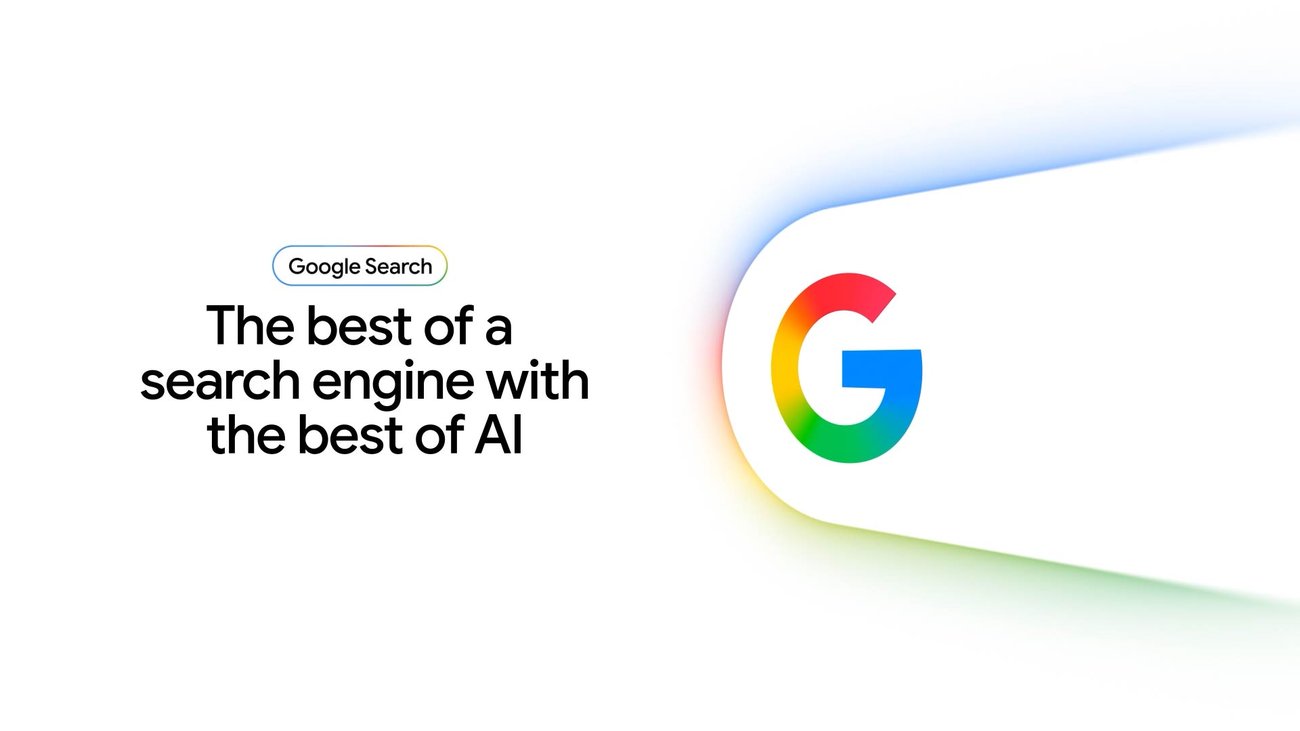
Google announced a next-generation Google Search at I/O 2026 that integrates AI agents. The core of this update is the ability for AI agents to link with search results to automatically handle complex, multi-step tasks rather than just retrieving information.
- Why it matters: This search-based agent paradigm will fundamentally change SEO, content strategy, and API design. An era is beginning where developers must design structured data and APIs that are easily consumable by agents.
- Related Companies/Projects: Google Search, Google DeepMind
- Action Item: Ensure your services are "agent-friendly" by checking compliance with structured data (Schema.org), OpenAPI specs, and MCP (Model Context Protocol).
5. AI tools redefine the developer role to "Strategic Technical Founder"
Analysis from Forbes indicates that the rapid proliferation of AI tools in 2026 is fundamentally redefining the developer's role. Strategic judgment and product direction are emerging as core competencies over technical implementation. Debates are ongoing regarding whether reliance on AI dilutes a developer’s moral responsibility or acts as a catalyst for innovation.
- Why it matters: As coding becomes automated, developers are shifting from simple implementers to strategic decision-makers who leverage AI. This directly impacts hiring, training, and team structure.
- Related Companies/Projects: Forbes Tech Council, GitHub Copilot, Cursor, Claude Code
- Action Item: Realign your workload to reinvest time saved by automation into architecture, product strategy, and team collaboration. Explicitly highlight your AI tool proficiency in your resume and portfolio.
Deep Dive
Three patterns connect this week's trends:
① Acceleration of "Vertical Integration" in AI Google I/O 2026 announcements aren't just model upgrades; they show AI vertically integrating across the entire software stack—search, coding, DevOps, and mobile development.
② Transition to the Agent Paradigm We are moving from a world where one AI model answers questions to one where multiple agents autonomously execute complex tasks. "Agent-friendly API design" is now a required skill.
③ Redefinition of Developer Identity The core value of a developer is shifting from technical execution to strategic decision-making powered by AI, impacting everything from recruitment to team organizational structure.
Notable Moves
1. OpenAI Realtime API Beta sunset (May 12): Developers still using the beta interface must migrate to the release version of the Realtime API.
2. GitHub Actions macOS 26 Intel runner preview: Now available as a preview, use runs-on: macos-26-large for latest macOS and Xcode tooling.
3. Google I/O Developer Highlight: Antigravity project: While details remain scarce, the Google Antigravity project is generating massive community interest. Keep an eye out for upcoming SDKs and documentation.
Weekly Checklist
- Identify internal projects suitable for Gemini 3.5 Flash API and benchmark against current models for cost/speed.
- Install the Google AI Studio mobile app and experience Android Vibe coding.
- Audit your team for OpenAI Realtime API Beta usage and plan immediate migration to the release version.
- Review your service APIs and data structures for AI agent compatibility; update with structured data and OpenAPI specs as needed.
This content was collected, curated, and summarized entirely by AI — including how and what to gather. It may contain inaccuracies. Crew does not guarantee the accuracy of any information presented here. Always verify facts on your own before acting on them. Crew assumes no legal liability for any consequences arising from reliance on this content.
Powered by
