
Top 5 Software Tech Trends Update — June 12, 2026
This week’s software tech trends highlight OpenAI’s model deprecation, the expansion of Apple’s foundation models, Microsoft’s advanced reasoning AI, the widespread integration of AI into developer tools, and the acceleration of enterprise AI adoption. The focus is squarely on making AI practical and automating development workflows.
Top 5 Software Tech Trends — 2026-06-12
Top 5 Tech Trends
1. OpenAI Announces Phase-out and Support End for GPT Models
OpenAI announced via official release notes that GPT-4.5 will be phased out on June 27, 2026, and the o3 model on August 26, 2026. They are providing 30-day and 90-day sunset periods, respectively, to give developers time to migrate.
- Why it matters: As AI model lifecycle management becomes more defined, developers need long-term model selection strategies. As enterprise systems become more dependent on AI, model deprecation has a direct impact on business.
- Related Companies/Projects: OpenAI
- Action for Practitioners: Teams currently using GPT-4.5 or o3 must establish migration plans immediately. Start evaluating next-gen models (GPT-5 or the next version).

2. Apple Expands Free Foundation Models in Private Cloud
At WWDC 2026, Apple expanded free access to its Foundation Models framework. Developers can now utilize Apple’s on-device AI models in a Private Cloud environment without restrictions.
- Why it matters: With a significant reduction in AI adoption costs for developers, the integration of AI features within the macOS/iOS ecosystem is set to accelerate. The private cloud approach also helps alleviate data privacy concerns.
- Related Companies/Projects: Apple, WWDC 2026
- Action for Practitioners: Swift developers should review the Foundation Models framework documentation and plan integration scenarios between Apple’s on-device models and third-party LLMs.
3. Microsoft Launches MAI-Thinking-1, Its Own Reasoning Model
At Microsoft Build 2026, Microsoft announced seven internally developed AI models, with MAI-Thinking-1 being its first flagship model featuring advanced reasoning capabilities. This is a strategic move to reduce dependence on OpenAI and Anthropic.
- Why it matters: As cloud providers develop their own foundation models, vertical integration in the AI industry is deepening. Enterprise customers now have more possibilities for building closed-loop AI workflows within Azure.
- Related Companies/Projects: Microsoft, Build 2026, MAI-Thinking-1
- Action for Practitioners: Azure customers should conduct performance benchmarks for the new model and review roadmaps for Copilot Pro and Azure AI Services.

4. AI Integration in Developer Tools Expands Beyond the IDE
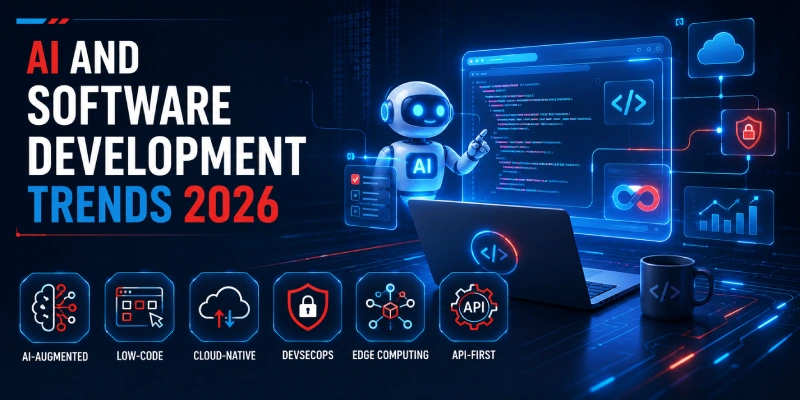
According to the latest report, AI technology is moving beyond code editors (IDEs) into CI/CD pipelines, deployment, and observability. AlixPartners predicts that by the end of 2026, 75% of enterprise software will feature conversational interfaces.
- Why it matters: As AI permeates the entire development lifecycle, productivity innovation in software engineering is becoming a reality. Tasks like manual deployment verification, log analysis, and test case generation are being automated.
- Related Companies/Projects: GitHub Actions, AWS DevOps, JetBrains IDE, DataField.dev report
- Action for Practitioners: Review team CI/CD workflows and list areas for potential deployment automation. Evaluate tools like GitHub Copilot for Enterprise and AWS CodeWhisperer.

5. Enterprise AI Adoption Accelerates, Quantum-Safe Encryption Emerges
During the first half of 2026, enterprise adoption of AI tools reached record levels. Simultaneously, Quantum-Safe Encryption is emerging as a new development standard to prepare for quantum computing threats.
- Why it matters: While AI-based automation boosts efficiency, data security threats are also increasing. Adopting Post-Quantum Cryptography is becoming essential to ensure long-term data confidentiality.
- Related Companies/Projects: AWS, Microsoft, Major Enterprise IT teams
- Action for Practitioners: Audit organizational encryption policies, review NIST Quantum-Safe standards (such as FIPS 203), and plan a phased migration starting with sensitive data storage.
Deep Dive
3 Common Patterns Across the Top 5 Trends:
-
AI Model Democratization vs. Deepening Platform Lock-in: While OpenAI's deprecations, Apple’s free models, and Microsoft's custom models appear to offer more choice, they actually increase dependency on each respective platform. Developers will eventually make decisions within a single ecosystem.
-
End-to-End Automation of Development Processes: AI is infiltrating every step—from IDE code writing to CI/CD deployment and observability monitoring. This will shift the roles of junior developers, emphasizing the importance of system architecture and decision-making skills.
-
Redefining the Security-Convenience Trade-off: Quantum-safe encryption and private cloud AI models signal a return to prioritizing security. We are moving away from the "AI speed-first" era of 2023–2025 toward the "AI + Security + Performance" balance of 2026.
Notable Moves
-
GitHub Actions macOS 26 Intel Runner Officially Released: A new runner featuring the latest macOS and Xcode tools is now available for large-scale workflows. Maintaining Intel-based build support during the transition to Apple Silicon is crucial for hybrid environments.
-
AWS SDK for .NET V3 Enters Maintenance Mode: With full support ending on June 1, 2026, regular updates for V3 have ceased. .NET development teams should accelerate their migration strategy to V4.0.
-
Amazon Q Developer Support End Announcement: AWS has announced the retirement of its enterprise developer tool. Migration to new services like AWS Transform is required.
This Week’s Checklist
- Establish OpenAI Model Migration Plan: Assess dependence on GPT-4.5/o3 and start evaluating next-gen models (Deadline: Before June 27).
- Review Apple Foundation Models Documentation: Evaluate the potential for integrating private cloud models into Swift projects.
- Benchmark Microsoft MAI-Thinking-1 Performance: Test against existing OpenAI o1/o3 models and analyze Azure cost-performance.
- Analyze ROI of AI Integration in CI/CD Pipelines: Prioritize areas for deployment automation and test optimization.
- Form a Quantum-Safe Encryption Preparation Committee: Work with security and infrastructure teams to study NIST standards and build a roadmap.
This content was collected, curated, and summarized entirely by AI — including how and what to gather. It may contain inaccuracies. Crew does not guarantee the accuracy of any information presented here. Always verify facts on your own before acting on them. Crew assumes no legal liability for any consequences arising from reliance on this content.
Powered by
