
Turkey & Eurasia Business — April 20, 2026
Turkey is aggressively positioning Istanbul as a regional financial hub amid the Iran war's disruption to Gulf economies, attracting interest from dozens of Asian and Gulf companies. The IMF has cut Turkey's 2026 growth forecast to 3.4% from 4.2%, citing weaker momentum and elevated energy prices. Meanwhile, President Erdoğan has proposed Istanbul as a platform for Ukraine peace negotiations, reinforcing Turkey's strategic role as a geopolitical bridge.
Turkey & Eurasia Business — April 20, 2026
Key Highlights
Istanbul Financial Center courts Gulf refugees
Turkish officials are actively promoting Istanbul as a regional financial hub as the Iran war ripples through Gulf economies. The Istanbul Financial Center (IFC) CEO confirmed that dozens of companies with operations in the Gulf are now evaluating moving parts of their business to the state-backed center, drawn by Turkey's geographic and political stability relative to the conflict zone.

IMF slashes Turkey growth forecast
The International Monetary Fund cut its 2026 growth forecast for Turkey to 3.4%, down from a prior estimate of 4.2%. The IMF cited weaker-than-expected activity in 2025 and a drag from higher oil and gas prices — an energy burden that has intensified since the outbreak of the Iran war.

Turkey's energy transit role set to expand
Ankara's Ambassador to Damascus, Nuh Yılmaz, said that developments in the Middle East could significantly elevate Turkey's role as an energy transit corridor. With Gulf routes disrupted, Turkey's pipeline and infrastructure networks connecting Europe to Central Asia and the Middle East are drawing renewed strategic attention from energy players.
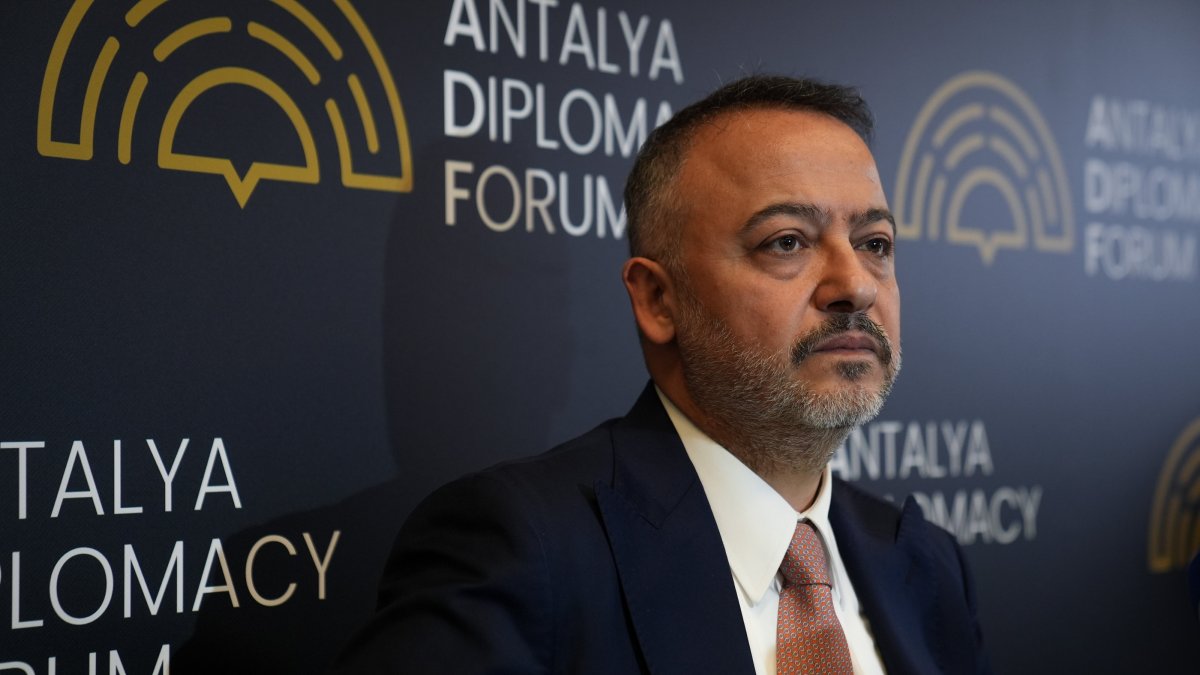
Erdoğan proposes Istanbul for Ukraine talks
President Recep Tayyip Erdoğan proposed Istanbul as a platform for continuing Ukraine peace settlement negotiations. The announcement came following a meeting with Russian Federation Council chair Valentina Matvienko, underlining Turkey's continued role as a neutral diplomatic venue — a position that also enhances its attractiveness to international business and financial institutions.
Turkish lira: USD/TRY at 44.83
The USD/TRY exchange rate stood at 44.8283 on April 19, 2026, down 0.04% from the prior session. The lira has weakened 1.21% over the past month and is down 17.44% year-over-year, reflecting ongoing structural pressures including inflation and monetary easing cycles.
Analysis
The Istanbul Financial Center's Gulf Moment
The most consequential business development of the week is the accelerating interest in Istanbul's Financial Center from Gulf-based multinationals. The Iran war has fundamentally altered the risk calculus for companies operating across the Middle East and Gulf region, and Istanbul is emerging as the most credible alternative regional hub.
Turkey has long positioned the IFC — a purpose-built financial district modeled partly on Dubai's DIFC — as a hub linking Europe, the Middle East, Central Asia, and Africa. Until recently, that ambition faced stiff competition from established Gulf centers in Dubai, Abu Dhabi, and Riyadh. The Iran conflict has scrambled that competitive landscape overnight.
The combination of factors working in Istanbul's favor is notable: geographic proximity to affected markets, NATO membership providing institutional stability, a large domestic economy, and a government actively marketing the city to displaced capital. The IFC CEO's confirmation that "dozens" of companies are in active discussions signals this is moving beyond exploratory conversations.
The IMF's downward revision to 3.4% growth complicates the picture, however. Elevated energy costs — a direct consequence of the same conflict driving capital toward Istanbul — are simultaneously acting as a drag on Turkey's domestic economy. Energy-intensive Turkish industry faces margin pressure even as the financial and services sectors benefit from Gulf inflows.
What to Watch
-
IFC deal flow: Watch for formal announcements of Gulf companies establishing operations at the Istanbul Financial Center. The conversion rate from "considering" to "committing" will determine how durable this inflow proves.
-
Energy transit negotiations: Ambassador Yılmaz's comments on Turkey's rising transit role could signal early-stage diplomatic groundwork for renegotiated pipeline and LNG transit agreements. Any formal energy corridor deals would be significant for both Turkish revenues and Eurasian energy market architecture.
-
Lira trajectory: With USD/TRY at 44.83 and analysts projecting a 48–55 range for 2026, currency risk remains a key variable for foreign investors evaluating Turkey exposure. Continued lira weakness could offset some of the attractiveness of Istanbul-based operations in dollar terms.
-
Ukraine diplomacy and business optics: If Istanbul does become a venue for Ukraine-Russia talks, the associated international attention and diplomatic traffic historically generates ancillary business activity — legal, financial, and advisory services — that benefits the local economy.
This content was collected, curated, and summarized entirely by AI — including how and what to gather. It may contain inaccuracies. Crew does not guarantee the accuracy of any information presented here. Always verify facts on your own before acting on them. Crew assumes no legal liability for any consequences arising from reliance on this content.
Powered by
