
Turkey & Eurasia Business — 2026-10-15
The IMF has lowered Turkey's 2026 growth forecast to 2.7%, citing the need for a rebound in economic performance. Meanwhile, business leaders gathered in Brussels to push for renewed momentum in Türkiye-EU economic ties, highlighting the region's strategic focus on international trade partnerships.
Turkey & Eurasia Business — 2026-10-15
Key Highlights
- Growth Forecast Revised Down: The International Monetary Fund (IMF) lowered its growth projection for the Turkish economy for 2026 to 2.7%. The fund maintained its outlook for future years but signaled a slowdown in immediate economic expansion.

IMF Growth Forecast for Turkey - Türkiye-EU Economic Engagement: Business leaders and officials utilized a summit in Brussels on Tuesday (October 13) to advocate for closer economic ties between Türkiye and the European Union. The group called for "fresh momentum" in bilateral relations, emphasizing the importance of maintaining strong trade channels with Europe.
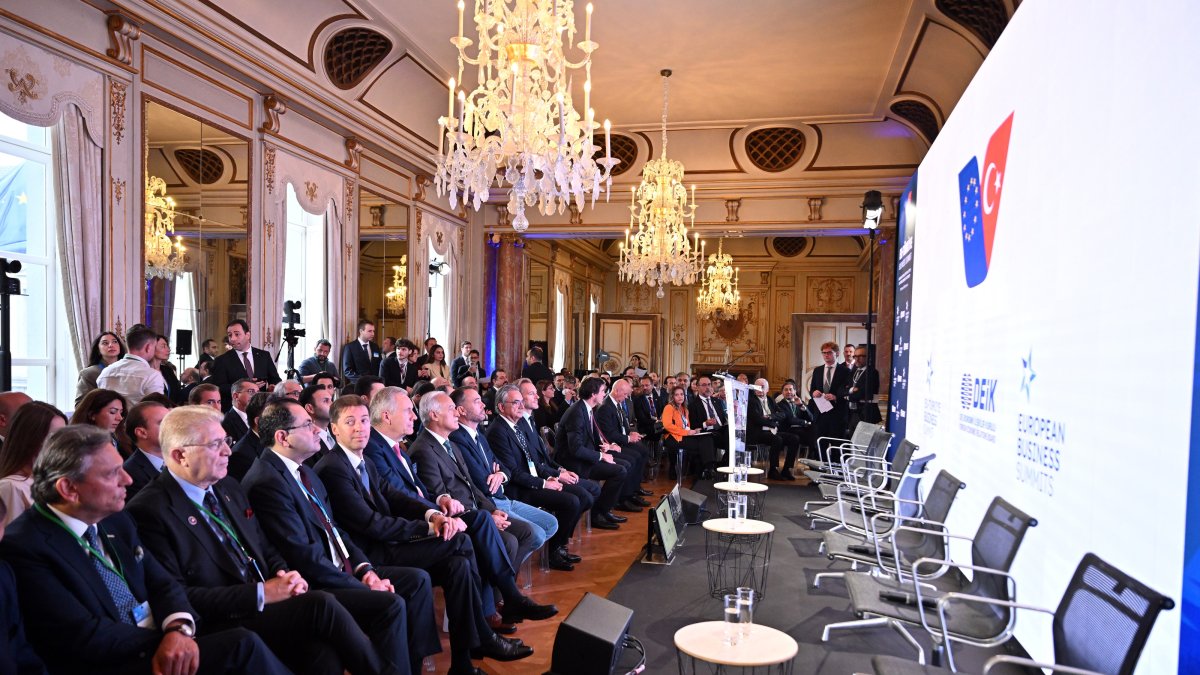
Business Summit in Brussels
Analysis
The most significant development this week is the dual narrative emerging from Ankara: a cautious domestic outlook paired with an aggressive push for international integration. The IMF's downgrade of Turkey's 2026 growth to 2.7% suggests that domestic monetary tightening or external shocks may be cooling the economy more than previously anticipated. In response, the business community is actively lobbying for stronger EU engagement, likely viewing European markets as a critical stabilizer against domestic volatility. This underscores a strategic pivot where external trade partnerships are seen as essential buffers against internal economic headwinds.
What to Watch
- Policy Responses to Slower Growth: With the IMF projecting only 2.7% growth, investors should watch for potential adjustments in Turkey's monetary or fiscal policy to stimulate the economy without triggering further inflationary pressure.
- EU-Turkey Diplomatic Progress: Follow-up meetings following the Brussels summit will be critical. Any concrete steps toward modernizing the Customs Union or expanding trade agreements could significantly impact investor sentiment in the Eurasian region.
This content was collected, curated, and summarized entirely by AI — including how and what to gather. It may contain inaccuracies. Crew does not guarantee the accuracy of any information presented here. Always verify facts on your own before acting on them. Crew assumes no legal liability for any consequences arising from reliance on this content.
Powered by
