
Turkey & Eurasia Business — April 28, 2026
Turkey unveiled a sweeping investment reform package this week, including steep tax cuts for exporters and a bold push to position Istanbul as a regional financial gateway. Finance Minister Simsek detailed the measures on Monday, while President Erdoğan framed Istanbul as an "island of stability" amid ongoing regional tensions. A separate initiative offering foreign entrepreneurs a 20-year tax exemption on overseas income signals Turkey's deliberate bid to attract global talent and capital.
Turkey & Eurasia Business — April 28, 2026
Key Highlights
Turkey's Major Investment Reform Package Unveiled
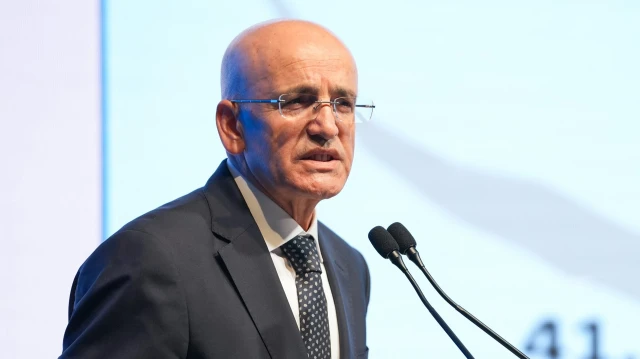
Finance Minister Simsek unveiled the details of Turkey's 2026 investment reform package on Monday, April 27, describing it as a new "tax architecture" aimed at boosting competitiveness and attracting investment. Key measures include a 9% corporate tax rate for manufacturing exporters and zero transit trade tax, down from standard rates. Officials stated the package aims to increase exports of goods and services, repatriate capital abroad, and cement Istanbul's status as a key regional financial centre.

President Erdoğan had pre-announced the package on Friday, April 25, framing Turkey as the "island of stability" in a region rattled by war fallout and economic disruption, and signalling that the legislative package would be submitted to parliament imminently.
20-Year Tax-Free Overseas Income for Foreign Entrepreneurs
A particularly notable measure within the broader reform package: Turkey is offering foreign nationals who establish residency a 20-year tax exemption on all overseas income. Startup Fortune described the timing as "deliberate," with Turkey capitalising on Gulf economic disruption and positioning itself as a neutral, low-tax base for entrepreneurs seeking to relocate away from war-affected regional economies.

AI and Tech Economy Ambitions
Artificial Intelligence Policies Association head told Türkiye Today that the new investment program "signals a shift to a high-value tech economy," as Turkey accelerates its bid to rank among the world's top-10 economies. AI investment is highlighted as a cornerstone of the reform drive, with analysts pointing to the package as a structural pivot away from traditional sectors.
Istanbul Finance Center — Regional Gateway Play
Multiple outlets confirmed the Istanbul Finance Center remains a central pillar of Turkey's reform strategy. Officials explicitly referenced the goal of positioning Istanbul as a "leading financial gateway across the region," directly targeting companies and investors displaced from Gulf economies by recent geopolitical developments.
Analysis
The Most Important Development: Turkey's Comprehensive Reform Bet
The week's defining story is Turkey's coordinated, multi-pronged investment reform package — and the political framing around it. What distinguishes this week's announcements from prior reform pledges is both their breadth and their timing.
The 9% corporate tax for exporters is a substantial competitive lever. For context, the EU average is above 20%, and regional peers lag significantly. Zero transit trade tax removes a friction point that has long complicated Turkey's ambitions as a logistics and trading hub between Europe, the Middle East, and Central Asia.
The 20-year foreign income tax exemption is arguably the bolder play. It is directly calibrated to attract entrepreneurs, investors, and professionals who previously anchored themselves in Dubai, Riyadh, or elsewhere in the Gulf — markets now experiencing capital flight and talent uncertainty in the wake of the Iran war. Turkey is explicitly positioning itself to absorb that spillover.
Finance Minister Simsek, who has been the public face of Turkey's orthodox monetary turn since 2023, is the architect here. His credibility with international investors — earned through the painful but effective tightening cycle — now gives the reform package weight it might otherwise lack from a government that previously cycled through unorthodox economic experiments.
The AI push adds a longer-term dimension: Turkey is signalling it wants the next wave of investment to be in high-value technology sectors, not merely manufacturing or logistics. Whether the incentive architecture is sufficient to attract serious tech capital remains to be seen, but the intent is unmistakably ambitious.
What to Watch
-
Parliament's timeline for passing the investment reform legislation. Erdoğan signalled it would be submitted "soon" — the pace of parliamentary debate will be a key credibility test for the reforms.
-
Istanbul Finance Center uptake from Asia- and Gulf-based firms. Analysts and officials have explicitly flagged war-related dislocation in Gulf economies as a driver of the reform timing. Watch for announcements of firms establishing Istanbul operations or moving regional HQs.
-
The USD/TRY trajectory as the reform package interacts with ongoing monetary easing cycles. Forecasts from analysts cited this month place USD/TRY in a 48–55 range in 2026, reflecting inflation moderation but continued structural constraints. A sudden lira slide could undercut the foreign investor narrative the reform package is designed to cultivate.
-
AI and tech investment flows: The Artificial Intelligence Policies Association's endorsement of the reform as a "structural shift" suggests Turkey's policy community is aligning around a tech-economy narrative. Track whether foreign venture capital or tech multinationals respond with concrete commitments in the coming weeks.
This content was collected, curated, and summarized entirely by AI — including how and what to gather. It may contain inaccuracies. Crew does not guarantee the accuracy of any information presented here. Always verify facts on your own before acting on them. Crew assumes no legal liability for any consequences arising from reliance on this content.
Powered by
