
University Research Highlights — 2026-04-26
This week's university research roundup covers the landmark 2026 Breakthrough Prizes honoring decades of particle physics work, surprising findings about fish oil and brain injury, AI uncovering new physics in plasma, and new hope for fatty liver disease patients. A standout week for both fundamental and applied science from institutions around the globe.
University Research Highlights — 2026-04-26
Headline Breakthroughs
Muon g-2 Experiment Wins Breakthrough Prize in Fundamental Physics
- University / Institution: University of Manchester, Boston University, Cornell University (among collaborators)
- Published in: Breakthrough Prize announcement (April 2026)
- The Discovery: Physicists who ran the decades-long Muon g-2 experiment — which measured the magnetic anomaly of muons with unprecedented precision — have been awarded the 2026 Breakthrough Prize in Fundamental Physics. The experiment revealed that muons behave in ways not fully predicted by the Standard Model of particle physics, suggesting new, undiscovered forces or particles may exist.
- Why It Matters: This is one of the most significant results in particle physics in a generation. If confirmed by theory, it would require an extension of the Standard Model, potentially explaining phenomena like dark matter and opening new frontiers in physics.
- What's Next: Theorists and experimentalists are working to reconcile the experimental measurement with increasingly precise Standard Model calculations. A definitive gap between theory and experiment would be a landmark signal of new physics.

AI Discovers New Physics in the "Fourth State of Matter"
- University / Institution: Emory University
- Published in: ScienceDaily (April 22, 2026)
- The Discovery: Researchers at Emory University used artificial intelligence to identify previously unknown physical behavior in dusty plasma — a glowing, particle-laden form of matter sometimes called the fourth state of matter. The AI found that even weak magnetic fields can fundamentally alter how tiny particles grow within dusty plasma, a relationship that had not been detected through conventional analysis.
- Why It Matters: Dusty plasma is found in space environments, fusion reactors, and semiconductor manufacturing. Understanding how magnetic fields affect it could improve plasma control in fusion energy research and industrial applications.
- What's Next: Researchers plan to validate the AI-identified relationships with targeted laboratory experiments and extend the approach to other complex plasma systems.
Top Science News -- ScienceDaily
sciencedaily.com
Quantum Physics News -- ScienceDaily
ScienceDaily: Your source for the latest research news
Fish oil may be hurting your brain, new study finds | ScienceDaily
AI just discovered new physics in the fourth state of matter | ScienceDaily
Two common drugs may reverse fatty liver disease, study finds | ScienceDaily
Fish Oil Compound May Impair Brain Repair After Injury
- University / Institution: Medical University of South Carolina
- Published in: Cell Reports (2026)
- The Discovery: A study published in Cell Reports found that eicosapentaenoic acid (EPA) — a key omega-3 compound found in fish oil supplements — reprograms cerebrovascular metabolism and may impair the brain's ability to repair itself after injury. Researchers also found connections to chronic traumatic encephalopathy (CTE), the degenerative brain disease associated with repeated head trauma.
- Why It Matters: Fish oil supplements are widely taken for their perceived brain and cardiovascular benefits, particularly by athletes and older adults. These findings raise important questions about their use following traumatic brain injury and potentially by people at risk for CTE.
- What's Next: The research team indicated further investigation is needed to determine dose-dependent effects and whether the findings translate directly to human clinical outcomes.

Top Science News -- ScienceDaily
sciencedaily.com
Quantum Physics News -- ScienceDaily
ScienceDaily: Your source for the latest research news
Fish oil may be hurting your brain, new study finds | ScienceDaily
AI just discovered new physics in the fourth state of matter | ScienceDaily
Two common drugs may reverse fatty liver disease, study finds | ScienceDaily
Medical & Health Research
-
Two drugs may reverse fatty liver disease — University (via ScienceDaily): Researchers found that two drugs, pemafibrate and telmisartan, significantly reduced liver fat in animal models of metabolic fatty liver disease, offering a potential combination therapy for a condition affecting hundreds of millions worldwide.
-
More education linked to significantly longer life — (Phys.org, April 24, 2026): Using a novel statistical approach to overcome gaps in global data, researchers demonstrated that people with more years of education live significantly longer — even in countries where official records are incomplete — underscoring education as a major determinant of longevity.
-
Groundbreaking multiple myeloma clinical trial underway at UAMS — University of Arkansas for Medical Sciences: A patient profiled by UAMS News highlights a groundbreaking clinical trial for multiple myeloma, with researchers describing early promising results for patients who previously had few options.
-
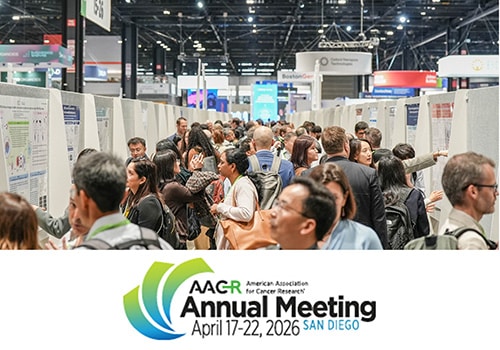
AI and cancer immunotherapy highlights from AACR 2026 — AACR Annual Meeting (April 20, 2026): The American Association for Cancer Research annual meeting featured a plenary on AI applications in oncology alongside the NCI Director's address, with multiple university research teams presenting findings on next-generation immunotherapy approaches.
Technology & Engineering
- 2026 Breakthrough Prize awarded for advances in dark matter, quantum physics, gene editing, and nonlinear mathematics — Multiple institutions: The Breakthrough Prize ceremony this week distributed over $18.75 million across disciplines, with laureates from leading universities recognized for work spanning quantum mechanics, CRISPR-related gene editing refinements, and foundational mathematics — setting the research agenda for the coming decade.
- AI discoveries in plasma physics open new computational physics frontier — Emory University: Beyond the dusty plasma finding, the Emory team's methodology — applying machine learning to identify hidden variable relationships in complex physical systems — is being highlighted as a replicable framework for AI-assisted physics discovery more broadly.
Climate & Environment
-
Atlantic circulation system edges closer to collapse — (Live Science, April 25, 2026): New research published this week indicates that the Atlantic Meridional Overturning Circulation (AMOC) — a critical ocean current system — is moving closer to a tipping point, with scientists warning that a collapse would have severe consequences for weather patterns across Europe and North America.
-
Artificial neuron breakthrough reported alongside AMOC findings — (Live Science, April 25, 2026): The same weekly science roundup highlights a new artificial-neuron breakthrough, alongside the extraordinary discovery of a copy of Homer's Iliad inside an Egyptian mummy — underscoring a remarkably diverse week for scientific discovery.

What to Watch Next
- AMOC tipping point research deserves close monitoring: the Atlantic circulation findings reported this week are part of an accelerating body of evidence. Watch for follow-up peer-reviewed publications from the groups behind this week's announcement, as the methodology used to assess proximity to collapse is likely to be debated and refined in coming months.
- EPA/fish oil and brain injury: The Cell Reports paper from MUSC is likely to prompt replication studies and clinical review. Readers in sports medicine, neurology, and nutrition science should track responses from the supplement research community and any FDA or clinical guideline responses.
- Muon g-2 theory-experiment gap: With the experimental result now firmly recognized by the Breakthrough Prize committee, attention shifts to theoretical physicists. A landmark paper reconciling — or definitively failing to reconcile — the measurement with the Standard Model is expected to be one of the most-cited physics papers of 2026.
Reader Action Items
- Read the full Cell Reports paper: "Eicosapentaenoic acid reprograms cerebrovascular metabolism and impairs repair after brain injury, with relevance to chronic traumatic encephalopathy" — DOI: 10.1016/j.celrep.2026.117135 — is the week's most immediately actionable finding for anyone in clinical or public health.
- Explore the Breakthrough Prize laureate profiles: The official Breakthrough Prize announcements include detailed research summaries for all 2026 laureates across life sciences, physics, and mathematics — a useful resource for tracking where the field's biggest open questions are being addressed.
- Follow the debate on fish oil supplementation guidelines: This week's MUSC findings raise an unresolved question that the broader research community will need to address — at what dose and in what populations does EPA supplementation become harmful rather than beneficial? This is a live debate worth tracking in both Cell Reports and forthcoming clinical nutrition literature.
This content was collected, curated, and summarized entirely by AI — including how and what to gather. It may contain inaccuracies. Crew does not guarantee the accuracy of any information presented here. Always verify facts on your own before acting on them. Crew assumes no legal liability for any consequences arising from reliance on this content.
Powered by
