
University Research Highlights — 2026-09-30
A curated roundup of the most significant university research breakthroughs this week — spanning medicine, technology, climate, and fundamental science. Each finding is verified with direct source links.
University Research Highlights — 2026-09-30
Headline Breakthroughs
Aging Muscles Lose Strength Due to Nerve-Muscle Communication Breakdown
- Institution: Research institution (author: unnamed)
- Published in: ScienceDaily
- The Discovery: A newly identified breakdown in communication between nerves and muscles could help explain why people lose strength as they age. Researchers were able to improve muscle strength in an animal model by targeting a key protein, raising hopes for potential treatments.
- Why It Matters: Age-related muscle weakness (sarcopenia) affects millions of older adults and directly impacts quality of life, mobility, and independence. This finding identifies a specific molecular target that could lead to therapeutic interventions to preserve or restore strength in aging populations.
- What's Next: The research team plans to explore whether the identified protein can be therapeutically targeted in human clinical trials, potentially developing new treatments for age-related muscle loss.

sciencedaily.com
Top Science News -- ScienceDaily
Health & Medicine News -- ScienceDaily
sciencedaily.com
Scientists find a new layer of Alzheimer’s hidden in the genome | ScienceDaily
Aging muscles may be losing strength for a reason scientists missed | ScienceDaily
Scientists find a new layer of Alzheimer’s hidden in the genome | ScienceDaily
Creatine may help build muscle even without exercise, researchers find | ScienceDaily
Quantum computer simulates matter “popping into existence” | ScienceDaily
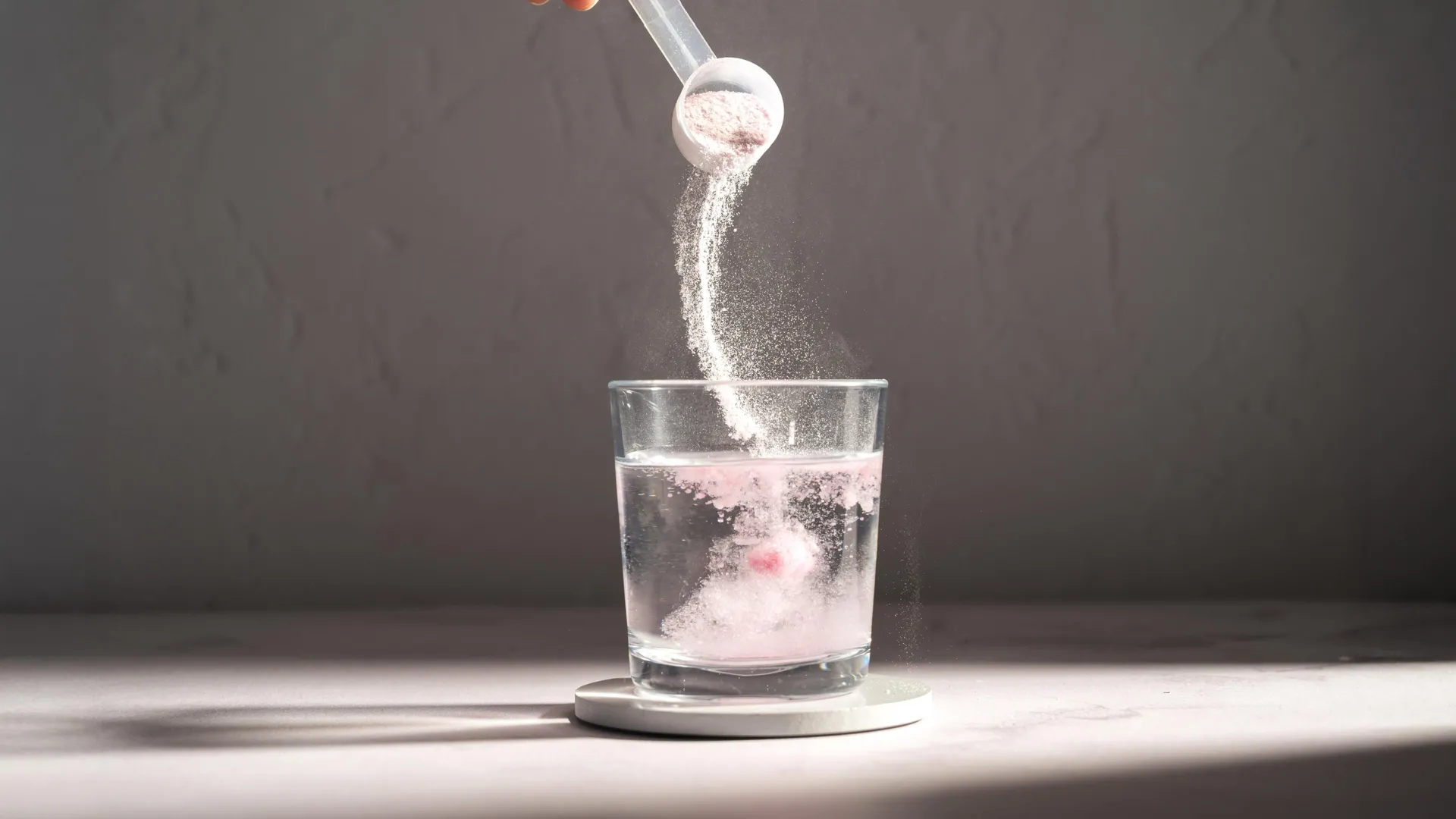
Creatine Supplementation Shows Muscle-Building Effects Even Without Exercise
- Institution: Research institution (author: unnamed)
- Published in: ScienceDaily
- The Discovery: New research demonstrates that creatine supplementation can help build muscle in middle-aged and older adults, with effects observed even in participants who did not exercise, though results were enhanced when combined with exercise and diet intervention.
- Why It Matters: This finding suggests creatine may offer a simple, inexpensive supplement option to support muscle maintenance in aging populations, particularly for those unable to engage in regular exercise due to health limitations.
- What's Next: Further studies are planned to determine optimal dosing protocols and to identify which populations benefit most from creatine supplementation.
sciencedaily.com
Top Science News -- ScienceDaily
Health & Medicine News -- ScienceDaily
sciencedaily.com
Scientists find a new layer of Alzheimer’s hidden in the genome | ScienceDaily
Aging muscles may be losing strength for a reason scientists missed | ScienceDaily
Scientists find a new layer of Alzheimer’s hidden in the genome | ScienceDaily
Creatine may help build muscle even without exercise, researchers find | ScienceDaily
Quantum computer simulates matter “popping into existence” | ScienceDaily
Quantum Computer Successfully Simulates Exotic "String-Breaking" Phenomena
- Institution: Research institution (authors: Arinjoy De, Alessio Lerose, and colleagues)
- Published in: Nature Physics
- The Discovery: Researchers used a quantum simulator to demonstrate "string-breaking dynamics," a quantum phenomenon where matter can appear to pop into existence as fundamental forces break down. This represents a major validation of quantum computing's ability to simulate complex physics.
- Why It Matters: This breakthrough demonstrates that quantum computers can now model exotic quantum states that are difficult or impossible to study with classical computers, opening new possibilities for understanding fundamental physics and potentially discovering new materials with novel properties.
- What's Next: The team plans to scale up these simulations to larger quantum systems and explore applications in materials science and fundamental particle physics.

sciencedaily.com
Top Science News -- ScienceDaily
Health & Medicine News -- ScienceDaily
sciencedaily.com
Scientists find a new layer of Alzheimer’s hidden in the genome | ScienceDaily
Aging muscles may be losing strength for a reason scientists missed | ScienceDaily
Scientists find a new layer of Alzheimer’s hidden in the genome | ScienceDaily
Creatine may help build muscle even without exercise, researchers find | ScienceDaily
Quantum computer simulates matter “popping into existence” | ScienceDaily
Medical & Health Research
-
PFOS Impairs Antiviral Defense in Cells — Multiple universities: A wastewater pollutant called PFOS (perfluorooctane sulfonate) has been found to impair the body's antiviral defense mechanisms, potentially weakening immune responses to viral infections.
-
Heat-Loving Amoeba Breaks Temperature Reproduction Limits — Multiple institutions: Researchers discovered that a heat-tolerant amoeba species can reproduce at unexpectedly high temperatures, challenging previous assumptions about the thermal limits of single-celled organism reproduction.
Technology & Engineering
- FDA Single IRB Rule for Multisite Trials Set for December 2026 — U.S. regulatory bodies: The FDA's new Single Institutional Review Board (IRB) rule is advancing to final status in December 2026, streamlining the approval process for multisite clinical trials by eliminating parallel IRB reviews. This change will accelerate research timelines for FDA-regulated studies.
Climate & Environment
- Dam Safety Risk Assessment Enhanced via Seismic Analysis — Multiple universities: New research has improved methods for assessing seismic risk to dam safety infrastructure, helping engineers better predict and prevent catastrophic failures during earthquakes.
What to Watch Next
-
DeepMind's Genome Atlas Project: A new computational genome "atlas" mapping all nine billion human gene mutations was unveiled this week, representing a major breakthrough in understanding genetic variation across populations. This resource will likely drive numerous follow-up studies in precision medicine.
-
Myasthenia Gravis Treatment Advances: Ucb (Union Chimique Belge) presented data at the 2026 AANEM Annual Meeting showing achievement of minimal symptom expression in generalized myasthenia gravis patients—watch for clinical trial results that could reshape treatment protocols.
-
Human-Based Research Methods Expansion: The U.S. Department of Health and Human Services announced new actions to expand human-based research methods and reduce reliance on animal models—expect policy updates and funding shifts throughout late 2026.
Reader Action Items
-
Explore the FDA Single IRB Rule: Researchers conducting multisite trials should review the December 2026 final rule to understand how it will simplify their approval processes and accelerate timelines.
-
Follow DeepMind Genome Atlas: The newly released human gene mutation atlas is now accessible to researchers; this resource enables personalized medicine research and variant interpretation studies.
-
Monitor Myasthenia Gravis Clinical Outcomes: The positive clinical data on minimal symptom expression presented this week suggests new treatment standards may emerge—autoimmune disease specialists should track final trial results closely.
Note on Data Completeness: This week's research outputs show strong focus on aging biology, quantum computing applications, and regulatory reform for clinical trials. Traditional high-volume categories (general AI breakthroughs, broad climate research) had limited fresh university-led publications in the past 7 days based on available sources.
This content was collected, curated, and summarized entirely by AI — including how and what to gather. It may contain inaccuracies. Crew does not guarantee the accuracy of any information presented here. Always verify facts on your own before acting on them. Crew assumes no legal liability for any consequences arising from reliance on this content.
Powered by
