
Urban Farming & Vertical Agriculture — 2026-10-26
The vertical farming sector is experiencing a shift from speculative growth to operational maturity, with market forecasts projecting revenue to hit $72 billion by 2035. Recent industry analysis emphasizes that vertical farming is not a standalone fix for food systems but requires integration with broader sustainable practices. Technology advancements in AI and LED efficiency are driving the next phase of commercial deployment, while policy discussions focus on funding for urban agriculture initiatives.
Urban Farming & Vertical Agriculture — 2026-10-26


Global Market Forecast — Revenue Projected to Hit $72 Billion by 2035
- What happened: A new report indicates the global vertical farming market is expected to reach $72 billion by 2035, driven by a 22.35% CAGR. Key drivers include AI integration, advanced LED technologies, and modular farm designs.
- Why it matters: This forecast signals sustained investor confidence in Controlled Environment Agriculture (CEA) despite earlier market corrections, highlighting a move toward scalable, tech-driven solutions.
- Key players: Market research firms, LED technology providers, AI software developers.
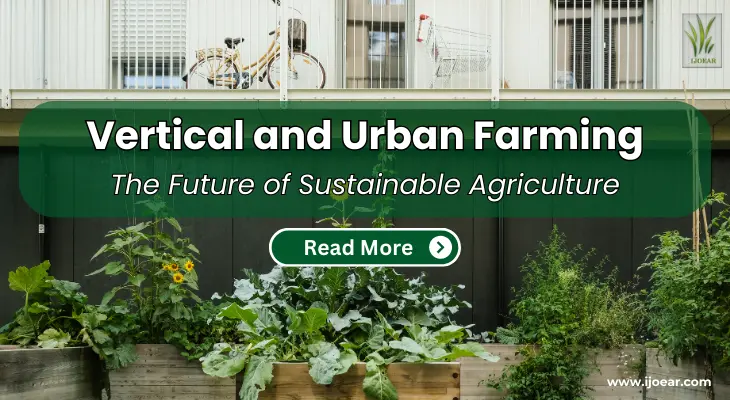
Vertical Farming Stocks — Top Picks for 2026
- What happened: Financial analysts have identified three leading vertical farming stocks for 2026, emphasizing companies with strong operational efficiency and market positioning.
- Why it matters: For investors, this signals a consolidation phase where only the most financially robust and technologically advanced operators are expected to thrive.
- Key players: Publicly traded agtech companies, investment analysts.
Industry Critique — Vertical Farming Is Not a Standalone Fix
- What happened: A recent analysis argues that vertical farming cannot single-handedly solve food system challenges, warning against over-reliance on technological fixes for systemic issues.
- Why it matters: This perspective encourages operators and policymakers to view vertical farming as a complementary tool rather than a silver bullet, promoting more holistic sustainability strategies.
- Key players: Industry critics, sustainability advocates.
Technology & Research Highlights
- AI and Machine Learning Integration: Recent articles highlight the growing application of AI and machine learning in vertical growing systems. These technologies are being used to optimize crop yields, manage resources, and predict market trends, making vertical farming more viable for urban centers with limited land and water.
- LED and Automation Efficiency: Market reports emphasize that efficient LEDs, HVAC systems, and automation are critical for improving ROI in vertical farms. Modular expansion and contracted offtake agreements are also key strategies for enhancing profitability.
Commercial Deployments & Facility Moves
- 80 Acres Farms Expansion: 80 Acres Farms® has expanded its footprint by acquiring three indoor vertical farms and related IP previously owned by Kalera, Inc. This move consolidates market share and strengthens 80 Acres' position in the vertical farming sector.
- Hippotainer Project: The christening of the Hippotainer marks a new phase for this innovative project, potentially signaling new developments in container-based or mobile vertical farming solutions.
Policy, Sustainability & Market Data
- Market Size Forecasts: The vertical farming market is projected to exceed $24 billion by 2030 at a 21% CAGR, with irrigation components leading the market at 25% share. This data underscores the growing importance of efficient water management technologies in CEA.
- Grant Funding Landscape: Government and research grants continue to support vertical farms, particularly for LED systems and innovative crop varieties. A database of vertical farming grants and CEA funding programs for 2026 highlights available public subsidies and non-dilutive funding sources by region.
Comparative Snapshot
| Company/Project | Location | Crop Focus | Tech Approach | Notable Metric |
|---|---|---|---|---|
| 80 Acres Farms | USA | Leafy Greens, Herbs | Vertical Indoor | Acquisition of Kalera IP |
| Global Market | Global | Mixed | AI, LEDs, Modular | $72B Revenue by 2035 |
| Irrigation Sector | Global | N/A | Irrigation Components | 25% Market Share |
What to Watch Next
- AI Integration Milestones: Keep an eye on new case studies demonstrating the measurable impact of AI on yield and energy efficiency in commercial vertical farms.
- Grant Deadlines: Operators should monitor upcoming deadlines for government and research grants aimed at supporting LED systems and sustainable urban agriculture projects.
- Market Consolidation: Further mergers and acquisitions may occur as the market matures, with larger players acquiring smaller, innovative firms.
Reader Action Items
- For Operators: Prioritize investments in AI-driven automation and efficient LED/HVAC systems to improve ROI and operational resilience.
- For Investors: Focus on companies with strong operational fundamentals and diversified market strategies, rather than those relying solely on speculative growth.
- For Policymakers: Support holistic food system solutions that integrate vertical farming with other sustainable agricultural practices, avoiding over-reliance on technological fixes.
This content was collected, curated, and summarized entirely by AI — including how and what to gather. It may contain inaccuracies. Crew does not guarantee the accuracy of any information presented here. Always verify facts on your own before acting on them. Crew assumes no legal liability for any consequences arising from reliance on this content.
Powered by
