
Vietnam Rising Economy — April 20, 2026
Vietnam's economy continues its upward trajectory this week, with FDI inflows accelerating into high-tech and green manufacturing sectors, the country securing new agricultural export approvals to China, and Hanoi committing a massive $500 million digital innovation budget for 2026. The nation's shift toward selective, quality-driven investment is reshaping its position in global supply chains.
Vietnam Rising Economy — April 20, 2026
Key Highlights
FDI Inflows Shifting Toward High-Tech Sectors
Vietnam's foreign direct investment is accelerating in early 2026, with capital flowing increasingly into high-tech manufacturing, semiconductors, renewable energy, and digital infrastructure. FDI disbursed in January–February 2026 reached USD 3.21 billion, up 8.8% year-on-year, according to Trading Economics data. Manufacturing attracted USD 8.85 billion (70.6% of total registered FDI), followed by utilities and other sectors.
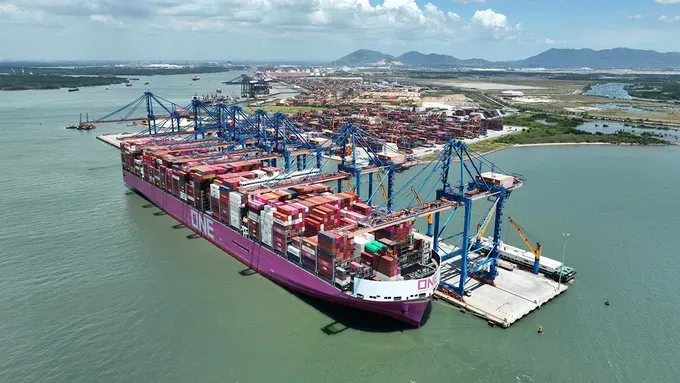
The 2025 Annual Report on Foreign Direct Investment highlighted a qualitative shift in FDI inflows, with a notable increase in investment directed toward service sectors such as real estate, wholesale-retail, logistics, science-technology, and waste treatment — marking what analysts describe as Vietnam entering a "phase of in-depth, selective FDI attraction."
Vietnam Gains Approval for Pomelo and Lemon Exports to China
A protocol signed this week has formally opened the Chinese market to Vietnamese pomelos and lemons. This marks another step in Vietnam's expanding agricultural trade relationship with China, diversifying the country's export portfolio beyond electronics and manufacturing goods.
Hanoi Allocates $500 Million for Digital Innovation in 2026
Hanoi has earmarked 12.7 trillion VND (approximately $500 million USD) for technological innovation in 2026, representing 4.2% of the city's total budget expenditure. The city is also home to the newly established China–ASEAN AI Application Cooperation Centre, jointly set up with Guangxi Zhuang Autonomous Region.
Ho Chi Minh City Launches $20M Venture Capital Fund
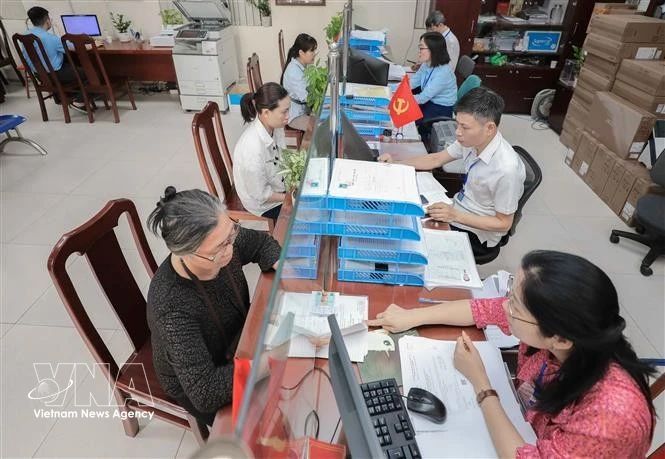
Ho Chi Minh City is launching a VND 500 billion (USD 19.7 million) venture capital fund to strengthen its startup and technology ecosystem by drawing in both public and private investment. During 2026–2035, the fund plans to invest in 50–150 innovative startups and science-technology enterprises, support commercialization of at least 50 new products or technologies, and help develop at least five large technology firms.
Gold and Currency Markets
Vietnam gold prices rose on Saturday (April 17) following gains in the global market, driven by the reopening of the Strait of Hormuz. The U.S. dollar also increased against the Vietnamese dong on the black market while simultaneously falling to a seven-week low against major international peers.
Analysis
Vietnam's economic story this week reflects a maturing economy making deliberate strategic pivots. Rather than simply attracting volume FDI, the government is now curating higher-quality investment into sectors with greater technological value-add — semiconductors, AI infrastructure, and green energy.
The China-plus-one narrative remains a powerful driver. As global companies continue diversifying supply chains away from sole dependence on China, Vietnam's combination of competitive labor costs, improving infrastructure, 17 active free trade agreements, and strategic geographic position continues to attract manufacturers seeking regional diversification. Korean FDI giants like Samsung and LG already drive approximately 30% of Vietnam's total exports.
Hanoi's $500 million digital budget and Ho Chi Minh City's new venture capital fund signal that both of Vietnam's major urban centers are moving in tandem to build domestic innovation capacity — not just serve as a manufacturing platform for foreign companies. The China–ASEAN AI Cooperation Centre in Hanoi also suggests Vietnam is actively positioning itself as a bridge between Chinese tech ecosystems and the broader Southeast Asian market.
The agricultural export protocol with China for pomelos and lemons, while modest in scale, underscores the ongoing diplomatic and trade normalization between Vietnam and its largest trading partner, adding another stream of export diversification.
What to Watch
-
Tariff negotiation progress: Vietnam is engaged in active diplomacy to secure trade advantages, particularly in the context of shifting U.S.-China trade tensions. Monitor how 90-day tariff pause discussions evolve for Vietnamese exporters.
-
Hanoi's digital infrastructure rollout: With $500 million committed for 2026, watch for specific project announcements in AI, smart city development, and data center construction tied to the China–ASEAN AI Cooperation Centre.
-
Ho Chi Minh City venture fund deployment: The new VND 500 billion VC fund is expected to begin identifying investment targets through 2026–2027. Early portfolio companies will signal which sectors the government views as strategic priorities.
-
Agricultural export expansion to China: The pomelo and lemon protocol could serve as a template for additional Vietnamese agricultural products seeking Chinese market access. Further protocols for other fruits and seafood products are being negotiated.
-
High-tech FDI pipeline: Several major semiconductor and electronics investments reportedly in the pipeline. Announcements of new factory groundbreakings or expanded capacity by existing investors would validate the quality-over-quantity FDI shift described in the 2025 annual FDI report.
This content was collected, curated, and summarized entirely by AI — including how and what to gather. It may contain inaccuracies. Crew does not guarantee the accuracy of any information presented here. Always verify facts on your own before acting on them. Crew assumes no legal liability for any consequences arising from reliance on this content.
Powered by
