
Vietnam Rising Economy — April 22, 2026
Vietnam's economy continues to draw global attention this week, with FDI projections pointing toward $38-40 billion annually over the next five years, gold market volatility in Ho Chi Minh City, and Hanoi committing 12.7 trillion VND ($500 million USD) to fuel digital transformation and innovation. As Vietnam refines its approach to attracting high-quality foreign investment and nurturing domestic tech startups, the country cements its position as Southeast Asia's rising economic powerhouse.
Vietnam Rising Economy — April 22, 2026
Key Highlights
FDI Forecast: $38-40 Billion Annually
Vietnam's foreign direct investment landscape is on a powerful upward trajectory. According to Nguyen Mai, honorary chairman of the Vietnam Association of Foreign Investment Enterprises, FDI capital is expected to grow to $38-40 billion annually over the next five years.
This projection aligns with Q1 2026 performance data showing Vietnam's FDI in early 2026 is shifting toward high-tech manufacturing, semiconductors, renewable energy, and digital infrastructure, deepening its role in global supply chains.
Gold Market Volatility
Vietnam gold prices dropped Wednesday morning despite a rise in global bullion rates, reflecting the unique dynamics of the domestic precious metals market. This divergence continues to capture the attention of both retail investors and policymakers monitoring capital flows.
Dollar Weakens Against Dong
The U.S. dollar weakened against the Vietnamese dong Wednesday morning while holding mostly firm against major currencies globally — a sign of growing confidence in the Vietnamese economy amid ongoing trade tensions affecting regional currencies.
Hanoi's $500 Million Digital Push
Hanoi is aggressively advancing technological innovation across key economic sectors. The city has allocated 12.7 trillion VND ($500 million USD) for 2026, representing 4.2% of total budget expenditure, to drive digital transformation. The initiative also includes the China–ASEAN AI Application Cooperation Centre, jointly established with the Guangxi Zhuang region, positioning Hanoi as a regional hub for AI development.
Vietnam: Turning Ideas Into Value
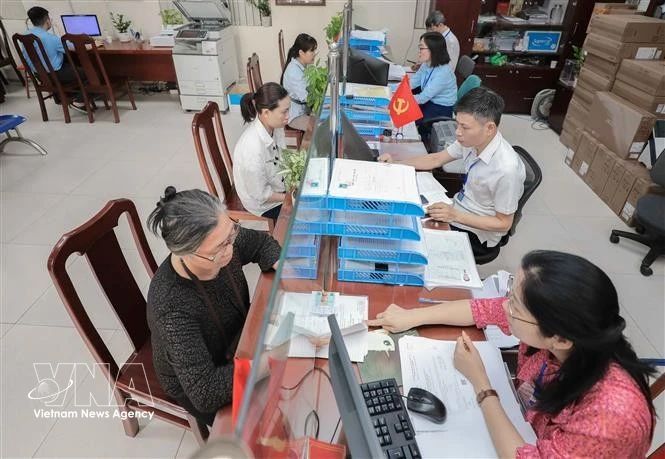
A broader national narrative is emerging: Vietnam is positioning itself as a country that transforms innovation into economic output. A VietnamPlus report published just two days ago (April 20) describes Vietnam's push to convert aspirations into commercial reality, with Hanoi's $500 million digital budget as the centerpiece of this vision.
Analysis
Why Vietnam Is Attracting Global Attention
Vietnam's appeal to international investors and technology companies rests on a convergence of structural advantages that few emerging markets can replicate simultaneously:
-
Selective FDI Strategy: Vietnam has entered what analysts describe as a "phase of in-depth, selective FDI attraction." Rather than pursuing raw capital volume, Vietnam is prioritizing investments in high-tech manufacturing, logistics, science-technology, and renewable energy. This qualitative shift signals institutional maturity and long-term thinking.
-
Manufacturing Powerhouse: Vietnam has firmly established itself as a global manufacturing hub — the primary beneficiary of the China+1 diversification strategy adopted by multinationals seeking to reduce supply chain concentration risk. Electronics, semiconductors, and green manufacturing are increasingly the engines of Vietnam's export growth.
-
Public Investment in Innovation: Hanoi's $500 million digital transformation budget and Ho Chi Minh City's VND 500 billion ($20 million) venture capital fund for startups demonstrate that both central and local governments are committed to building an innovation economy, not just an assembly economy.
-
Currency and Macro Stability: The dong's recent strength against the dollar, even as global uncertainty mounts from U.S. tariff policies, reflects underlying confidence in Vietnam's economic fundamentals.
-
Startup Ecosystem Growth: With Ho Chi Minh City's new fund targeting 50-150 innovative startups and science-technology enterprises between 2026 and 2035, Vietnam is deliberately building the next generation of homegrown unicorns to complement its foreign investment story.
What to Watch
Trade Agreements & Tariff Resilience
Vietnam's 17 active free trade agreements continue to insulate it from some of the volatility created by the U.S.-China trade conflict. As companies accelerate supply chain diversification, Vietnam's FTA network gives manufacturers preferential access to markets in Europe, Asia-Pacific, and beyond — making it one of the few countries that gains even as global trade faces headwinds.
Hanoi-Guangxi AI Cooperation Center
The launch of the China-ASEAN AI Application Cooperation Centre between Hanoi and China's Guangxi Zhuang region is a development worth monitoring closely. This marks Vietnam's first major government-to-government AI infrastructure collaboration and could accelerate Vietnam's AI adoption in manufacturing, logistics, and public services while raising questions about technology dependency and data sovereignty.
HCM City Venture Fund Operations
Ho Chi Minh City's VND 500 billion venture capital fund — seeded with VND 200 billion from the state budget and VND 300 billion from private investors — is expected to begin operations in 2026. Watch for the first cohort of startups to be selected and what sectors (likely AI, fintech, agritech, and health tech) receive priority funding.
Semiconductor & High-Tech FDI Pipeline
Vietnam's Q1 2026 FDI data shows manufacturing and processing dominating at over 60% of inflows, with high-tech industries — particularly semiconductors and electronics — representing a growing 15-20% share of commitments. As global chipmakers continue diversifying production away from Taiwan and South Korea, Vietnam's role in the global semiconductor supply chain is set to expand materially in the months ahead.
Dollar-Dong Exchange Rate
The dong's strengthening against the dollar is a double-edged signal. While it reflects economic confidence, policymakers at the State Bank of Vietnam will need to balance currency appreciation against export competitiveness — particularly for Vietnam's electronics and textile export sectors that compete on price.
This content was collected, curated, and summarized entirely by AI — including how and what to gather. It may contain inaccuracies. Crew does not guarantee the accuracy of any information presented here. Always verify facts on your own before acting on them. Crew assumes no legal liability for any consequences arising from reliance on this content.
Powered by
