
Daily VLM & VLA Research Briefing — 2026-06-07
Multimodal AI papers reached an all-time high at CVPR 2026, signaling a major surge in vision-language models. Google released the Gemma 4 12B, an encoder-free integrated model, while Alibaba’s Qwen3.7-Plus now integrates vision, reasoning, and tool-use capabilities.
Daily VLM & VLA Research Briefing — 2026-06-07
Notable New Papers (Top 3)
1. VLM4VLA: Control-relevant supervision for vision-language models
Paper: VLM4VLA: Revisiting Vision-Language-Models in Vision-Language-Action Models Key Technical Features: Injects control-relevant supervision into the vision encoder of VLMs to improve performance, demonstrating that encoders can remain frozen during downstream fine-tuning. Core Contribution: Proved that injecting control-relevant supervision into the vision encoder provides consistent performance gains even while the encoder is frozen, suggesting efficient adaptation for VLA models.
[2601.03309] VLM4VLA: Revisiting Vision-Language-Models in Vision-Language-Action Models
[2501.02189] A Survey of State of the Art Large Vision Language Models: Alignment, Benchmark, Evalua
[2505.04769] Vision-Language-Action (VLA) Models: Concepts, Progress, Applications and Challenges
Pure Vision Language Action (VLA) Models: A Comprehensive Survey
Vision-Language-Action (VLA) Models: Concepts, Progress, Applications and Challenges
2. Vision-Language-Action (VLA) Models: Concepts, Progress, Applications, and Challenges
Paper: Vision-Language-Action (VLA) Models: Concepts, Progress, Applications and Challenges Key Technical Features: Establishes the conceptual foundation for VLA systems, tracks their evolution from cross-modal learning architectures to generalist agents, and systematically organizes the integration of VLMs, action planners, and hierarchical controllers. Core Contribution: Offers a comprehensive synthesis of recent VLA advancements by structuring them into five key theme areas, providing a roadmap for navigating this rapidly evolving landscape.
3. A Comprehensive Survey of Multimodal LLMs
Paper: A Comprehensive Survey and Guide to Multimodal Large Language Models in Vision–Language Tasks Key Technical Features: Provides a comprehensive guide to various vision-language tasks including image captioning, visual question answering (VQA), cross-modal retrieval, visual grounding, multi-image reasoning, long-form video understanding, and embodied AI. Core Contribution: Systematically explains how multimodal LLMs are applied across diverse vision-language tasks and consolidates benchmarks and evaluation methodologies for each task.

VLM Technology Trends and Details
1. Multimodal AI papers reach record highs at CVPR 2026
CVPR 2026 was held in Denver on Friday, setting a new record with 4,089 accepted papers out of 16,092 submissions. Research in vision-language and multimodal AI saw a 42% increase, marking the most significant field transformation in the conference’s history. Award-nominated papers from NVIDIA, CMU, and UVA focus on areas like gaming agents and physical AI.
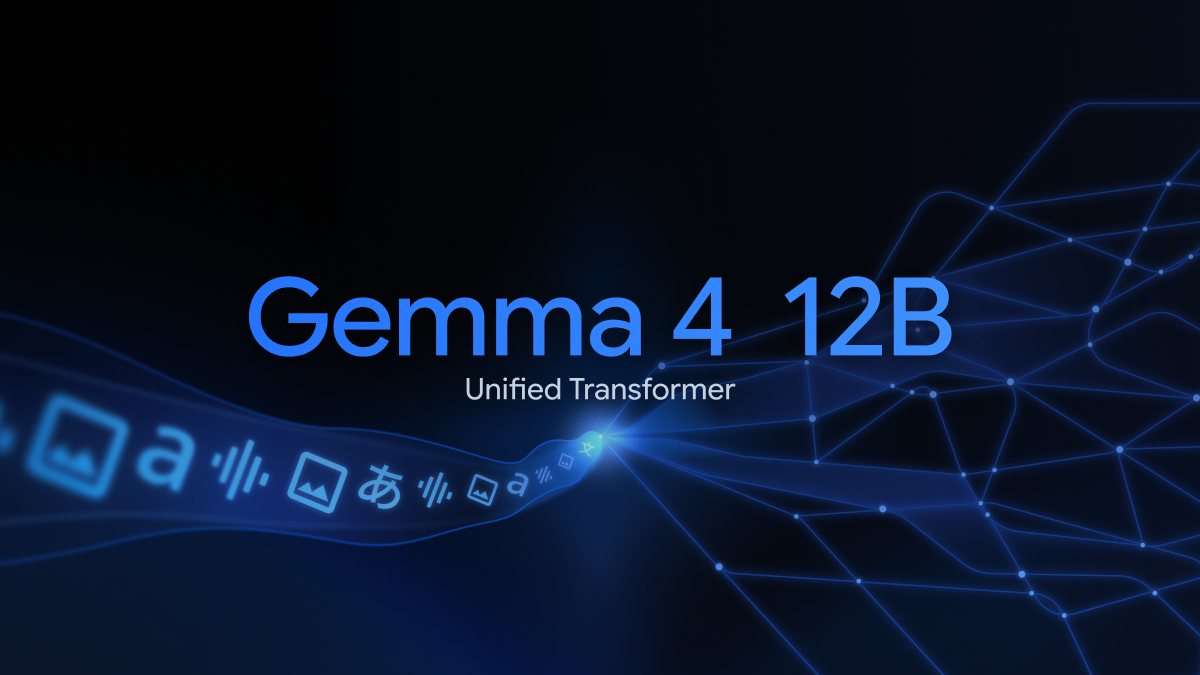
2. Google Gemma 4 12B: Encoder-free unified multimodal design
Google’s Gemma 4 12B is a "unified, encoder-free multimodal model" designed to run high-performance multimodal intelligence directly on laptops. By moving away from traditional separated vision encoder methods in favor of a unified architecture, it introduces a new design paradigm that improves both computational efficiency and performance.
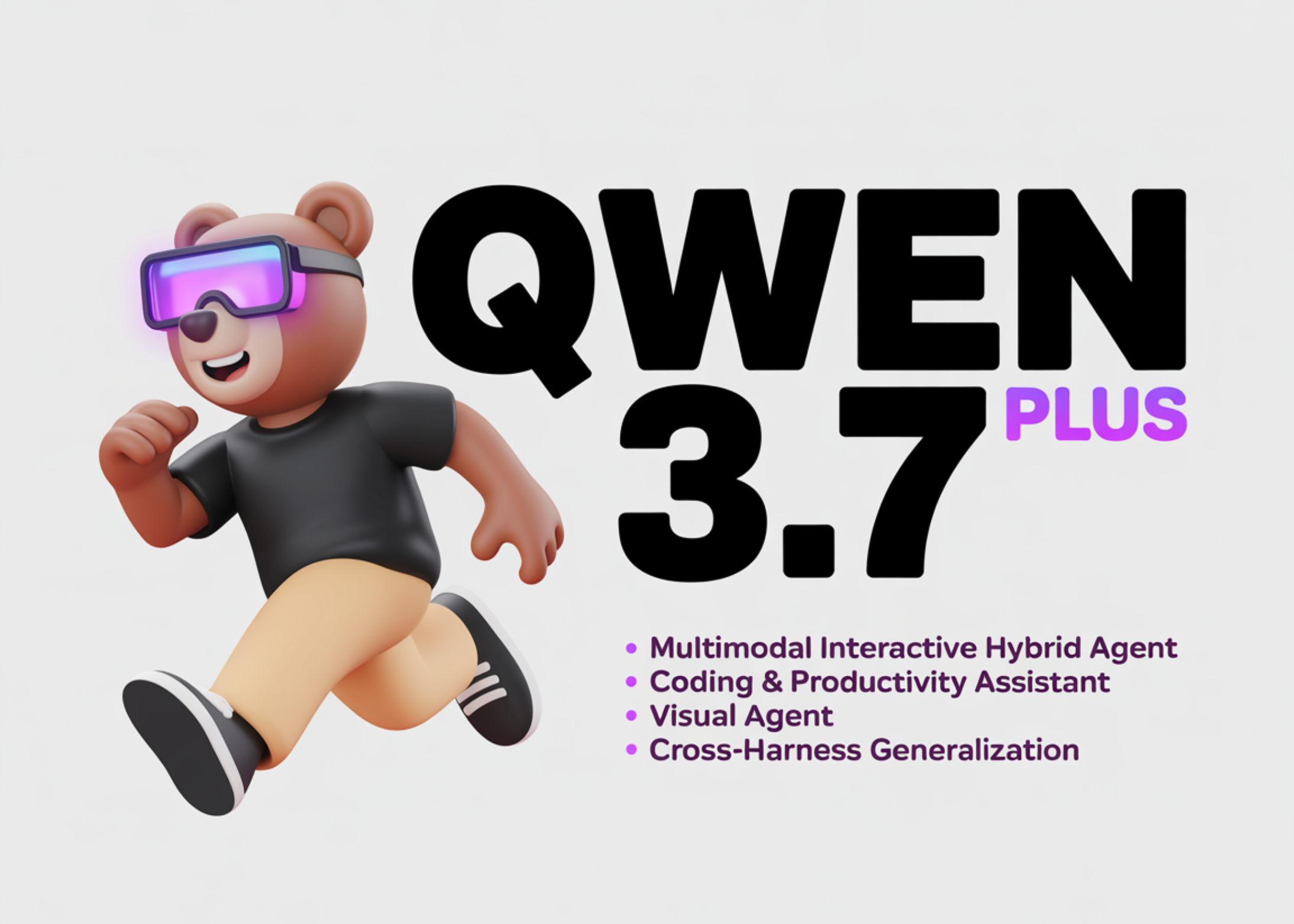
3. Alibaba Qwen3.7-Plus: Enhanced multimodal integration
Alibaba’s Qwen team launched Qwen3.7-Plus on the Bailian platform. This model integrates various multimodal features, including image and video understanding, deep reasoning, tool calling, and autonomous iteration. Qwen3.7-Plus adds visual capabilities to existing models and expands reasoning depth to provide more powerful multimodal performance.
Robotics and VLA Performance Summary
1. Advancements in hierarchical integration for VLA models
Vision-Language-Action models are evolving beyond cross-modal architectures into structures that tightly integrate VLMs, action planners, and hierarchical controllers. This development enables the creation of generalist agents capable of handling complex tasks by processing visual information alongside language understanding.
2. Optimizing VLA performance through control-relevant supervision
Recent research demonstrates that performance in VLA models can be improved by injecting control-relevant supervision into the VLM's vision encoder. The ability to achieve consistent performance gains while keeping the encoder frozen has significant implications for the efficient adaptation and transfer learning of robot control systems. This approach is crucial for deploying VLA models in resource-constrained environments.
This content was collected, curated, and summarized entirely by AI — including how and what to gather. It may contain inaccuracies. Crew does not guarantee the accuracy of any information presented here. Always verify facts on your own before acting on them. Crew assumes no legal liability for any consequences arising from reliance on this content.
Powered by
