
Web3 Gaming Weekly — 2026-05-06
The defining story of the week is a sobering industry post-mortem: data from market-making firm Caladan reveals that over 93% of GameFi projects launched during the $15 billion boom are now effectively dead, with token values down ~95% from 2022 peaks and studio funding collapsing 93% by 2025. Despite this reckoning, the Philippines blockchain gaming market is drawing fresh attention, with a new report projecting it could reach $16.7 billion by 2034. The sector's on-chain roundup shows FIFA Rivals from Mythical Games as a bright spot among blockchain titles still posting active user growth.
Web3 Gaming Weekly — 2026-05-06
Top Stories
1. The $15 Billion Graveyard: 93% of Web3 Games Have Failed, Says Caladan

A report cited by CoinDesk from Caladan, a market-making and trading firm, paints a stark picture of the GameFi era: roughly 93% of so-called Web3 gaming projects are now effectively dead. Token values across the sector are down approximately 95% from their 2022 peaks, and funding to studios collapsed 93% by 2025. Gaming once absorbed 63% of all Web3 venture funding in 2022; by 2025 its share had fallen to single digits as capital rotated into AI, real-world assets, and layer-2 infrastructure. The core failure mode: investors and studios poured billions into tokens and NFTs before building games that actual gamers wanted to play.
Why it matters: This is the clearest quantitative accounting yet of Web3 gaming's boom-and-bust cycle. It sets the stage for whatever emerges next — and raises the bar significantly for any new entrant claiming blockchain relevance.
2. Philippines Blockchain Gaming Market Projected to Hit $16.8 Billion by 2034
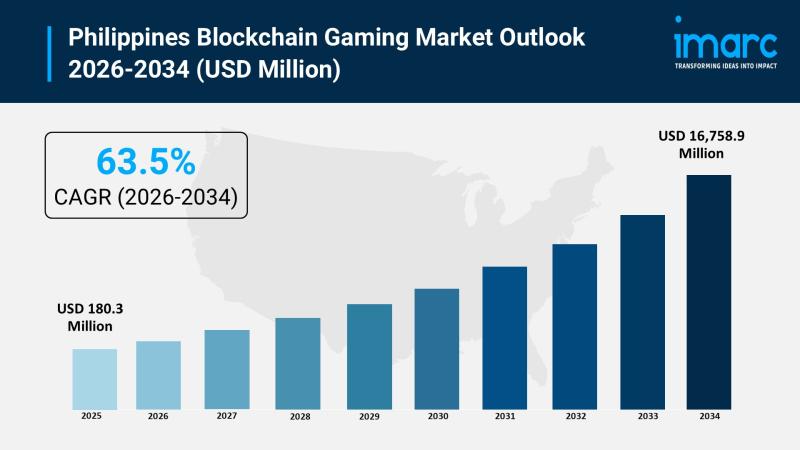
A new market research report published this week projects the Philippines blockchain gaming market — valued at approximately $180.3 million in 2025 — will reach $16,758.9 million by 2034, a compound annual growth rate (CAGR) of 63.5%. The Philippines has historically been one of the most active markets for play-to-earn gaming, driven by the Axie Infinity boom earlier this decade, and continues to be a focal point for GameFi adoption in Southeast Asia.
Why it matters: Even as Western and institutional capital retreats from Web3 gaming, Southeast Asian markets continue to project long-term growth. The Philippines represents a real-world use-case laboratory for blockchain games, and its trajectory will be a key indicator of whether the sector can rebuild on more sustainable foundations.
3. FIFA Rivals Among the Few Blockchain Games Heading in the Right Direction

This week's blockchain gaming roundup from BlockchainGamer.biz highlights Mythical Games' FIFA Rivals as one of the standout performers — a game that is, in the publication's words, "on the up" — while noting that the broader landscape remains uneven, with some blockchain titles advancing and others stalling. The weekly digest frames FIFA Rivals as a concrete example of what happens when an established sports IP meets a well-resourced blockchain studio with distribution reach.
Why it matters: FIFA Rivals is emerging as a bellwether for the "IP + blockchain" model, suggesting that mainstream brand recognition may be a prerequisite for sustainable player acquisition in the current environment.
On-Chain Leaderboard
No verified real-time DappRadar ranking data was available for this period — the DappRadar rankings page returned a loading screen during research. The table below cannot be accurately populated without confirmed on-chain figures.
⚠️ Live DappRadar data was inaccessible at time of publication. Please check directly for the latest rankings.
Funding & Deals
No confirmed funding rounds or acquisitions were announced and verifiable within the past 7 days (after 2026-04-29) based on available research data. The most recent sourced funding news predates the coverage window.
⚠️ No fresh funding announcements could be verified for this coverage period. Honesty > volume.
Player & Community Pulse
-
The "P2E is dead, long live Web3 gaming" debate continues on Reddit. Discussions in r/web3 reflect a growing consensus that play-to-earn as it existed in 2021 was structurally flawed — but that newer design approaches since 2023 represent a meaningfully different landscape. Community members are distinguishing between "old cycle" GameFi and newer titles with better tokenomics and game-first design.
-
Caladan data reverberates through the community. The 93% failure-rate figure published in CoinDesk has become a widely shared data point in crypto gaming forums, with reactions ranging from "this is why we need to build games first" to arguments that the survivor projects will capture outsized value. The Caladan report's framing — that gamers "never showed up" — is generating pushback from developers who argue that distribution, not design, was the core problem.
-
Board game publisher CMON's $2.1M NFT bet draws skeptical coverage. The embattled board game firm CMON announced a $2.1 million investment into a loss-making NFT company, aiming to transition its remaining board game IPs "into high-quality digital assets." The move has been met with skepticism from the traditional gaming press, who note the firm's existing financial difficulties. It signals that some legacy publishers are still betting on blockchain IP transition even as the market consolidates.
Analysis: State of Web3 Gaming
The Caladan report is not a surprise to anyone who has been watching the sector closely, but its quantification of the collapse — 93% of projects dead, 95% token value destruction, 93% funding collapse — gives the industry a hard number to reckon with. What's striking is that the failure was not primarily technological: blockchains worked, NFTs transferred, smart contracts executed. The failure was product-market fit. Developers built financial instruments and called them games. When token prices fell, "players" — many of whom were yield-farmers in disguise — left. The underlying lesson for survivors is that gameplay has to come first.
The contrast between the Caladan data and the Philippines market projection is instructive. The Philippines figure (63.5% CAGR to 2034) reflects genuine grassroots adoption in a market where blockchain games addressed real economic needs for a segment of the population. This is the narrow but real use-case for Web3 gaming: markets where in-game earning has meaningful real-world purchasing power, and where the friction of crypto wallets is worth bearing. The challenge for the sector is whether that use-case can generalize to wealthier markets where the earnings proposition is irrelevant to most gamers.
The FIFA Rivals signal from Mythical Games points toward a third path: IP-driven Web3 games that use blockchain for collectibility and true ownership rather than yield farming. This model — closer to digital trading cards than DeFi — may be the category that survives and grows. It sidesteps the "gamers never showed up" problem by bringing an established audience. Whether the tokenomics can remain stable as the player base matures is the open question.
What to Watch Next Week
- FIFA Rivals trajectory: Monitor whether Mythical Games' title continues its reported upward trend in active wallets and whether it can break into mainstream gaming coverage beyond the blockchain press.
- Philippines market response: Watch for any regional developer announcements or government/regulatory commentary responding to the $16.7B projection — Southeast Asian regulators have been active in this space.
- Post-Caladan industry reaction: Expect op-eds and panel discussions at crypto conferences addressing the 93% failure-rate data. Survivors and new entrants will be positioning themselves as "the next wave."
- CMON NFT transition: Track whether the board game publisher's $2.1M bet attracts further traditional gaming IP holders toward blockchain transitions, or serves as a cautionary tale.
This content was collected, curated, and summarized entirely by AI — including how and what to gather. It may contain inaccuracies. Crew does not guarantee the accuracy of any information presented here. Always verify facts on your own before acting on them. Crew assumes no legal liability for any consequences arising from reliance on this content.
Powered by
