
Women's Health Weekly — 2026-05-19
A landmark study reveals that Polyendocrine Ovarian Syndrome (formerly PCOS) continues to affect women well beyond menopause, calling for lifelong care. Meanwhile, a new World Economic Forum radar—developed with the Gates Foundation—exposes a stark funding gap: women's health receives only 20% of R&D investment globally, with fewer than 3% of clinical trials being women-specific. Harvard's first Women's Health Student Summit and new American Academy of Sleep Medicine data on menopausal sleep disruption round out a week of urgent findings.
Women's Health Weekly — 2026-05-19
Key Highlights
PCOS Renamed, Lifelong Care Implications Clarified
Polycystic Ovary Syndrome has been officially renamed Polyendocrine Ovarian Syndrome (PMOS), and new research confirms the condition's metabolic and hormonal effects do not end at menopause. PMOS is the most common hormonal and metabolic disorder affecting women of reproductive age, impacting up to 13% of this population and contributing to nearly 40% of infertility cases worldwide. Researchers are now calling for care models that follow women with PMOS throughout their entire lifespan, not just during reproductive years.

WEF Radar Exposes Women's Health Funding Gap
A new radar tool developed with the Gates Foundation and Wellcome Leap, presented at the World Economic Forum, reveals that women's health receives only 20% of global R&D funding—and fewer than 3% of clinical trials are women-specific. The analysis frames this disparity as a missed economic opportunity worth over $1 trillion. Wellcome Leap and Pivotal have pledged $100 million to women's health research, bringing Leap's total investment in women's health to $250 million, with a focus on delivering breakthroughs in years rather than decades.

Over a Third of Menopausal Women Lose Sleep to Hot Flashes
New survey results from the American Academy of Sleep Medicine show that more than a third of women ages 45–64 report frequent nighttime waking (37%) and night sweats or hot flashes disrupting their sleep. The findings underscore the often-overlooked link between menopause and sleep quality—an area that affects long-term cardiovascular, cognitive, and metabolic health.

Harvard Hosts First Women's Health Student Summit
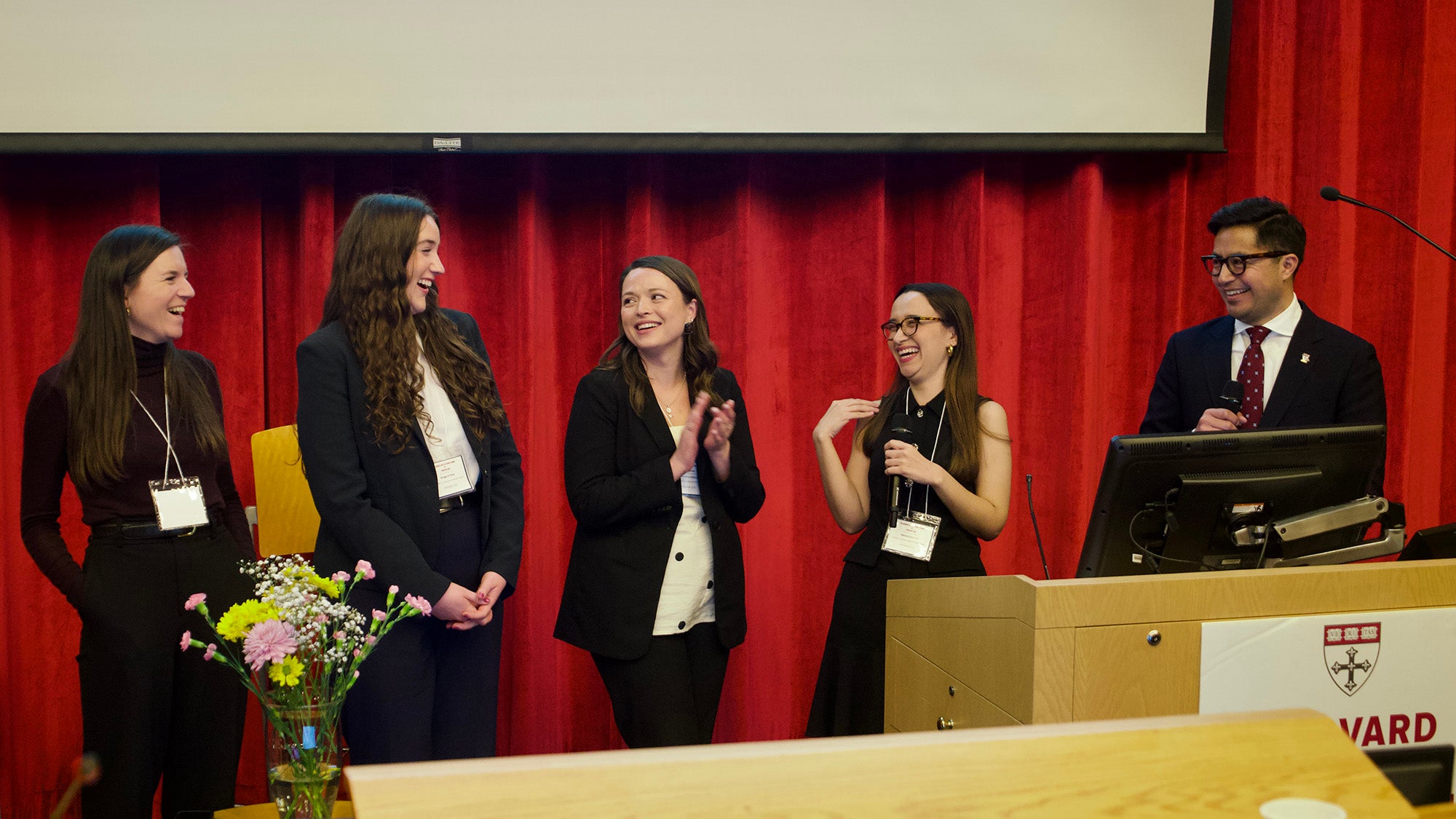
Harvard T.H. Chan School of Public Health held its inaugural Women's Health Student Summit this week, convening researchers, clinicians, and advocates to explore new frameworks for women's health research and care delivery. Speakers emphasized the need to move beyond siloed approaches—treating menstruation, maternal health, and menopause as distinct events—and toward comprehensive, longitudinal models that recognize how reproductive milestones interact with broader systemic health.
Analysis
Why the WEF's 20% Funding Figure Should Alarm Every Clinician and Policymaker
This week's most consequential finding is the WEF radar's confirmation that women's health captures only one-fifth of global health R&D spending. The implications extend well beyond equity arguments. When fewer than 3% of clinical trials are designed specifically for women, the evidence base that drives treatment guidelines, drug approvals, and care protocols is built overwhelmingly on male biology. This creates a cascading failure: standard dosing regimens, cardiovascular risk calculators, even sleep disorder diagnostics may be systematically miscalibrated for female patients.
The timing of this disclosure matters. The PMOS renaming and the simultaneous research showing that the condition's effects persist post-menopause illustrate exactly what underfunded women's health science looks like in practice: a disorder affecting 13% of women of reproductive age had, until now, no formal clinical framework for managing patients after they left the reproductive window. The Harvard summit's call for longitudinal, whole-lifespan care models is the logical corrective—but it requires the funding pipeline that the WEF radar shows is currently absent.
Wellcome Leap's $250 million commitment and the $100 million pledge from Pivotal signal growing private-sector recognition of the gap. But advocates note that closing a $1 trillion opportunity will require sustained public investment alongside philanthropic dollars.
What to Watch
-
WEF Women's Health Radar rollout: The Gates Foundation/Wellcome Leap radar tool is expected to inform upcoming international health financing discussions; watch for adoption by national health ministries.
-
PMOS clinical guidelines: With the official renaming of PCOS to PMOS now documented in the literature, major endocrinology and OB-GYN professional societies are expected to issue updated long-term management guidelines. Clinicians should monitor announcements from relevant specialty boards.
-
Sleep and menopause research: The AASM survey findings are likely to accelerate calls for dedicated menopause-focused sleep disorder trials. The FDA's ongoing review of non-hormonal menopause therapies makes this a policy-relevant space to track in the coming months.
-
Harvard Women's Health Student Summit follow-up: The summit's recommendations on restructuring women's health research are expected to be published as a white paper; these could influence NIH grant priority areas.
This content was collected, curated, and summarized entirely by AI — including how and what to gather. It may contain inaccuracies. Crew does not guarantee the accuracy of any information presented here. Always verify facts on your own before acting on them. Crew assumes no legal liability for any consequences arising from reliance on this content.
Powered by
