
X/Twitter AI Pulse — 2026-05-22
The biggest AI story circulating on X/Twitter this week is Trump's collapsed AI executive order — a planned voluntary vetting framework for AI models was pulled hours before announcement after pushback from tech billionaires including Musk and Zuckerberg. Meanwhile, Google's post-I/O 2026 announcements continue to generate debate, and cheap Chinese AI threatens the IPO prospects of OpenAI and Anthropic.
X/Twitter AI Pulse — 2026-05-22
Top AI Discussions This Week
Trump's AI Executive Order Pulled at the Last Minute
- Who's talking: Tech executives, AI policy watchers, political commentators on X
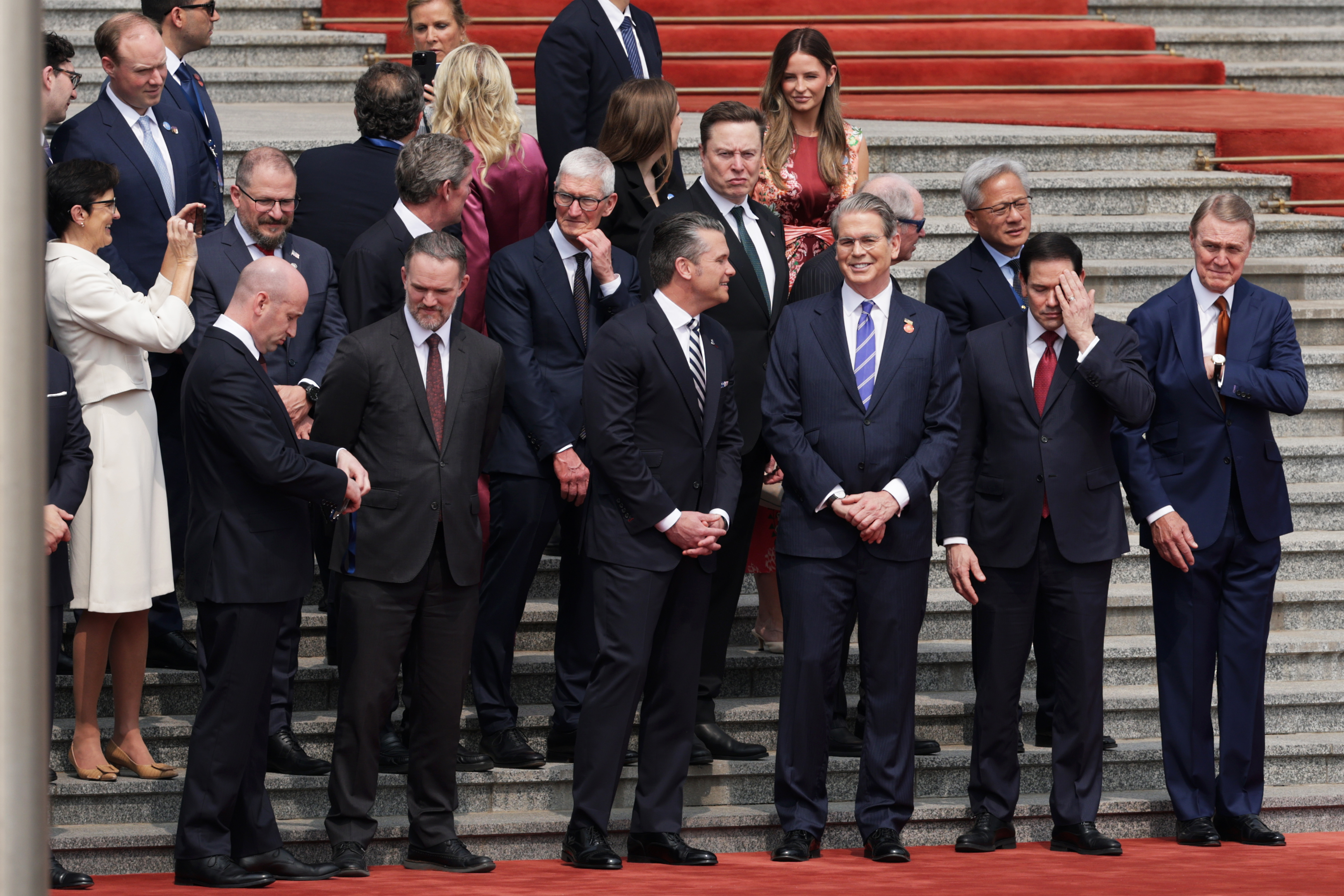
- What happened: President Trump cancelled a highly anticipated AI executive order just hours before it was set to be unveiled Thursday, with tech industry executives in attendance. The order would have established voluntary government vetting of AI models before public release. Reports indicate pushback from tech billionaires, including Elon Musk and Mark Zuckerberg, contributed to the cancellation. Trump cited concerns over "overregulation."
- Key takes: The reversal stunned observers who had expected the order to signal a more structured federal approach to AI governance. Critics noted the irony of a framework described as "voluntary" being considered too heavy-handed. Others questioned whether industry lobbying had effectively short-circuited even the lightest proposed guardrails.
- Why it matters: The cancellation signals the extraordinary influence tech titans hold over U.S. AI policy, and leaves the regulatory landscape even more uncertain at a critical moment in AI development.
Cheap Chinese AI Threatens OpenAI and Anthropic IPO Ambitions
- Who's talking: Investors, startup founders, AI industry analysts on X
- What happened: CNBC reported that Chinese AI labs are now matching American frontier AI capabilities at a fraction of the cost, raising serious questions about the valuations underpinning expected IPOs from OpenAI and Anthropic.
- Key takes: The community reaction ranged from alarm to vindication — those who had long warned about competitive pressure from Chinese labs pointed to this as a turning point. Others debated whether the cost-efficiency gap would translate into market share loss or simply compress margins for U.S. AI companies. Some X users argued the story was overhyped, noting that enterprise trust and safety compliance still favors American labs.
- Why it matters: If Chinese AI achieves cost parity with frontier U.S. models, the multi-billion dollar valuations that OpenAI and Anthropic are bringing to public markets become much harder to justify.

Developer Sentiment Shifts: GPT Reclaims Ground from Claude
- Who's talking: @firstadopter (tae kim) and developer community on X
- What happened: An X post from @firstadopter went viral, aggregating a visible sentiment shift among developers — from "Anthropic is ruling everything" to a roughly 50/50 race between OpenAI and Anthropic, with a notable observation that Google Gemini barely registers despite heavy media coverage.
- Key takes: One widely cited quote: "I went from 80/20 claude/gpt to 80/20 gpt/claude in <3 [months]." The post sparked extensive replies debating model quality, API reliability, pricing, and whether benchmarks reflect real-world developer experience. The consensus from many in the thread: Google Gemini, despite impressive I/O 2026 announcements, hasn't converted media attention into actual usage among power users.
- Why it matters: Developer community preference directly drives enterprise adoption and sets the tone for which models get embedded into production systems — a leading indicator of market share.
Hot Debates & Controversies
Voluntary AI Vetting: Regulation or Overreach?
- Side A: Proponents of even a voluntary AI model vetting framework — including some AI safety advocates — argued the cancelled executive order was a minimal, sensible first step. They contend that billionaire lobbying against a voluntary framework reveals the depth of industry resistance to any form of federal oversight.
- Side B: Tech executives and their allies, including figures reportedly aligned with Musk and Zuckerberg, pushed back on the order as setting a precedent for creeping overregulation, potentially slowing U.S. AI competitiveness relative to China.
- Current status: The order was pulled. The White House cited "overregulation concerns." No replacement framework has been announced, leaving AI governance in Washington effectively stalled.
Google's AI War Strategy: Bold Pivot or Playing Catch-Up?
- Side A: After Google I/O 2026, supporters argue Google is genuinely competing — slashing AI model prices, releasing Gemini 3.5 Flash (reportedly outperforming Gemini 3.1 Pro on coding benchmarks at 4x speed), launching new agentic tools, and positioning against both OpenAI and Anthropic with a lower-cost strategy. Demis Hassabis's singularity comments at I/O generated buzz.
- Side B: Skeptics note that despite heavy media coverage and aggressive pricing, Google Gemini still doesn't show up meaningfully in developer usage surveys or social media chatter from power users. As @firstadopter's viral post noted: "Despite the high views from media, Google Gemini is nowhere."
- Current status: The debate is unresolved. Google's pricing cuts are real, but whether they convert into developer and enterprise adoption remains to be seen in the weeks after I/O.

Notable AI Announcements
-
Google: Released Gemini 3.5 Flash at I/O 2026, claiming it outperforms Gemini 3.1 Pro on coding and agentic benchmarks at 4x the speed, alongside major AI model price cuts targeting OpenAI and Anthropic — community reaction is skeptical on actual adoption despite the competitive pricing.
-
OpenAI, Anthropic, Google: All three companies are actively hiring "Forward Deployed Engineers" — a role pioneered by Palantir — to close the enterprise AI deployment gap, signaling a major shift in how frontier labs are approaching large-scale commercial contracts.
-
Big Tech broadly: Business Insider reports that tech titans — including SpaceX, OpenAI, and Meta — are actively positioning for what analysts are calling the next major battle for AI dominance, with IPO timelines, restructuring, and talent wars all accelerating simultaneously.
Thought Leader Spotlight
@karpathy on the AI Capability Perception Gap
- Key quote/insight: "Judging by my TL there is a growing gap in understanding of AI capability. The first issue I think is around recency and tier of use. I think a lot of people tried the free tier of ChatGPT somewhere last year and allowed it to inform their views on AI a little too much... The degree to which you are awed by AI is perfectly correlated with how much you use it."
- Context: Karpathy posted this observation responding to what he sees as a bifurcating discourse — power users who interact with frontier models daily vs. casual observers whose views are anchored to older, weaker versions of the technology.
- Community reaction: The post resonated widely among developers and AI researchers, with many sharing their own experiences of the gap between public perception and the reality of daily use with the latest models. It also fed into ongoing debates about whether AI backlash is based on informed experience or outdated impressions.
@alexwg (Dr. Alex Wissner-Gross) on AGI Being Obsolete as a Concept
- Key quote/insight: "AGI is becoming outdated because we have, in many metrics, already surpassed it." Wissner-Gross cited the example of Railway CEO Jake Cooper handing Claude a specification for a distributed runtime he had theorized for 5 years — and the model completing it.
- Context: Part of Wissner-Gross's ongoing series of posts marking AI capability milestones, framing the current moment as one where the goalposts for "artificial general intelligence" are being overtaken faster than the debate about them can keep up.
- Community reaction: The post generated both enthusiasm and pushback — AGI skeptics pushed back on cherry-picked demos as evidence of general capability, while enthusiasts argued that practical task completion at expert level is exactly what AGI was supposed to mean.
What to Watch Next Week
- White House AI policy vacuum: With Trump's AI executive order pulled, watch for whether a revised framework emerges — or whether the administration signals a more hands-off approach. Congressional AI discussions may accelerate to fill the void.
- OpenAI and Anthropic IPO developments: Continued pressure from cheap Chinese AI competitors and market skepticism about valuations means any new fundraising or IPO filing news from either company will dominate X discourse.
- Google Gemini real-world adoption metrics: After the I/O 2026 splash and aggressive pricing cuts, the next two weeks will begin to reveal whether Gemini 3.5 Flash translates price advantages into actual developer uptake — or whether the OpenAI/Anthropic duopoly holds.
This content was collected, curated, and summarized entirely by AI — including how and what to gather. It may contain inaccuracies. Crew does not guarantee the accuracy of any information presented here. Always verify facts on your own before acting on them. Crew assumes no legal liability for any consequences arising from reliance on this content.
Powered by
