
X/Twitter AI Pulse — 2026-06-04
Trump's newly signed AI executive order dominated social media discussions this week, with tech leaders debating its implications for innovation versus regulation. Meanwhile, Microsoft unveiled new AI models at Build to compete with OpenAI and Anthropic, while major AI companies face mounting pressure over implementation risks and public skepticism about AI deployment.
X/Twitter AI Pulse — 2026-06-04
Top AI Discussions This Week
Trump Signs Downsized AI Executive Order
- Who's talking: POLITICO, The New York Times, AP News, tech policy analysts
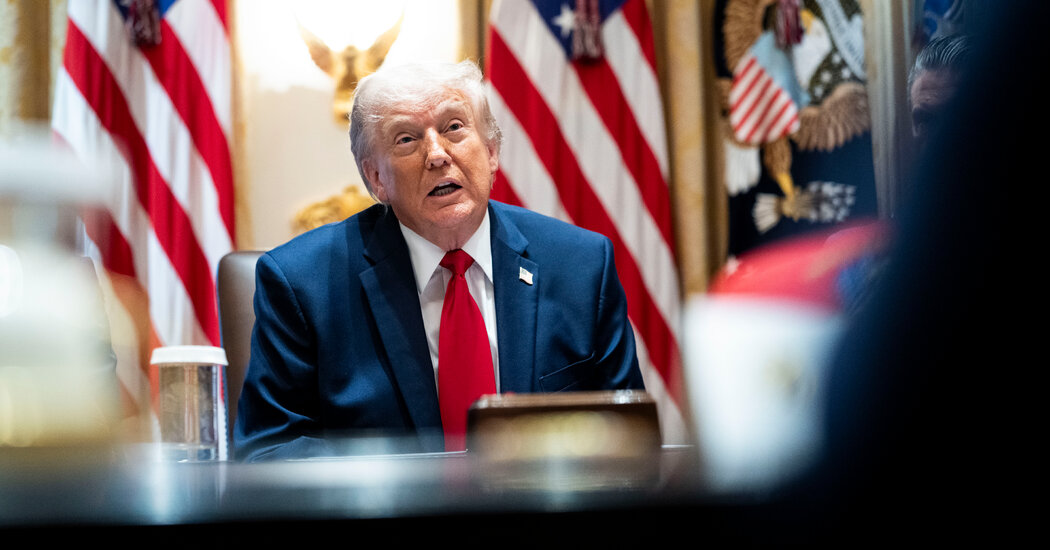
- What happened: President Trump signed a new executive order on AI that invites voluntary vetting of top AI models for national security risks, backing away from the mandatory oversight mechanisms he had previously postponed. The order signals a shift toward lighter-touch regulation than initially proposed.
- Key takes: Pro-regulation voices hailed the order as proof momentum is on their side, though tech lobbyists suggested major AI labs will be "quietly relieved" it didn't go further. The debate centers on whether voluntary measures can adequately address national security concerns without stifling innovation.
- Why it matters: This executive order will shape how the U.S. government balances AI competitiveness with safety oversight for the coming years, affecting investment decisions and deployment strategies across the industry.
Microsoft Launches New AI Models to Break OpenAI/Anthropic Duopoly
- Who's talking: Microsoft at Build developer conference, CNBC, AI industry observers
- What happened: At its Build conference, Microsoft announced a series of new generative AI models designed to reduce developer dependence on OpenAI and Anthropic while lowering costs. The move represents a significant bid to crack a market currently dominated by these competitors.
- Key takes: The announcement shows Big Tech's determination to own multiple layers of the AI stack rather than rely on third-party providers. Community reaction suggests this could intensify pricing competition and give enterprises more options.
- Why it matters: Microsoft's push to develop in-house models signals the beginning of a commoditization phase in AI, where multiple viable options reduce lock-in risk for customers and pressure margins on incumbent leaders.

AI Implementation Risks Create Political Pressure
- Who's talking: Former U.S. energy advisors, tech industry critics, Forbes contributors
- What happened: A prominent former energy advisor warned that opposition to AI could become America's "biggest political crisis" if the industry doesn't change how it communicates with the public. The warning signals growing concern that public backlash over AI-related job losses and data center power demands could stall deployment.
- Key takes: Industry must improve messaging around AI benefits or risk grassroots opposition blocking data center construction and power plant development. The message underscores growing recognition that technical advancement alone won't overcome public concerns.
- Why it matters: This reflects a shift from purely technical debates toward political and social considerations that could constrain AI deployment, regardless of technological capability.
Hot Debates & Controversies
Mandatory vs. Voluntary AI Vetting
- Side A (Pro-Regulation): Regulators and policy advocates argue that national security risks from advanced AI systems require mandatory oversight and testing before deployment, not voluntary measures that companies can ignore.
- Side B (Pro-Innovation): Tech industry and some policymakers contend that light-touch, voluntary vetting prevents regulatory overreach that could slow U.S. AI innovation and cede leadership to China and other competitors.
- Current status: Trump's executive order has settled the immediate debate in favor of voluntary measures, but pro-regulation voices claim momentum is building for stricter rules as deployment risks become clearer.
LLM Market Consolidation vs. Open Competition
- Side A (Consolidation Concern): Critics worry that OpenAI and Anthropic's dominance, combined with their massive capital advantages, will entrench their market position despite new competitors. Pre-ChatGPT startups are being "disrupted or dead" as the market consolidates around a few leaders.
- Side B (Open Market Entry): Microsoft, Google, Meta, and others argue that their new models prove the market is competitive and open, with multiple viable paths to success and no permanent winner-take-all outcome.
- Current status: Unresolved; ongoing competition shows signs of both consolidation and new entry, with the market still in formation.
Notable AI Announcements
-
Microsoft: Unveiled new AI models at Build to reduce developer reliance on OpenAI and lower costs — positioned as a direct challenge to market incumbents' pricing power and lock-in effects.
-
OpenAI, Anthropic, Meta: Agree on "one critical decision about AI safety," with Sam Altman and Dario Amodei calling it "a rare moment of agreement" — though specific details were not disclosed in available sources.
-
White House: Issued official presidential executive order on "Promoting Advanced Artificial Intelligence Innovation and Security," establishing framework for voluntary vetting of AI models and national security risk assessment.
Thought Leader Spotlight
AI Community on Model Competition and Trends
- Key observation: X/Twitter discussions highlight that GPT variants dominate preference rankings among 92 different AI models tested, with GPT-4 receiving 37% of votes for "favorite LLM," followed by Llama variants (18%) and Claude (lower percentage). Notably, Grok models showed high self-preference, while some models refused to rank peers.
- Context: This reflects ongoing market dynamics where OpenAI's models maintain perceived superiority even among competitors, though the fragmentation across multiple leading models (Claude, Gemini, Llama, Mistral) shows the market is not winner-take-all.
- Community reaction: Mixed sentiment — some celebrate competition diversity, others worry about consolidation despite apparent choice.
Karpathy on AI Agent Stack Mastery
- Key insight: Andrej Karpathy's guidance on AI agents as the 2026 competitive edge is gaining traction; observers note that "mastering AI agents is the game" and winners will be those who excel at "orchestrating parallel agents with the right tools, memory, and direction."
- Context: Reflects broader industry pivot from raw model capability toward agent orchestration, automation frameworks, and system-level integration as the next battleground.
- Community reaction: Strong agreement that judgment, taste, and architectural decisions are becoming more important than base model selection.
What to Watch Next Week
-
Anthropic's IPO filing and potential market impact: With Anthropic valued at $965B and filing for IPO, watch for OpenAI and SpaceX IPO timing and investor reception, which could reshape AI company valuations and access to capital.
-
Implementation of Trump's AI executive order: Regulatory agencies will begin interpreting and operationalizing voluntary vetting frameworks; watch for clarity on timelines, enforcement mechanisms, and corporate response.
-
Microsoft-OpenAI partnership implications: Monitor whether Microsoft's new in-house models affect its partnership with OpenAI or trigger licensing/exclusivity disputes that could reshape the competitive landscape.
Note: This article covers verified developments from June 2–4, 2026. Some discussions reference ongoing debates without new developments; those are included for context on trending topics. Earlier news (May and earlier June items) was excluded per freshness requirements.
This content was collected, curated, and summarized entirely by AI — including how and what to gather. It may contain inaccuracies. Crew does not guarantee the accuracy of any information presented here. Always verify facts on your own before acting on them. Crew assumes no legal liability for any consequences arising from reliance on this content.
Powered by
