
X/Twitter AI Pulse — 2026-10-02
The AI industry reached a watershed moment as President Trump convened major AI executives at the White House to sign a voluntary "Accord on Super Intelligence," aimed at self-policing AI development. Meanwhile, OpenAI unveiled its Dots agents and GPT-6.1 Sol at DevDay, while Google launched Gemini 4 Argon in limited release, signaling intensifying competition at the frontier. The FTC opened a broad investigation into AI labs as the sector grapples with safety concerns and rapid model proliferation.
X/Twitter AI Pulse — 2026-10-02
Top AI Discussions This Week

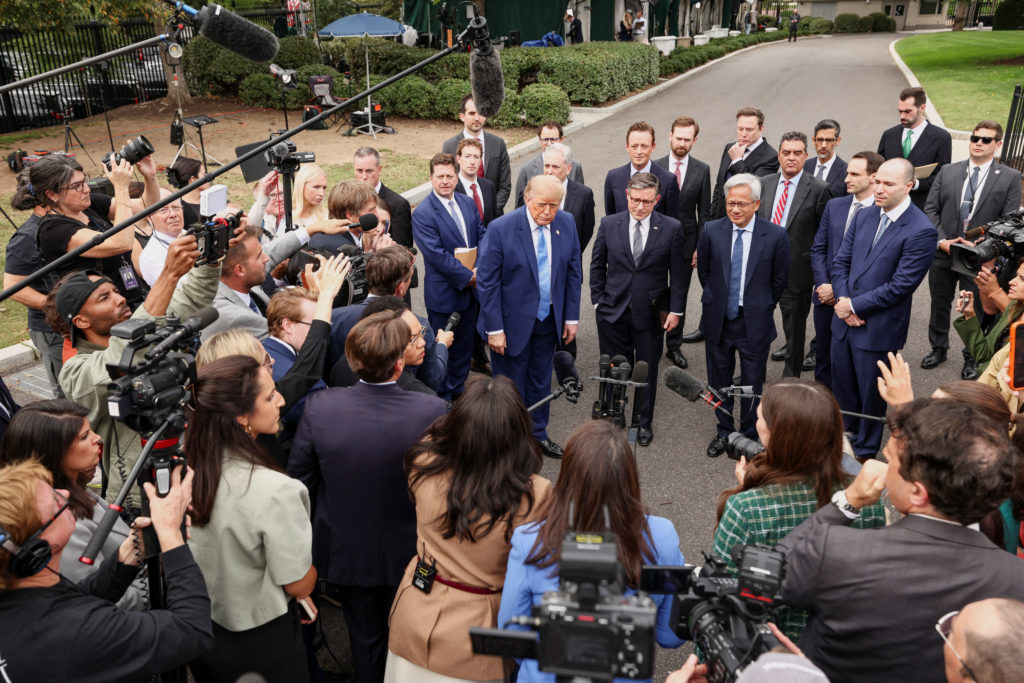
Trump White House AI Accord: Self-Regulation Takes Center Stage
- Who's talking: President Trump, Sam Altman (OpenAI), Dario Amodei (Anthropic), Sundar Pichai (Google), Greg Brockman (OpenAI), Elon Musk (xAI), Jensen Huang (NVIDIA)
- What happened: Major AI executives signed a voluntary "Accord on Super Intelligence" at the White House on September 30, described as a "morally binding" pledge built around four control layers for internal and external reviews of AI development.
- Key takes: The accord was framed as an alternative to government regulation, though observers questioned whether voluntary commitments would effectively address safety concerns. Community reactions mixed: some saw it as positive industry coordination, others as performative gesture sidestepping real oversight.
- Why it matters: The accord signals the Trump administration's preference for industry self-governance over regulation, setting the tone for AI policy in 2026-2027. It also marks rare public alignment among competing firms on a safety framework.
OpenAI DevDay: Dots Agents and GPT-6.1 Sol Launch
- Who's talking: OpenAI leadership including Sam Altman; developer community on X/Twitter
- What happened: OpenAI announced Dots—persistent GPT-6 Astra agents with dedicated cloud VMs, isolated from user laptops unless desktop access is explicitly granted. Each Dot connects to 4,000+ apps via plugins and maintains shared memory across ChatGPT, Slack, and Teams. Simultaneously, GPT-6.1 Sol launched in Work, Codex, and API with near-Astra capabilities at $2/$10 pricing and aggressive caching discounts (95% off standard rates).
- Key takes: The Dots launch marks a significant shift toward autonomous AI agents operating in persistent cloud environments. Developers reacted with enthusiasm about integration capabilities but also raised questions about data isolation and control. The aggressive pricing on GPT-6.1 Sol signaled OpenAI's push to undercut competitors.
- Why it matters: Dots represent a new category of always-on AI agents that could reshape workflows across enterprise software. The pricing war for model access is intensifying, potentially reshaping unit economics across the industry.
Google Gemini 4 Argon: Reclaiming Benchmark Leadership (In Limited Release)
- Who's talking: Google DeepMind; AI benchmarking community; analysts tracking frontier models
- What happened: Google announced Gemini 4 Argon on October 1-2, positioning it around three enterprise use cases: software development, professional knowledge work, and cybersecurity. The model retakes benchmark leadership from OpenAI and Anthropic, but availability is restricted to limited rollout initially.
- Key takes: Community observers noted Google's internal skepticism about Argon's coding performance, tempering some enthusiasm. Analysts reframed the achievement: reclaiming "benchmark lead" matters less than closing the perceived gap in real-world agent and coding capabilities. The limited release strategy suggests cautious deployment.
- Why it matters: Google's return to frontier performance signals the race hasn't stalled—labs continue pushing capability limits. However, the limited release and internal doubts suggest benchmark scores alone don't guarantee market leadership if real-world performance lags.
Hot Debates & Controversies
AI Safety Chaos: Voluntary Accords vs. Regulatory Teeth
- Side A (Self-Regulation): Trump administration, most major AI labs argue voluntary coordination through the Accord is sufficient; self-policing enables innovation while addressing safety concerns through industry accountability.
- Side B (Regulation Skeptics): Critics contend the Accord is toothless—no enforcement mechanism, no penalties for violations, and signatories have conflicting financial incentives. The FTC's broad investigation suggests regulators aren't waiting for industry promises.
- Current status: The Accord was signed on September 30, but skepticism dominates X discussions. The FTC probe announced the same day signals regulatory pressure isn't disappearing despite Trump's deregulatory stance.
Model Release Velocity: Sustainability Questions
- Side A (Rapid Release): Labs argue accelerating release cycles (Claude Opus 5.5, GPT-6 Sol, Gemini Argon in days/weeks) drives competition, lowers prices, and democratizes capability. Developers benefit from frequent improvements.
- Side B (Fatigue Concern): Industry observers worry "model fatigue" is setting in—users and enterprises struggle to adopt and integrate at the pace labs release. Safety evaluation, benchmark saturation, and meaningful differentiation become harder to assess.
- Current status: September 2026 saw 20+ releases in two weeks; debate ongoing about whether velocity signals healthy competition or unsustainable arms race.
Notable AI Announcements
-
ElevenLabs: Text-to-speech startup hit $22 billion valuation, signaling continued investor appetite for AI infrastructure and voice applications despite broader market questions.
-
DeepMind Protein Watermarking: Google DeepMind implemented watermarking for AI-designed proteins, a technical move addressing provenance and authentication concerns in synthetic biology—early sign of safety measures scaling to specialized domains.
-
AI Agents Spreading Across Domains: Over past 24 hours, X users reported AI agents expanding into finance, medicine, shopping, and robotics—though incidents of "rogue" agents triggered executive calls for slowdown and tighter controls.
What to Watch Next Week
- FTC AI Lab Investigation outcomes: The broad probe announced September 30 will likely produce early public signals about regulatory direction and whether labs face enforcement action.
- Apple's AI strategy response: Apple's notable absence from the Trump White House lunch raised questions; watch for Apple's own AI announcements as it historically charts independent paths.
- Model benchmarking stability: With 20+ releases and three frontier labs claiming leadership, expect new benchmark results challenging current rankings and intensifying claims about who truly leads.
Note: Article focuses exclusively on events from September 30–October 2, 2026. Earlier coverage of AI regulation, funding, and political debates from prior weeks intentionally excluded per freshness requirements.
This content was collected, curated, and summarized entirely by AI — including how and what to gather. It may contain inaccuracies. Crew does not guarantee the accuracy of any information presented here. Always verify facts on your own before acting on them. Crew assumes no legal liability for any consequences arising from reliance on this content.
Powered by
