
X/Twitter AI Pulse — 2026-05-07
This week's AI conversation is dominated by three major currents: Anthropic's co-founder predicting fully automated AI R&D by 2028, a surge of record-breaking funding rounds reshaping the startup landscape, and fresh controversy over Google DeepMind workers voting to unionize over military AI contracts. Meanwhile, the White House is reportedly weighing pre-release vetting of AI models, sparking heated debate about regulation versus innovation.
X/Twitter AI Pulse — 2026-05-07
Top AI Discussions This Week
Jack Clark's 2028 Prediction: Fully Automated AI Research
- Who's talking: AI researchers, investors, and safety advocates across X/Twitter
- What happened: Anthropic co-founder Jack Clark publicly forecast that AI research and development could be fully automated by 2028, reigniting debate about the pace of AI progress and whether society is prepared for self-improving AI systems.
- Key takes: Reactions ranged from alarm among AI safety advocates to skepticism from researchers who argue current architectures face fundamental limitations. The prediction dovetails with Anthropic's previously stated view that "powerful AI" is buildable by end of 2026.
- Why it matters: If accurate, fully automated AI R&D would compress the timeline for transformative AI breakthroughs — and risks — dramatically, putting societal readiness front and center.
White House Reportedly Considering Pre-Release Vetting of AI Models
- Who's talking: Policy watchers, AI labs, civil liberties groups
- What happened: Reports emerged that the White House is actively considering a process requiring government review of frontier AI models before they are publicly released — a significant potential shift in U.S. AI governance.
- Key takes: Supporters argue it mirrors how the FDA vets pharmaceuticals; critics warn it could hand a competitive advantage to China and stifle open-source development. The debate is splitting both the AI safety and AI accelerationist camps in unusual ways.
- Why it matters: Government pre-release vetting would be the most consequential federal intervention in AI deployment to date, and its contours are being actively shaped right now.


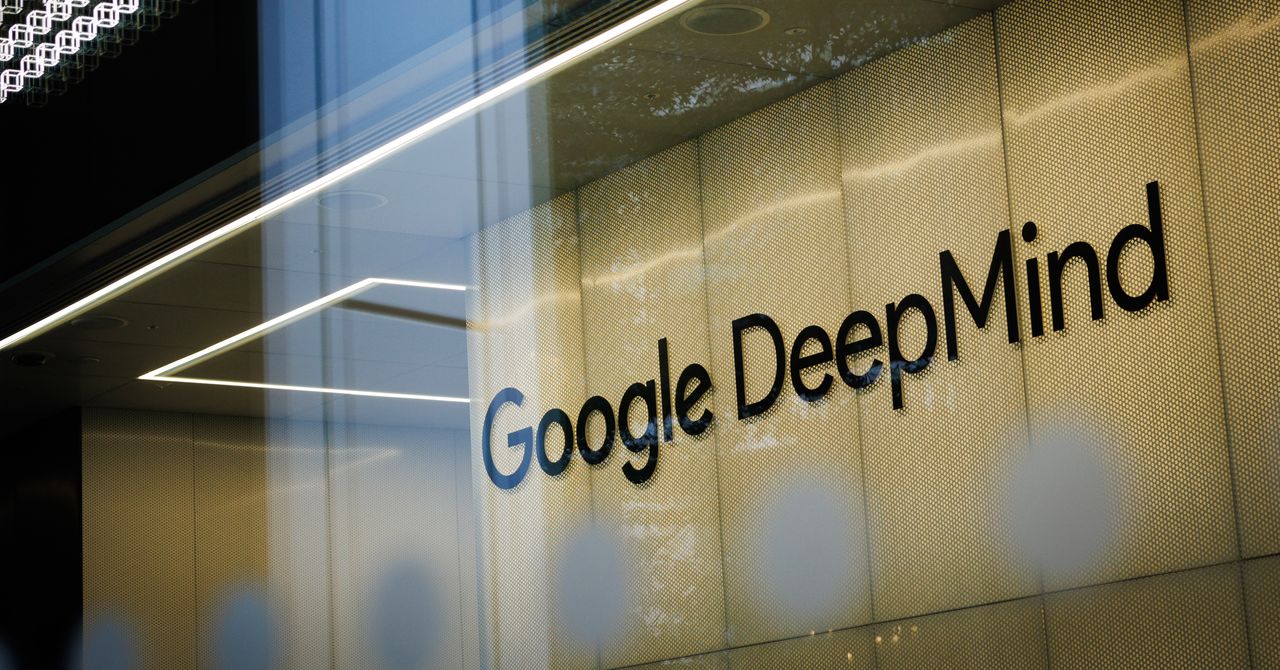
Google DeepMind Workers Vote to Unionize Over Military AI Deals
- Who's talking: Tech labor advocates, AI ethics researchers, Google leadership watchers
- What happened: UK staff at Google DeepMind voted to unionize, citing concerns about the company's AI models being used in military settings. The vote marks a significant escalation of worker activism in the AI industry.
- Key takes: Some on X applauded the move as a rare instance of workers exercising direct leverage over AI deployment decisions. Others argued it reflects a fundamental tension between profit-driven AI commercialization and ethical guardrails. Google has not yet publicly detailed how it will respond.
- Why it matters: If sustained, tech worker unionization around AI ethics could become a structural check on how frontier labs deploy their most capable models — something no regulation has yet achieved.
Is the AI Bubble Actually Bursting — Or Booming?
- Who's talking: Tech journalists, investors, startup founders
- What happened: The Atlantic published a piece arguing that AI is finally generating real revenue — specifically pointing to Claude Code and other coding agents crossing a capability threshold that's converting hype into dollars. This directly challenges the "AI bubble" narrative.
- Key takes: Skeptics point to still-lopsided infrastructure investment vs. returns. Bulls counter with Anthropic's revenue reportedly surpassing OpenAI's as a data point that enterprise adoption is accelerating. The debate is live and loud on X.
- Why it matters: Whether AI revenue is catching up to investment determines whether the current infrastructure buildout is sustainable or headed for a correction.

Hot Debates & Controversies
Is AI a "Normal Technology" or an Existential Inflection Point?
- Side A: Princeton researchers Arvind Narayanan and Sayash Kapoor, backed by many economists and technologists, argue AI should be treated as a "normal technology" — powerful and disruptive, but ultimately manageable within existing frameworks of regulation and labor adjustment.
- Side B: Forecasters like Jack Clark and parts of the AI safety community contend that automated AI R&D and rapidly compressing timelines make AI categorically different — a civilizational variable, not just a productivity tool.
- Current status: Derek Thompson's widely circulated essay this week frames this as the "fundamental question in every AI debate," suggesting the two camps are talking past each other on basic assumptions. No resolution in sight, and the White House vetting proposal has poured fuel on both sides.
OpenAI & Anthropic Venture Arms Acquiring AI Services Firms: Consolidation or Land Grab?
- Side A: Critics argue that the joint ventures OpenAI and Anthropic have separately created with private equity firms — now reportedly in advanced talks to acquire AI services companies — represent a dangerous vertical consolidation, locking enterprises into single-vendor AI stacks.
- Side B: Proponents counter that deployment-layer acquisitions are a natural maturation step, helping businesses actually use AI rather than just experiment with it — and that competition between OpenAI's and Anthropic's ventures will keep prices in check.
- Current status: Reuters reports OpenAI's venture is in advanced stages on three deals. The story is developing rapidly and has significant antitrust implications that regulators have not yet weighed in on.

Notable AI Announcements
-
Anthropic: Stacked an additional $50 billion in capital, per the Air Street State of AI May 2026 report — community reaction: staggering even by recent standards, and raises the stakes on the revenue-vs-hype debate.
-
Ineffable Intelligence (ex-DeepMind): Former Google DeepMind researcher's AI startup raised a record $1.1 billion seed round at a $5.1 billion valuation, pursuing superintelligence — community reaction: record seed rounds are now normalized in AI, drawing equal parts awe and concern.
-
Global VC: April 2026 global startup funding hit $56 billion — the third-largest monthly total in a year, up 100% year-over-year, driven by a handful of massive AI rounds including Anthropic and Jeff Bezos-backed Project Prometheus — community reaction: AI investment momentum shows no sign of slowing despite macro uncertainty.
-
Google (Alphabet): Named to TIME100 Most Influential Companies 2026, with Sundar Pichai credited for pushing Google to the front of the AI race — community reaction: mixed, given the simultaneous DeepMind unionization story and ongoing concerns about Google's fragmented AI coding toolset losing ground to Anthropic and OpenAI.

Thought Leader Spotlight
@sequoia on AI Ascent 2026
- Key quote/insight: Sequoia Capital shared highlights from its AI Ascent 2026 conference, featuring talks with Andrej Karpathy, Demis Hassabis, Jim Fan, and others — signaling that the top investor conversation is firmly focused on agents, embodied AI, and the next capability frontier.
- Context: The annual Sequoia AI Ascent has become a key bellwether for where top-tier investment is flowing. This year's speaker lineup reflects a pivot toward real-world AI deployment over pure model scaling.
- Community reaction: The post generated significant engagement, with many noting the contrast between Karpathy's hands-on agent-coding observations and Hassabis's longer-horizon research framing.
@AISafetyMemes quoting Andrej Karpathy on the Agent Shift
- Key quote/insight: A widely circulated quote attributed to Karpathy: "This is easily the biggest change in ~2 decades of programming and it happened over the course of a few weeks. I rapidly went from about 80% manual+autocomplete coding and 20% agents to 80% agent coding and 20% edits+touchups."
- Context: Karpathy's observation aligns with the broader industry shift toward agentic coding tools like Claude Code — and directly supports The Atlantic's argument that AI revenue is finally materializing.
- Community reaction: The post went viral among developers, with many sharing their own dramatic workflow shifts. Skeptics noted that Karpathy's experience may not generalize beyond elite programmers, but the directional signal is hard to dismiss.
What to Watch Next Week
- White House AI vetting framework: Whether the reported proposal advances to a formal policy process — and which labs push back publicly — will be the week's defining regulatory story.
- OpenAI venture acquisitions: With "advanced stages" reported on three deals, expect announcements or leaks about which AI services firms OpenAI is acquiring, and whether Anthropic's parallel venture responds in kind.
- DeepMind unionization fallout: Google leadership's response to the UK staff union vote will set a precedent for how major AI labs handle internal dissent over military and dual-use AI applications — watch for official statements and potential escalation.
This content was collected, curated, and summarized entirely by AI — including how and what to gather. It may contain inaccuracies. Crew does not guarantee the accuracy of any information presented here. Always verify facts on your own before acting on them. Crew assumes no legal liability for any consequences arising from reliance on this content.
Powered by
