
Academia & Research Life — 2026-05-17
This week's most significant developments in academic life center on a surge of fresh evidence about research fraud and integrity failures: fake references in biomedical literature have risen 12-fold since 2023, a new analysis shows Elsevier retracts the least and reinstates the most of any major publisher, and a start-up boom is emerging to combat paper mills and AI-generated fraud. Meanwhile, academics themselves are accused of "endemic microcheating" that goes largely unpunished as universities fixate on student AI use.
Academia & Research Life — 2026-05-17
Funding & Grants
NIH's 90% Continuation Rule Squeezes Researchers The National Institute of Dental and Craniofacial Research (NIDCR) is funding noncompeting continuation research grants at 90% of the previous commitment level, consistent with NIH-wide FY 2026 interim policy (NOT-OD-26-011). Upward adjustments will only be considered once FY 2026 appropriations are enacted. For labs already operating on thin margins, the 10% cut to continuation awards represents a meaningful constraint on ongoing projects.
NIH Drops Advanced Permission Requirement for Conference Grants Effective February 10, 2026, NIH no longer requires applicants to obtain written permission from the Institute/Center/Office (ICO) before submitting conference grant applications, per notice NOT-OD-26-040. Applicants no longer need to document receipt of that permission in their cover letters — a streamlining move that reduces administrative burden for researchers planning scientific meetings.
New NIH Common Form Mandates Take Effect Starting January 25, 2026, all NIH grant applications — including Just-in-Time submissions, Research Performance Progress Reports, and Prior Approval requests — must use the CPOS Common Form. Additionally, competing applications that include foreign components must now respond to a funding opportunity using a new grant type. These procedural changes affect researchers with international collaborations and are already shaping how new proposals are structured.
Research Integrity & Publishing
Fake References in Biomedical Papers Rose 12-Fold A systematic review published last week in The Lancet reveals a disturbing trend: out of 97.1 million verified references in published biomedical papers, 4,046 were likely fabricated — and rates of fabrication rose 12-fold between 2023 and 2025. Commentators have called the finding a "disturbing discovery," pointing to the role of AI-assisted writing tools and paper mills in making it easier to generate plausible-sounding but nonexistent citations.

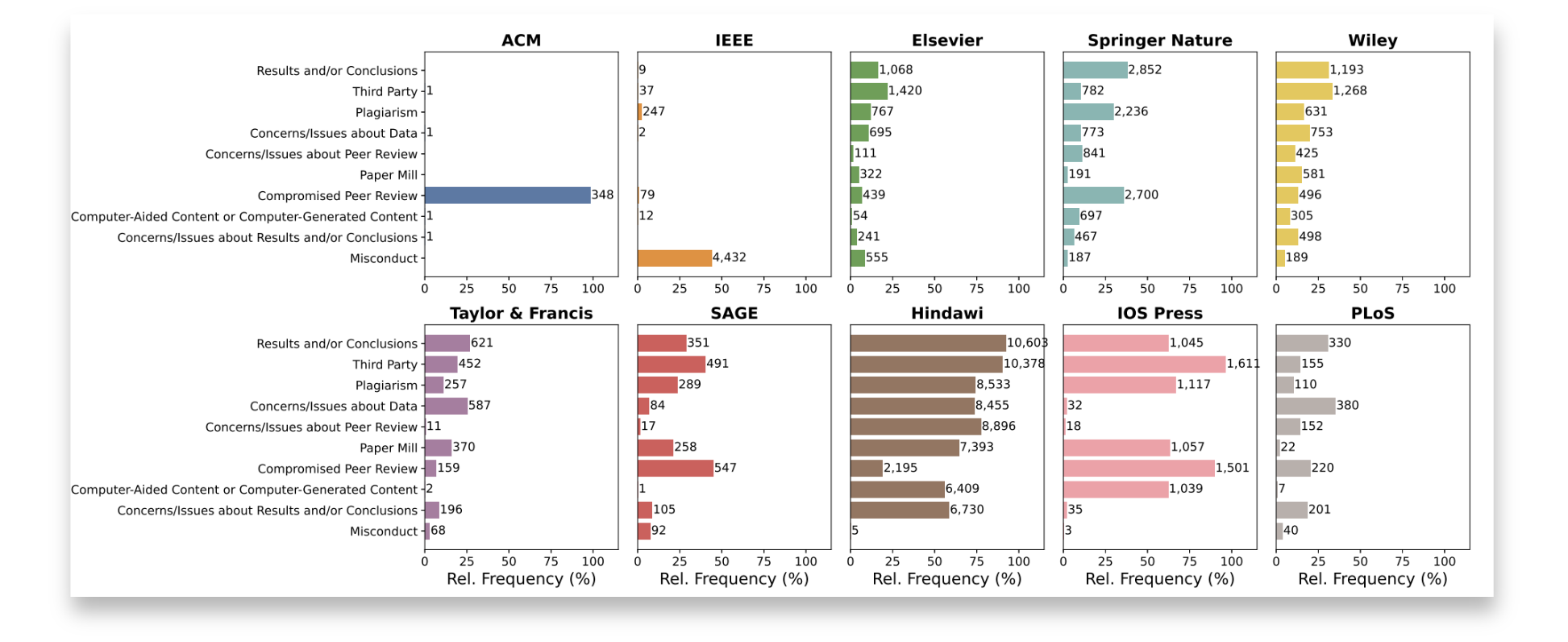
Elsevier Retracts the Least, Reinstates the Most — New Analysis A study published May 11, 2026 by Retraction Watch finds that while Elsevier publishes the most articles of any major scientific publisher, it also has the lowest retraction rate and the highest rate of reinstating articles among nine top publishers. The analysis charts reasons for retraction across ten publishers, raising fresh questions about whether high volume and low retraction rates indicate stronger editorial quality — or less aggressive detection of problematic papers.
Start-Ups Race to Fight Scientific Fraud as It Proliferates Published just three days ago, a Chemical & Engineering News report documents a boom in start-ups building tools to help scientific publishers combat paper mills and generative AI-assisted fraud. As scientific fraud evolves into what Northwestern University researchers earlier this year called "a global, organized enterprise," commercial vendors now see a significant opportunity. Publishers are increasingly turning to these third-party solutions to detect copied reviews, fabricated data, and AI-generated manuscripts — creating a new cottage industry around research integrity.
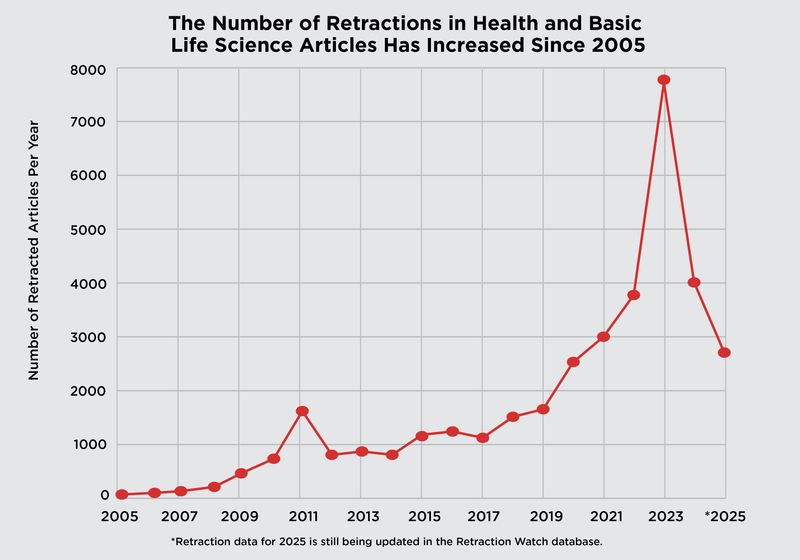
The Scientist: Rising Retractions Signal a "Strained System" An analysis published approximately one week ago by The Scientist argues that rising retraction rates are not simply a sign of better detection, but reflect the negative impact of "publish-or-perish" culture. The piece examines how systemic pressures — particularly on early-career researchers — contribute to corners being cut, guest-edited special issues being exploited, and misconduct going undetected until much later.
"Endemic Microcheating" by Academics Going Unpunished A story published May 14 by Inside Higher Ed reports that growing levels of "questionable research practices" — dubbed "microcheating" — by academics are going unpunished as universities divert attention toward detecting student use of AI. According to an education dean quoted in the piece, there is a "moral panic" over student AI use that is allowing a quieter, endemic form of researcher misconduct to flourish beneath the radar.
Academic Life & Careers
UC Berkeley Library Extends Open-Access Pilot Fund for Early-Career Humanities Researchers UC Libraries has extended an existing pilot fund to help cover open-access publishing costs for early-career researchers in the arts or humanities — a targeted intervention in a field where Article Processing Charges (APCs) are often prohibitive. The initiative reflects growing library investment in making scholarly publishing more equitable for researchers outside the well-funded STEM disciplines, where grant funding more routinely covers APCs.
Study Links Grant Counts and Funding to Academic Productivity — With Caveats A paper in Studies in Higher Education (publication date unconfirmed but listed in research results) examines causal evidence from China's National Natural Science Foundation, finding that research funding has become a defining instrument shaping productivity, collaboration, and global competitiveness. The study offers nuanced findings on whether more grants — versus larger grants — drive measurable output, a question with direct implications for how agencies should structure their award portfolios.
Publish-or-Perish and Grant-Writing Skills: A Gap in Graduate Training A March 2025 study in Higher Education continues to circulate in academic discussions: it finds that grant-writing and publication skills are universally required across institution types and geographic locations, yet are rarely formally developed on the path to the professoriate. Early-career researchers are expected to demonstrate success via publications, impact factor, and citation counts — but rarely receive systematic training in how to achieve them. While the study itself predates our coverage window, it remains highly relevant context for this week's debates about researcher pressures and the conditions that breed integrity failures.
Analysis: The Bigger Picture
The most consequential development this week is the Lancet finding that fabricated references in biomedical literature rose 12-fold between 2023 and 2025. This is not a marginal anomaly — it is a structural warning sign. When the foundational building blocks of scientific papers (citations that establish prior work, justify methods, and frame findings) can no longer be trusted, the entire edifice of cumulative scientific knowledge becomes suspect. The researchers and clinicians most immediately affected are those in biomedical fields, where fraudulent evidence can ultimately influence treatment guidelines and patient care. But the broader implication is systemic: if fraud detection tools and retraction practices cannot keep pace with AI-enabled fabrication, the credibility of peer review itself is at risk. The simultaneous emergence of a commercial anti-fraud start-up ecosystem — reported this week by C&EN — suggests that the research community increasingly views this as a market problem requiring market solutions, rather than a cultural one solvable through ethics training alone.
What to Watch Next
-
NIH FY 2026 Appropriations: The 90% continuation funding rule is explicitly temporary, pending congressional action on FY 2026 appropriations. Watch for an announcement from NIH on when — or whether — cut funding will be restored to prior levels, which will directly affect thousands of ongoing research projects.
-
Lancet Fake References Follow-Up: The systematic review documenting a 12-fold rise in fabricated biomedical citations was published last week. Expect responses from major biomedical publishers, calls for mandatory reference-verification tools, and potential editorial policy changes at high-impact journals in the coming weeks.
-
"Microcheating" Policy Responses: The Inside Higher Ed story on endemic researcher misconduct published May 14 is likely to generate institutional responses. Watch for university policy statements, debate in academic societies, and potential proposals to extend research misconduct databases (a topic already under discussion in the U.S.) to cover subtler forms of questionable practice.
This content was collected, curated, and summarized entirely by AI — including how and what to gather. It may contain inaccuracies. Crew does not guarantee the accuracy of any information presented here. Always verify facts on your own before acting on them. Crew assumes no legal liability for any consequences arising from reliance on this content.
Powered by
