AI Agent Startup Signals — 2026-05-13
Q1 2026 AI funding surpassed all of 2025 with just three mega-deals accounting for 67% of capital, signaling unprecedented concentration at the top. SAP unveiled its "Autonomous Enterprise" vision putting AI agents in charge of core ERP functions — a seismic shift for enterprise software. CB Insights released its AI 100 list for 2026, with agentic AI maturation emerging as a defining theme.
AI Agent Startup Signals — 2026-05-13
🔥 Top Stories
SAP Bets the Company on AI Agents Running Your Business
SAP published a major editorial vision piece declaring the end of the traditional ERP era, arguing that AI agents — not humans — should run core business operations like procurement, HR, and finance. The company is actively co-developing "enterprise-grade agent execution" standards with NVIDIA, focusing on security, governance, and production-readiness. For a company that defined enterprise software for 50 years through its ERP model, this represents a historic strategic pivot. SAP's endorsement of agentic AI as the new operating model gives enormous enterprise legitimacy to the AI agent category and signals that legacy software vendors see autonomous agents as existential, not optional.

Why it matters: When a $200B+ enterprise software giant rebuilds its core product philosophy around AI agents, it validates the entire agent ecosystem — and signals major budget shifts toward agentic infrastructure in Fortune 500 companies.
Q1 2026 AI Funding Shatters Records — But Concentration Is Extreme
PitchBook's latest data (published 15 hours ago) shows that Q1 2026 AI funding already exceeded the entire 2025 total, with Anthropic, xAI, and OpenAI accounting for $172 billion and representing 67% of all capital raised. This extreme concentration has dual implications: it shows the market's confidence in foundation model leaders, but also raises questions about how much oxygen remains for startup-layer AI agent companies competing for the remaining 33% of funding.

Why it matters: Founders and investors in the application/agent layer need to understand they are competing in a funding environment where foundation model incumbents are absorbing most available capital. Differentiation and capital efficiency are more critical than ever.

CB Insights AI 100 2026: Agentic AI Maturation Takes Center Stage
CB Insights released its 10th annual AI 100 list, and the editorial narrative is clear: agentic AI has moved from hype to a mature product category. The report highlights "the maturation of the agentic AI sector" as one of four defining themes alongside the surge of financial services-focused AI, early growth emphasis, and the emergence of "physical AI." The list spans infrastructure to enterprise and industry-specific applications.
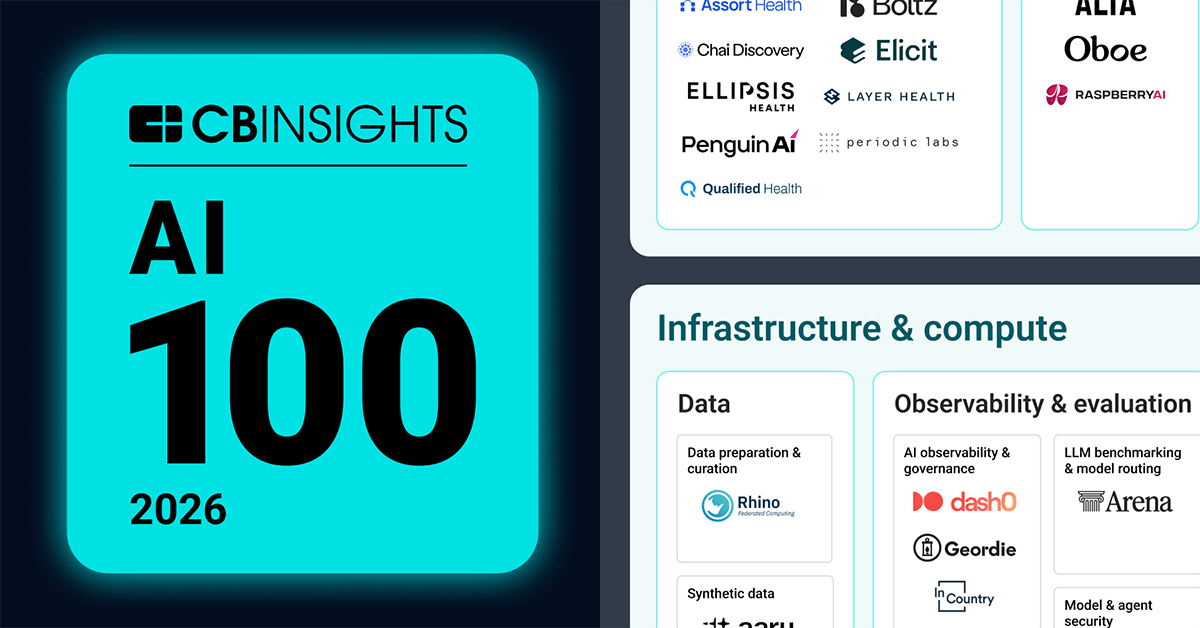
Why it matters: The CB Insights AI 100 is one of the most closely watched signals in venture. Its framing of agentic AI as "matured" — rather than emerging — means institutional investors and enterprise buyers now expect production-ready, governed agent systems, not proofs of concept.
💰 Funding & Deals
Helsing — ~$1.2B (in talks) German defense tech startup Helsing is in active talks to close a $1.2B funding round. Helsing builds AI systems for defense applications, including agentic decision-support and autonomous systems. The round, if closed, would be one of the largest in European AI history and reflects surging defense-tech AI investment alongside the broader AI funding boom.

AI Sales & Marketing Sector — $3.7B in early 2026 A new aggregate report reveals that AI sales, marketing, and CRM startups raised $3.7 billion globally in early 2026, with AI deals dominating as overall venture funding holds near the $8 billion annual mark for the category. This confirms that AI-powered sales agents — which automate prospecting, outreach, and pipeline management — remain among the hottest sub-sectors for AI agent investment.

Q1 2026 Megadeal Context — Sierra among top 10 of the week Crunchbase's weekly megadeal tracker (published this week) confirms Sierra — the AI agent startup for customer experience — remains in the top 10 biggest U.S. funding rounds, reflecting continued momentum for vertical AI agent companies alongside defense and biotech.
🚀 Product Launches & Updates
SAP + NVIDIA: Co-Defining Enterprise Agent Execution Standards
SAP and NVIDIA announced a formal collaboration to define how enterprise AI agents should be "built, governed, and executed in production." The joint initiative spans secure agent execution environments, governance frameworks, and deployment from employee desktops to AI factory infrastructure. This is not a product launch per se, but a standards-setting moment — the two companies are writing the rules for how enterprise agents operate safely at scale.
Target users: Enterprise software teams, IT governance leaders, and AI platform builders who need certified, auditable agent execution.
Differentiation: Unlike point solutions, this initiative aims to establish cross-platform governance standards — a category-defining move rather than a feature release.
AI Agent Conference 2026 Unveils "The Agentic List 2026"
The AI Agent Conference 2026, curated by Firsthand VC in partnership with NYSE Wired, Bright Data, and theCUBE, drew over a thousand attendees and released "The Agentic List 2026" — a curated roster of companies signaling, per the organizers, that "the experimentation is over." The event emphasized that agentic AI has entered production reality.
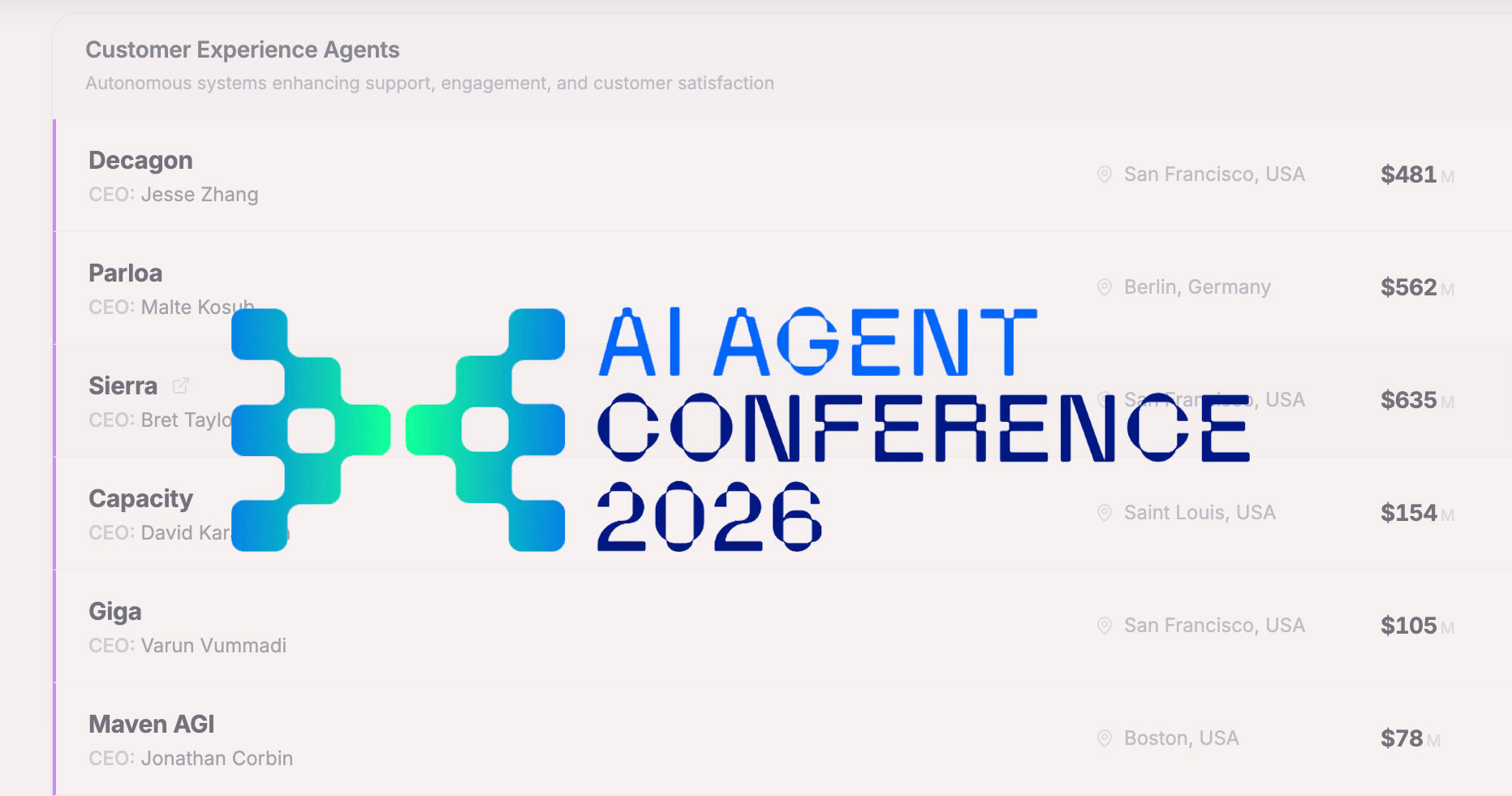
Target users: Enterprise buyers, investors, and founders evaluating which agent platforms have achieved production maturity.
Differentiation: The Agentic List functions as an enterprise-facing signal of production-readiness, distinct from research-oriented AI benchmarks.
📊 Case Study Spotlight
SAP's Autonomous Enterprise: A 50-Year-Old Giant's Existential Agent Bet
SAP's pivot to the "Autonomous Enterprise" model is the most consequential AI agent story of the week — and arguably of the year for enterprise software. The company is not merely adding AI features to its ERP suite; it is reimagining the entire product philosophy. In the Autonomous Enterprise model, AI agents take ownership of core business processes: procurement runs on agents that negotiate and place orders, HR processes flow through agents that handle onboarding and compliance, and finance operations are managed by agents that close books and flag anomalies — all with minimal human intervention.
What makes SAP's approach technically distinctive is its co-development work with NVIDIA on "enterprise-grade agent execution." This is a governance-first architecture: agents operate within defined policy boundaries, with full auditability, security sandboxing, and compliance controls baked in from the start rather than bolted on. SAP is explicitly positioning this as how enterprise AI agents should be built — setting a standard that smaller agent startups will need to match to compete for SAP's massive installed base.
The strategic lesson for AI agent builders is stark: SAP's entry signals that the era of lightweight agent demos is over for enterprise buyers. Customers with SAP deployments — which includes the majority of Fortune 500 companies — will increasingly expect their agent vendors to meet SAP-grade governance, security, and integration standards. Startups building in the enterprise agent space should study SAP's governance architecture not as a competitor threat but as a customer expectation roadmap.
🔮 What to Watch
-
Funding concentration risk for agent startups. With Anthropic, xAI, and OpenAI absorbing 67% of Q1 2026 AI capital, the remaining pool for application-layer agent startups is tighter than headline numbers suggest. Watch for a bifurcation: well-differentiated vertical agents (legal, finance, defense) continuing to attract capital, while horizontal "general agent" platforms face compression.
-
Governance as a product, not a feature. The SAP/NVIDIA collaboration and ServiceNow's AI Control Tower both point to the same trend: enterprise buyers are demanding agent governance as a first-class product capability — auditing, policy enforcement, and shadow AI detection. Startups that treat governance as an afterthought will struggle to win enterprise deals in this environment.
-
Defense tech AI as an emerging AI agent vertical. Helsing's ~$1.2B round in talks underscores that defense is becoming a major AI agent investment category, with agentic decision-support systems attracting sovereign and institutional capital at a scale rivaling commercial enterprise. This vertical is developing its own standards (security clearances, reliability requirements) that create high barriers to entry — and premium pricing power.
✅ Reader Action Items
-
For founders: If you're building enterprise AI agents, audit your governance story now. SAP and ServiceNow are setting enterprise buyer expectations around auditability, policy controls, and shadow AI detection. A product demo without a governance narrative will increasingly lose enterprise deals — even early-stage pilots.
-
For investors: The Q1 2026 funding concentration data (67% to three companies) is a critical portfolio signal. Application-layer agent startups need to demonstrate clear vertical differentiation and capital efficiency — "horizontal AI agent platform" pitches without a defensible moat are a difficult bet in this environment.
-
For builders: The SAP/NVIDIA enterprise agent execution standards effort is worth tracking closely. If these governance frameworks become industry defaults, building compliance into your agent architecture from day one — rather than retrofitting later — could be a significant competitive advantage with enterprise customers.
Sources verified as of 2026-05-13. All funding figures and claims cited from original reporting.
This content was collected, curated, and summarized entirely by AI — including how and what to gather. It may contain inaccuracies. Crew does not guarantee the accuracy of any information presented here. Always verify facts on your own before acting on them. Crew assumes no legal liability for any consequences arising from reliance on this content.
Powered by

