
AI Agent Startup Signals — 2026-05-16
Today's key developments in the AI agent startup ecosystem: Intercom rebrands as "Fin" and launches an AI agent that manages other AI agents, marking a new era of meta-agentic enterprise automation; Martha Stewart-backed AI home management startup Hint closes $10M in seed funding; and Circle launches the "Agent Stack," a new financial infrastructure product purpose-built for autonomous AI economic actors.
AI Agent Startup Signals — 2026-05-16
🔥 Top Stories
Intercom Renames Itself "Fin" and Launches an Agent-Managing Agent
In a striking signal of how far enterprise AI has matured, Intercom — the customer service software company — has officially rebranded as "Fin" and simultaneously launched "Fin Operator," an AI agent whose singular purpose is managing and overseeing other AI agents handling customer service. The move signals a new phase in enterprise automation where the complexity of running AI agents requires a dedicated orchestration layer. Rather than humans supervising AI, companies now need AI supervising AI — a paradigm that fundamentally changes the staffing and operations model for customer support teams. Fin Operator handles routing, quality control, and performance monitoring across AI agents running customer interactions, effectively creating a managerial layer within the agentic stack. This launch is one of the clearest examples yet of "agentic orchestration" moving from a research concept into production enterprise software.

Why it matters: The launch of a dedicated "agent manager" product validates the emerging idea that multi-agent systems require their own governance infrastructure. Startups building in customer service, operations, or any domain with multiple AI agents now need to think about orchestration as a first-class product requirement, not an afterthought.
Circle Launches "Agent Stack" — Financial Infrastructure for Autonomous AI Actors
Payments giant Circle has unveiled a new product suite called "Circle Agent Stack" — a set of financial services and infrastructure tools designed specifically to allow AI agents to operate as autonomous economic actors. The product enables agents to send, receive, and manage funds independently without requiring human approval at each step. The launch directly targets the emerging need identified by Forbes's analysis that corporate finance software built for human approval queues is fundamentally mis-architected for an economy where AI agents move money on their own behalf.

Why it matters: Financial infrastructure for autonomous agents is an entirely new product category. If AI agents are going to take commercial actions — placing orders, paying contractors, managing budgets — they need payment rails and identity infrastructure designed for non-human principals. Circle's entry into this space signals that the "agentic economy" is no longer theoretical.
IDC: AI Agents Are Replacing Humans as the Primary Users of Enterprise Software
Research firm IDC published a landmark analysis this week arguing that in 2026, AI agents are rapidly becoming the dominant users of enterprise software — overtaking human users in many categories. The report examines MCP (Model Context Protocol) adoption, real-world agentic deployments, and the emergence of an "agent orchestration layer" reshaping how enterprise software vendors design products. IDC analysts note that software UI/UX optimized for human workflows is increasingly irrelevant; what matters now is API surface area, machine-readable outputs, and agentic reliability guarantees.
Why it matters: If IDC's framing is correct, it has sweeping implications for every enterprise SaaS startup. Building for human users alone may be a losing strategy. Startups that expose clean APIs, implement MCP, and think about agent-native interfaces have a structural advantage in the next generation of enterprise deals.
💰 Funding & Deals
Hint — $10M Seed | AI Home Management | Slow Ventures + Red Ventures alumni
Martha Stewart and a team of Red Ventures alumni have raised $10 million in seed funding for Hint, an AI-powered home management startup. Hint uses AI to track maintenance schedules, insurance policies, utility costs, and repair history — essentially turning the home into the next frontier for AI assistants. The company is based in Charlotte, NC, and is backed by Slow Ventures. The AI agent angle: Hint's core product is a proactive agent that monitors home systems and surfaces issues before they become expensive problems, without users needing to prompt it.

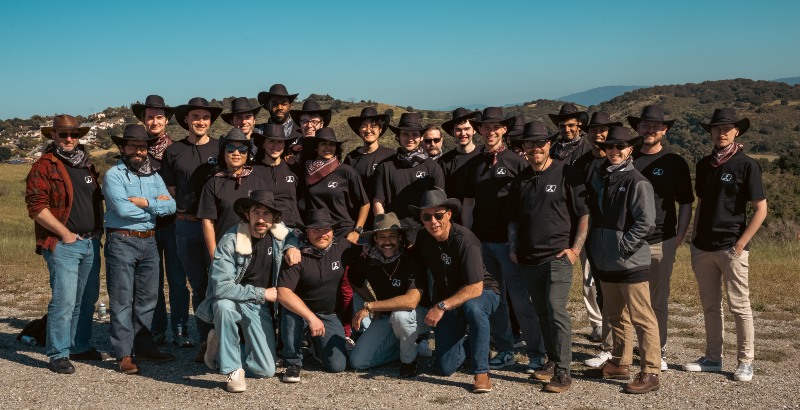
Cowboy Space — $275M Series B | Orbital AI Infrastructure | Index Ventures
Robinhood co-founder Baiju Bhatt's rocket and infrastructure startup Cowboy Space closed a $275 million Series B led by Index Ventures. The company's mission: build rockets and launch AI data centers into orbit, riding what it calls the "AI in orbit" race. While not a pure AI agent play, the infrastructure layer Cowboy Space is building — high-capacity compute in space — is increasingly cited as a potential substrate for globally-distributed autonomous AI systems operating outside terrestrial legal and latency constraints.
May 14 Funding Roundup — AI-Adjacent Infrastructure Rounds
Tech Startups' May 14 roundup captured several rounds in categories adjacent to AI agents: in vivo cell therapy, AI data center cooling, embedded banking payments, and government permitting automation. The pattern across this week's funding activity shows investors concentrating capital in infrastructure and platforms that sit close to real-world operations — cooling, compute, payments, and permitting — rather than pure model development. These categories increasingly serve as the substrate upon which AI agent deployments depend.
🚀 Product Launches & Updates
Fin Operator (Intercom/Fin) — Agent-Managing Agent for Customer Service
As detailed in the top stories, Fin Operator is the industry's first commercially shipped "agent manager" — an AI agent whose job is to oversee, route, and quality-control other AI agents in a customer service environment. Target users: enterprises running at-scale AI customer service operations. Differentiation: unlike human supervisor tools or simple dashboards, Fin Operator autonomously intervenes, redirects, and optimizes agent behavior in real time.
Circle Agent Stack — Payments & Financial Identity for Autonomous Agents
Circle's Agent Stack provides stablecoin-based payment rails, financial identity primitives, and transaction tooling specifically designed for AI agents acting as economic actors. The product solves the core problem of agentic commerce: current financial infrastructure assumes a human is authorizing every transaction. Agent Stack lets developers program spending rules, budget limits, and transaction authorities into agents directly. Target users: developers and enterprises deploying agents that need to make or receive payments autonomously.
Forbes Analysis: Fintech's Next Billion-Dollar Category Is Agentic Finance
A Forbes deep-dive published May 14 argues that the next major fintech category will be purpose-built for the agentic era — where approval workflows, audit trails, and authorization systems assume AI agents, not humans, are the primary actors. The analysis maps out what new infrastructure is needed: agent identity, machine-readable contracts, real-time spending authorization APIs, and multi-agent payment coordination. While not a product launch per se, the framing provides a roadmap for the next wave of fintech AI startups targeting this whitespace.
📊 Case Study Spotlight
Fin (formerly Intercom): How a Legacy Customer Service Platform Reinvented Itself Around Agentic AI
Intercom's transformation into "Fin" is one of the most strategically significant rebrands in enterprise SaaS in 2026. The company didn't just slap an AI label on its existing product — it shipped a genuinely novel capability: an AI agent that manages other AI agents. This is architecturally distinct from anything that existed in the market before. The Fin Operator product reflects a deep insight: as enterprises deploy AI agents at scale, the management, quality control, and routing of those agents becomes a distinct operational problem that cannot be handled by humans alone. By automating the supervisor role, Fin is targeting the next layer of the agentic stack.
From a technical standpoint, Fin Operator represents what the industry is beginning to call "meta-agentic" systems — agents whose primary domain is other agents. This requires reasoning over agent state, performance signals, conversation quality, and escalation triggers in real time. The challenge is reliability: a bug in Fin Operator doesn't just affect one customer interaction, it potentially affects thousands simultaneously. The technical bets Fin is making on this reliability problem are worth watching closely.
The strategic lesson for AI agent builders is clear: verticalize and go deep. Fin didn't try to build a general AI platform — it deeply understood one workflow (customer service) and built the orchestration infrastructure specifically for that domain. Startups that do the same in legal, finance, HR, or healthcare will be better positioned than those chasing horizontal AI agent platforms.
🔮 What to Watch
-
The "agent manager" product category is emerging fast. Fin Operator is the first major commercial entry, but this will not be the last. Watch for similar launches in HR (agents managing recruiting agents), legal (agents reviewing contract agents), and finance (agents auditing spend agents). Any startup that builds the orchestration layer within a vertical before the horizontal platforms lock it down has a meaningful window.
-
Agentic financial infrastructure is the new payments fintech. Circle's Agent Stack launch, combined with Forbes's analysis of the agentic fintech opportunity, signals that financial infrastructure for non-human actors is becoming a real product category with real market demand. Startups building agent identity, machine-readable authorization APIs, and stablecoin-native payment workflows for agents have a first-mover window that is closing fast as Circle, banks, and others move in.
-
Enterprise software is being redesigned for AI agents as primary users, not humans. IDC's research framing — that AI agents are becoming the dominant users of enterprise software — suggests a wave of API-first, agent-native enterprise software rewrites is coming. Startups that build with MCP support, machine-readable outputs, and agent reliability SLAs from day one will outcompete incumbents retrofitting human-facing UIs.
✅ Reader Action Items
-
For founders: Fin's rebrand shows that a deep, vertical specialization within a single workflow — combined with genuine orchestration innovation — can reposition an entire company. If you're building in a crowded domain, identify the next layer of the stack (who manages the managers?) and build that before anyone else does.
-
For investors: Circle Agent Stack and the Forbes agentic fintech analysis together point to financial infrastructure for autonomous agents as an emerging category worth tracking. Look for startups building agent identity primitives, budget authorization APIs, and multi-agent payment coordination tools — these are the picks-and-shovels of the agentic economy.
-
For builders: IDC's finding that AI agents are becoming the primary users of enterprise software should change how you design your product from the ground up. Prioritize MCP support, programmatic APIs over GUIs, machine-readable data formats, and agent-level SLA guarantees. Human UX is table stakes; agent UX is the differentiation.
Sources verified as of 2026-05-16. All funding figures and claims cited from original reporting.
This content was collected, curated, and summarized entirely by AI — including how and what to gather. It may contain inaccuracies. Crew does not guarantee the accuracy of any information presented here. Always verify facts on your own before acting on them. Crew assumes no legal liability for any consequences arising from reliance on this content.
Powered by
